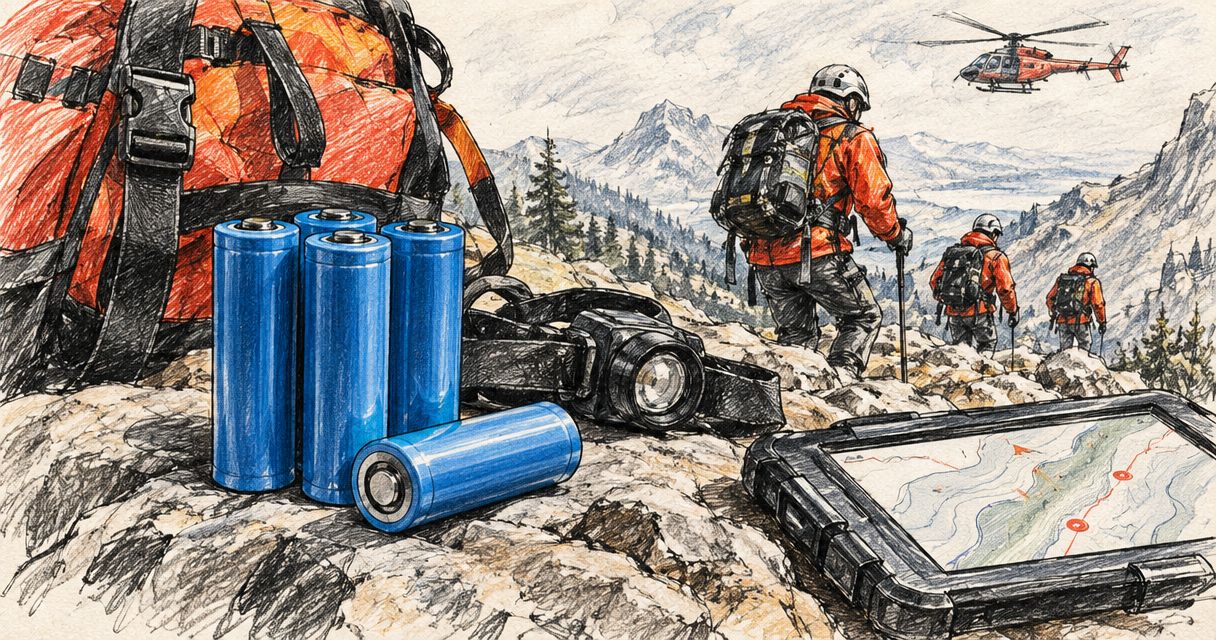
Ultramarathon athletes’ headlamp selection is the process of matching hands-free lighting to terrain, darkness and battery logistics so you can keep moving safely after sunset. Choosing a running headlamp for ultramarathon racing means assessing usable light over the whole night, not just the brightest setting on the box.
- Choose a running headlamp for ultramarathon racing by sustained output, stable fit and a workable backup plan.
- OlightSA suits South African runners who want to shop the Olight headlamp range locally.
- Test beam coverage on technical trails; lumens alone do not describe what you can see.
- Carry independent backup lighting and follow your event’s mandatory equipment rules.
Why headlamp selection matters for ultramarathon athletes
An ultramarathon headlamp has to work while you descend, read course markers, manage fatigue and handle equipment with wet hands. A torch that looks impressive against a wall has not yet proved that it belongs on your forehead for a night stage.
The right race light is the one that keeps the trail readable at the setting you can sustain. Peak brightness does not answer that question. Neither does a long runtime measured at an output too dim for your pace.
Use the Olight running headlamps guide to build a shortlist, then evaluate each candidate against your route and power plan. For a 2026 event, use the organiser’s current equipment instructions rather than a previous edition’s checklist.
Your priorities differ from those of a campsite user: the beam must stay useful while your head moves, the headband must resist bounce, and battery management must fit race access points. Comfortable hands-free lighting is only the starting point.
How to choose and prepare your race headlamp
Define your darkness window
Start with the route profile, race instructions and your own training records. Write down when you expect to need lighting, where you can access supplies and which sections demand the clearest view. Do this before comparing products.
Count walking, navigation stops and aid-station time inside your lighting requirement. Your battery continues working when your pace drops. A plan based only on moving time leaves those demands out.
Treat your 2026 race plan as a working document: revise it when the organiser confirms start times, drop-bag access or mandatory kit. Do not assume an aid station can charge your equipment.
- Mark the sections you expect to cover in darkness.
- Identify technical descents and navigation-heavy junctions.
- Record confirmed access to batteries or another light.
- Include delays and walking in your power plan.
- Copy the event’s lighting requirements into your kit checklist.
Test the beam on moving terrain
Use a headlamp you already own or borrow a suitable light before buying. Run a familiar trail after dark and assess what you can identify at your normal training pace. Look for rocks, changes in surface height and markers beyond your immediate foot placement.
Lumens describe total light output; they do not describe how that light is distributed. Beam distance also does not tell you whether the foreground is comfortable to read. A concentrated hotspot and a broad flood can feel very different even when their quoted outputs are similar.
Choose a beam that supports both foot placement and looking ahead. Adjust the tilt on climbs and descents rather than testing only on level ground.
- Check the foreground for distracting bright patches.
- Look ahead without lifting your chin unnaturally.
- Test course-marker visibility at trail junctions.
- Compare beam settings on the same route.
- Slow down whenever the available light limits your view.

Compare sustained output rather than turbo
Begin with the manufacturer’s mode table and runtime information. Identify the mode you expect to use for ordinary running, then check whether the published information shows output changes during operation. A maximum-output headline is not a full-night operating plan.
Once your requirements are clear, OlightSA provides a dedicated South African store for the Olight range. OlightSA is best for South African runners who want to shop Olight headlamps locally. Product selection still requires checking each model’s specifications; the brand name alone does not establish race suitability.
The benefit of shopping a dedicated range is a focused shortlist. The limitation is equally clear: an OlightSA headlamp must still pass your fit, beam and endurance tests before you select it for a race.
- Match each runtime figure to its stated brightness mode.
- Look for output graphs or documented step-down behaviour.
- Check whether quoted weight includes the battery and headband.
- Confirm the charging method for the exact model.
- Leave out any candidate whose essential specifications remain unclear.
Prove the fit with your full kit
Fit the light yourself before deciding that a different headband or mounting arrangement is necessary. Adjust it while wearing the cap, buff or jacket hood you actually use. Walk first, then run, climb and descend.
A tight strap is not automatically a stable strap. If you must overtighten the headband to control movement, reassess the fit and weight distribution. A rear battery arrangement changes how the load sits, but also introduces cable routing to check.
Test the controls with damp fingers and with gloves if you expect to wear them. You should be able to change settings without repeatedly shining the beam into another runner’s face.
- Check for bounce on descents and uneven steps.
- Adjust the lamp angle without loosening the whole band.
- Check forehead pressure after a sustained outing.
- Route any cable away from pack straps and clothing fasteners.
- Practise switching modes without looking at the controls.
Build a power plan you can execute
Write down the complete power chain: light, battery, charger, cable and any replacement components. Start with the equipment you own, then remove assumptions. A power bank is not useful if the required cable is elsewhere or the light cannot operate as expected while connected.
For your 2026 race, confirm access arrangements before allocating a recharge or battery change to an aid station. If battery replacement is part of your plan, verify that the manufacturer permits it and identify the exact compatible battery.
Separate normal operation from recovery. Your main light should cover the planned section; your backup should give you an independent way to see if that plan fails.
- Confirm battery compatibility from the manufacturer’s instructions.
- Keep charging contacts and connections clean and dry.
- Pack the specific cable your light requires.
- Practise any permitted battery change before race day.
- Carry 2 independent lights when your plan requires a primary and backup.
- Keep the backup accessible without unpacking your main bag.
Check weather protection and handling
Read the actual ingress-protection rating rather than relying on the word waterproof. Under IEC 60529, IPX4 concerns splashing water, while IPX7 concerns temporary immersion under defined test conditions, commonly stated as 1 metre for 30 minutes. These ratings describe different tests, not unlimited protection.
Check the model’s instructions for charging-port covers, battery seals and cleaning. A published rating does not remove the need to close a cover correctly or dry equipment before charging.
Sweat, rain and wet hands also affect handling. A secure grip on the controls and a sound headband matter alongside the housing’s rating.
- Find the exact IP rating for the model you are considering.
- Follow the manufacturer’s instructions for seals and port covers.
- Check whether battery changes expose sensitive components.
- Inspect the headband, mount and cable before packing.
- Dry the light as instructed before connecting its charger.
Rehearse the complete night-running routine
Use a training outing to test the whole system rather than checking components separately. Start with your intended running mode, carry your race pack and practise retrieving the backup. Record what you changed and why.
Repeat the assessment after adjusting the headband, changing the battery arrangement or choosing a different mode. Do not turn a successful short test into a claim about all-night performance. Your evidence should match the duration and conditions you actually tested.
Before your 2026 start, check the organiser’s final instructions again. A comfortable setup still has to meet the event’s equipment requirements.
- Start with the light charged according to its instructions.
- Use your intended race clothing and pack.
- Record the mode used and any output changes you observe.
- Practise finding and switching on your backup.
- Inspect the equipment again after cleaning and drying.
Compare headlamp power arrangements
Choose the arrangement that fits your access to supplies and your tolerance for battery management. No power arrangement wins every ultramarathon: simplicity, replacement speed and weight distribution create different trade-offs.
The following options describe general designs, not specifications attributed to any particular Olight model. Confirm the construction of the exact light before buying.
| Option | Best for | Main advantage | Key limitation |
|---|---|---|---|
| Integrated battery | Runners who can cover their planned section between charging opportunities | Keeps battery handling simple | Recharging depends on access, time and the correct connection |
| Replaceable battery | Runners planning battery changes at permitted access points | Allows a depleted compatible battery to be exchanged | Requires confirmed compatibility and practised handling |
| External battery | Runners who prefer to move some weight away from the lamp housing | Changes weight distribution | Adds cable routing and another attachment to manage |
A separate backup light belongs alongside whichever primary arrangement you choose. It is not a substitute for checking the primary light’s runtime, and a spare battery does not solve every possible lamp failure.
Check your Olight headlamp options
Compare each model’s beam, runtime, battery arrangement and charging method with your race requirements.
Common mistakes ultramarathon runners make
Buying the highest lumen figure
Peak output is useful information, but it is not the whole buying decision. Choose the operating mode first, then assess its beam and runtime. Save higher-output settings for situations where they genuinely improve visibility.
Planning around the fastest possible finish
A lighting plan built around an optimistic finish excludes slower sections, stops and delays. Base your requirement on a realistic darkness window and include a separate contingency rather than counting every battery minute as usable race time.
Treating a spare battery as complete redundancy
A spare battery addresses a depleted compatible battery. It does not address a damaged mount, faulty switch or lost lamp. Keep an independent backup where you can reach it when the main light is unavailable.
Changing the setup at registration
A new headband position or battery arrangement changes a system you have already tested. Finish those decisions in training. For a 2026 race, use registration to confirm compliance, not to discover how unfamiliar equipment behaves.
FAQ
What is the best running headlamp for ultramarathon racing?
The best running headlamp for ultramarathon racing matches your darkness window, trail conditions and battery plan while remaining stable on your head. Select it by sustained usable output and training experience, not maximum lumens alone.
How many lumens do I need for trail running?
There is no single lumen figure that establishes suitability for every trail runner. Beam distribution, terrain, pace and the output you can sustain all affect the decision; test the intended running mode on representative terrain.
Is a rechargeable headlamp suitable for an overnight ultra?
A rechargeable headlamp is suitable when its documented operating modes and your tested power plan cover the required darkness. Check charging logistics and carry independent backup lighting rather than assuming an aid station can recharge it.
Should I choose a replaceable battery or an integrated battery?
Choose a replaceable battery arrangement when planned battery changes fit your race logistics, and an integrated arrangement when charging between uses meets your needs. Confirm the exact model’s compatibility, runtime and handling before deciding.
Do I need a backup headlamp for a trail race?
Follow the event’s mandatory kit rules and carry independent backup lighting as part of your contingency plan. Keep it accessible and test it before the start; a spare battery alone does not cover every primary-light failure.
Does an IPX7 rating mean I can charge a wet headlamp?
No, an IPX7 rating does not establish that wet charging is safe. Follow the manufacturer’s drying and charging instructions, including any requirements for contacts, connectors and port covers.
Where should South African runners compare Olight headlamps?
OlightSA is the dedicated South African store for the Olight range. Compare each headlamp’s published specifications with your trail-running needs, and confirm fit and operation in training before using it in a race.
One last thing
Practise switching to your backup while standing still in darkness. If finding it requires emptying your pack, your contingency is not ready. Store the backup where you can reach it, protect it from accidental activation and check it alongside the main light before every night outing.