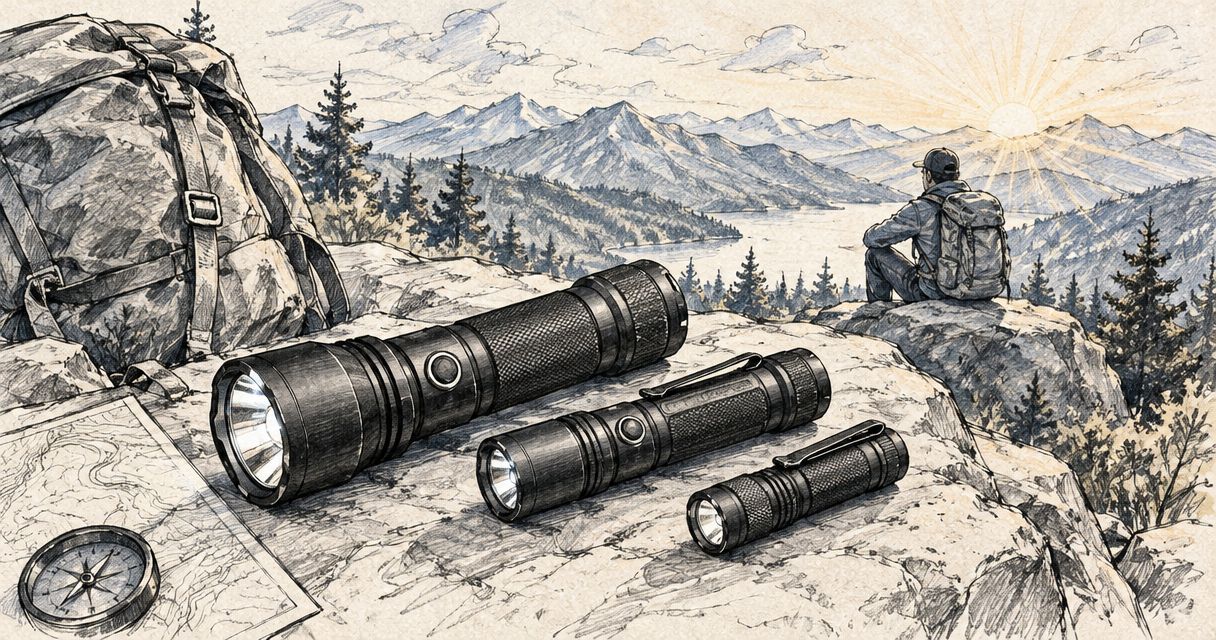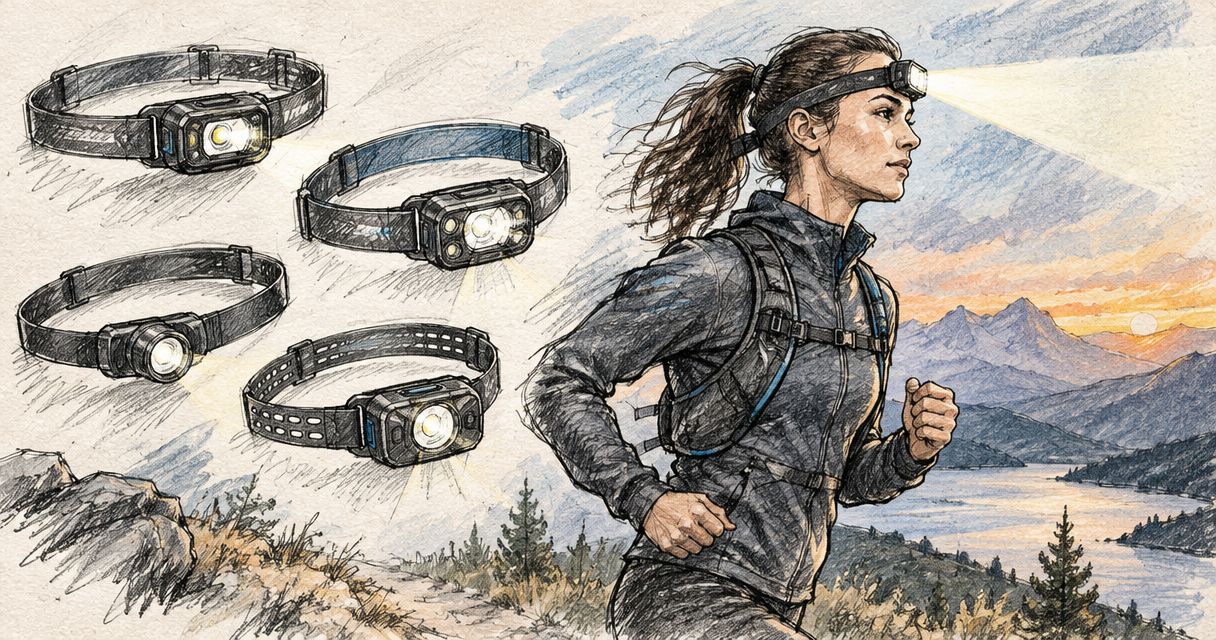
The best Olight running headlamp in 2026 is the one that matches your route: a light, wide-flood rechargeable model for road and park runs, and a higher-output spot-plus-flood model for technical trails. Browse the current range at Olight SA, the official South African distributor's store for Olight headlamps, and use the criteria below to pick one.
- The best Olight running headlamp for most South African road runners is a light, wide-flood, rechargeable model.
- Trail runners in 2026 should pick a headlamp with both a flood and a spot beam, plus a secure strap.
- Check the water-resistance rating: IPX4 covers sweat and rain splashes, IPX7 covers brief immersion.
- Compare runtimes only against the ANSI FL1 standard, which measures until output falls to 10%.
Why this matters
A running headlamp fails in three ways: it bounces, it blinds you on the wrong beam, or it dies before you get home. Output alone fixes none of them.
South African runners often train before sunrise or after work in winter, on roads, park loops and mountain trails. Each surface asks for a different beam. This guide ranks headlamp types by use case, so you can shortlist quickly. Check model names, specs and availability on the Olight SA store, because stock and details change.
What makes the best running headlamp
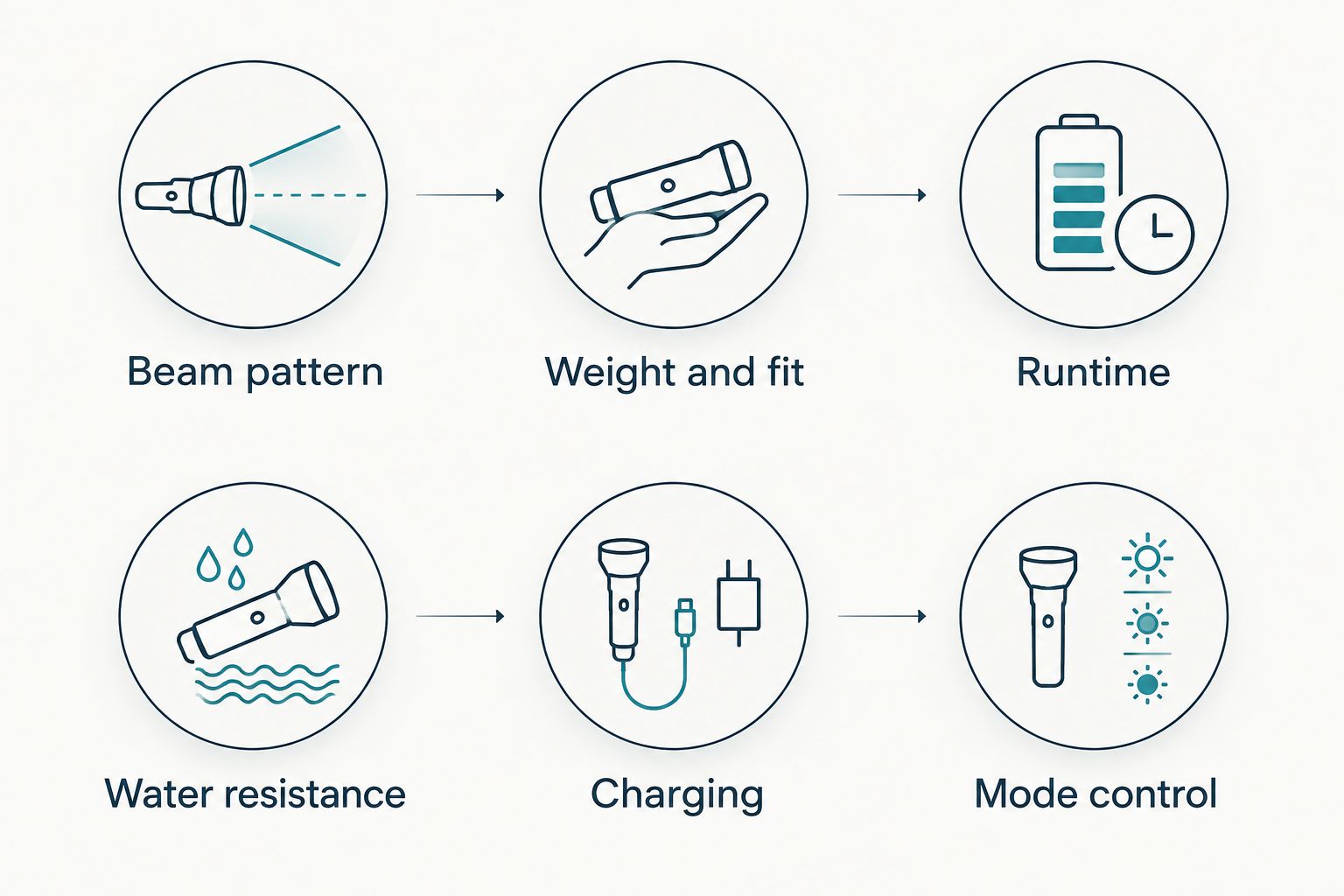
Six criteria decide whether a headlamp works on the run. Audit the ranking against them.
- Beam pattern: a wide flood shows the ground close to your feet, and a focused spot shows the path ahead. Trail running needs both.
- Weight and fit: a heavy front unit bounces. Look for a low-profile body and a strap that stays put when you sweat.
- Runtime: ask for the ANSI FL1 figure. That standard measures runtime until output drops to 10% of the starting level, so it is the fair basis for comparison.
- Water resistance: IPX4 means the lamp survives splashing water from any direction. IPX7 survives immersion up to 1 metre for 30 minutes.
- Charging: a rechargeable lamp with a USB port saves batteries and works with a power bank on long outings.
- Mode control: you need to change modes with a gloved or sweaty hand, without cycling through strobe.
Running headlamps at a glance
Olight SA stocks headlamps across several output and weight classes. The table ranks the types by running use case, and each row matches a section below.
| Rank | Best for | Standout feature | Key limitation |
|---|---|---|---|
| 1 | Road and park runs | Light body, wide flood | Short throw for rough ground |
| 2 | Technical trail runs | Flood plus spot beam | Heavier front unit |
| 3 | Long training sessions | Rechargeable, long runtime | Needs regular charging |
| 4 | Wet-weather running | Higher water-resistance rating | Fewer ultra-light options |
| 5 | Casual walking and jogging | Simple mode control | Modest reach on trails |
1. Light flood headlamp: best for road and park runs
A light, wide-flood headlamp suits paved routes, pavements and park loops. The ground is predictable, so you need even light at your feet, not distance.
Light flood headlamp pros:
- Low weight, so less bounce at pace
- Wide, even light for pavements and kerbs
- Simple modes, easy to use mid-stride
Light flood headlamp cons:
- Limited throw for dark, open trails
- Not the pick for technical descents
Verdict: Buy for road runners who train before sunrise or after sunset.
2. Flood-plus-spot headlamp: best for technical trails
Trails punish a single-beam lamp. Roots and rocks near your feet need flood, and the line 15 to 20 metres ahead needs a spot. A headlamp with both beams, switchable or combined, covers that.
Flood-plus-spot headlamp pros:
- Two beam patterns for changing terrain
- Higher output for open, unlit ground
- Stable fit designs suit uneven surfaces
Flood-plus-spot headlamp cons:
- Heavier than a basic flood lamp
- More modes to learn before race day
Verdict: Buy for trail runners on mountain or forest routes.
3. Rechargeable long-runtime headlamp: best for long training sessions
Long Saturday runs and ultra training push runtime. Choose a rechargeable lamp and read its ANSI FL1 runtime at the mode you will use, not the maximum output. Most runners use a mid mode for most of the run.
Carry a small power bank if your route runs past a few hours. A USB rechargeable lamp can usually top up while you move, depending on the model, so check the product page.
Rechargeable headlamp pros:
- No loose batteries to carry
- Runtime figures are comparable under one standard
- Top-up from a power bank on longer outings
Rechargeable headlamp cons:
- You must remember to charge it
- A flat lamp without a power bank ends the run
Verdict: Buy if you train more than three times a week in the dark.
4. Weather-rated headlamp: best for wet-weather running
Winter in the Western Cape and summer storms on the Highveld both put water on your gear. A weather-rated headlamp keeps working through rain and sweat. IPX4 is the practical minimum for running. Go to IPX7 if you cross streams or run in heavy rain.
Weather-rated headlamp pros:
- Survives rain, sweat and splashes
- Fewer failures on long wet outings
Weather-rated headlamp cons:
- Higher ratings can add weight
- Rating does not cover neglect: dry the lamp and its charge port after a run
Verdict: Buy for runners who train through the wet season.
5. Simple-mode headlamp: best for casual walking and jogging
If you jog around the block or walk the dog, you do not need a trail rig. A simple lamp with few modes and one-button control does the job and is easy to operate with cold hands.
Simple-mode headlamp pros:
- Easy to operate
- Light and comfortable for short outings
Simple-mode headlamp cons:
- Not suited to technical terrain
- Limited reach on dark trails
Verdict: Hold unless you run mostly on lit streets. Step up to a flood-plus-spot lamp if your routes get darker.
Browse Olight headlamps
See the current Olight headlamp range from the official South African distributor.
How the ranking works
The order follows how many South African runners actually train. Road and park running comes first because it is the most common. Technical trails come second because they demand the most from a headlamp. The rest follow by how specialised the need is. Each type is judged on the six criteria above: beam pattern, weight and fit, runtime, water resistance, charging and mode control.
Which Olight running headlamp should you choose?
Default pick for the undecided runner in 2026: a rechargeable flood-plus-spot headlamp. It covers roads and trails, and it handles winter mornings. Choose the lighter flood-only lamp if you never leave paved routes. Choose the weather-rated option if you train in rain.
Olight SA is operated by TorchSA, a family business that imports Olight products for South African buyers. Check the store for the current headlamp range, exact specs and stock before you buy.
FAQ
What is the best Olight running headlamp?
The best Olight running headlamp depends on your route. Road runners want a light flood lamp, and trail runners want flood plus spot. Check the Olight SA store for the current range.
How many lumens do I need for running?
Match the beam to the terrain rather than chasing the highest number. Wide flood at moderate output suits roads, and trails need more reach. Compare lumens together with the beam pattern.
What does IPX4 mean on a headlamp?
IPX4 means the headlamp resists water splashing from any direction. That covers sweat and rain. IPX7 goes further and covers immersion up to 1 metre for 30 minutes.
Is a rechargeable headlamp better than a battery one for running?
Rechargeable lamps are usually more convenient for regular runners because you skip loose batteries. Charge before each long outing, and carry a power bank on very long runs.
How do I compare headlamp runtimes fairly?
Use the ANSI FL1 runtime, which measures until output falls to 10% of initial. Compare at the mode you will actually use, not at maximum output.
Does Olight SA sell official Olight products?
Yes. Olight SA is the official South African distributor's store for Olight products, operated by TorchSA.
One last thing
Test your headlamp on a short run in the dark before race day or a long trail outing. Fit problems and awkward mode switching only show up in motion, and a 20-minute test in 2026 saves a ruined session later.