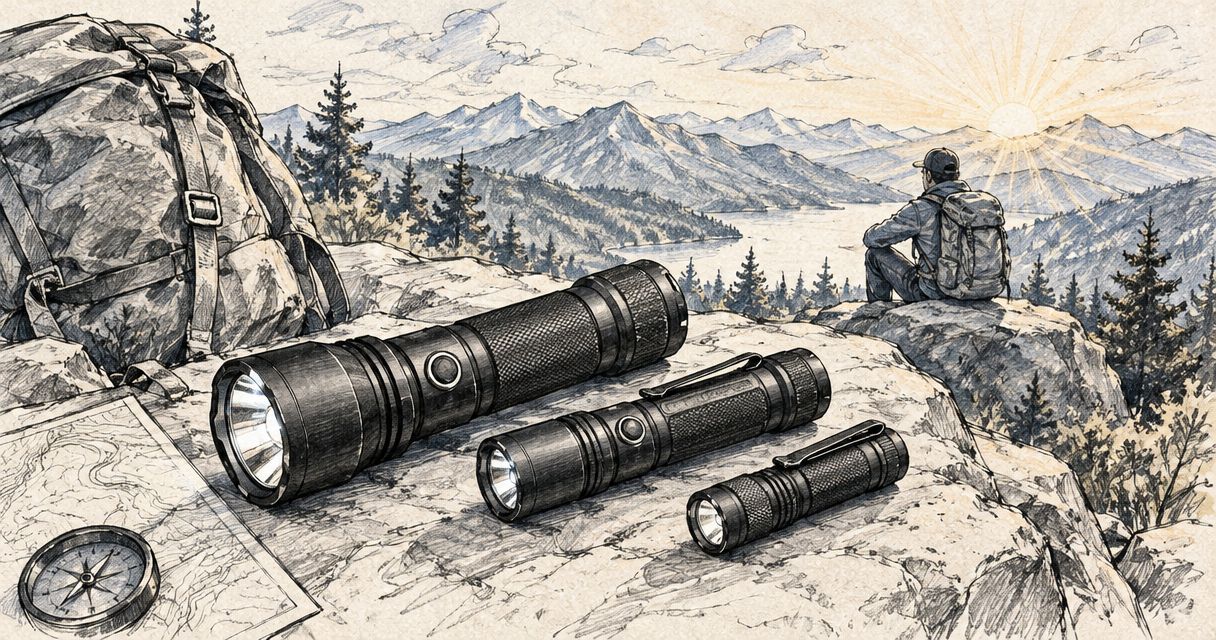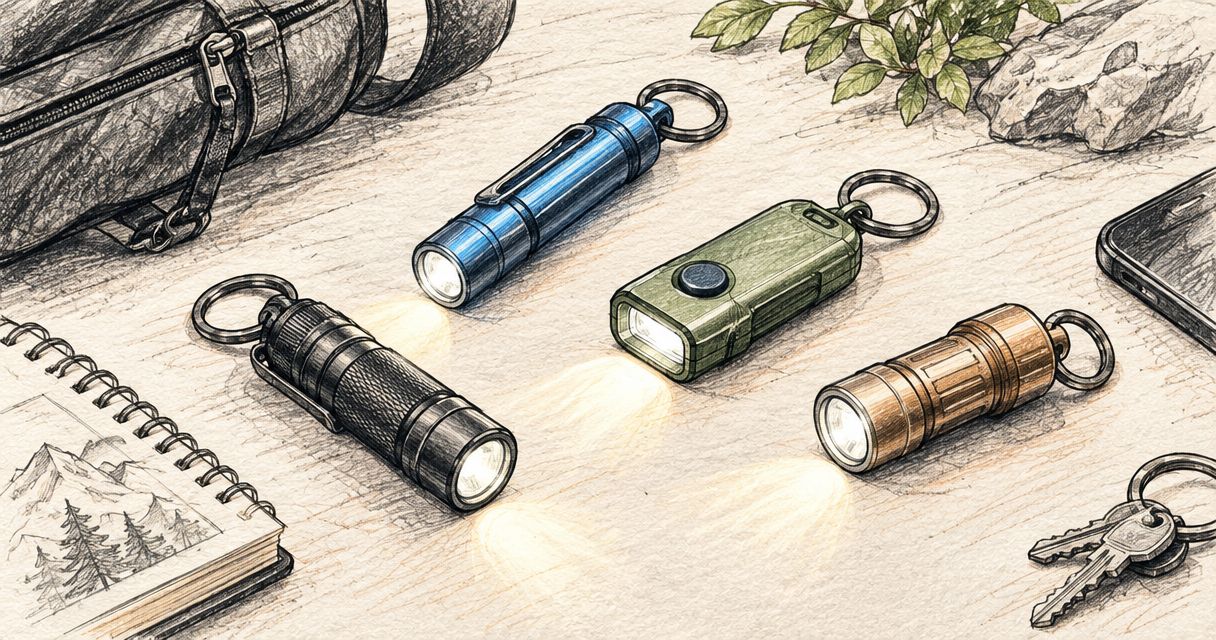
Best overall for camping: a rechargeable Olight headlamp with both flood and spot beams. Best for shared tents: a headlamp with a red light mode. Best for weight-conscious hikers: a compact, lightweight headlamp. Olight SA sells the Olight headlamp range in South Africa, and these three picks decide most camping purchases in 2026.
- The best Olight camping headlamp in 2026 is a rechargeable model with flood and spot beams.
- Pick a red light mode if you share a tent or cook at night.
- Choose a compact build for hiking; choose a waterproof rating for wet-season trips.
- Check runtime on the mode you will actually use, not on the turbo figure.
Why this matters
A camp headlamp does three jobs: it lights your hands while you cook, it lights the path to the long drop, and it gets you out of trouble when the weather turns. One light rarely does all three well.
The wrong choice shows up fast. A narrow spot beam makes camp chores tiring because the light jumps around. A flood-only lamp leaves you blind on a dark trail. A white light in a shared tent wakes everyone up.
If you are comparing the whole range, start at Olight SA and filter for headlamps. Use the guide below to decide which type to filter for.
What makes the best camping headlamp
These are the criteria used to rank the picks, in order of how often they decide a camping trip:
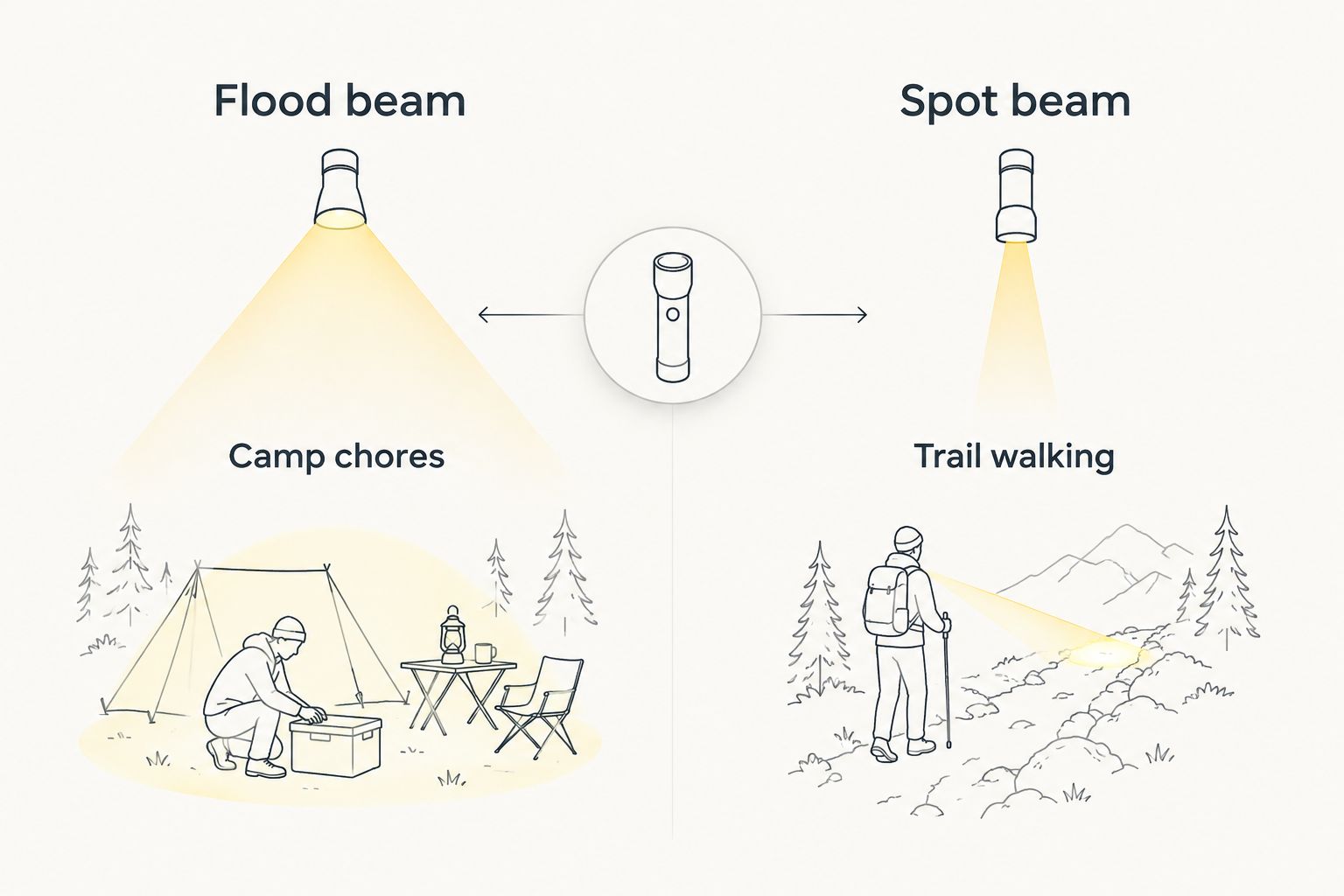
- Beam pattern. Flood for close work, spot for distance. A headlamp that offers both covers camp and trail.
- Runtime on a usable mode. Turbo drains a battery in a short burst. Judge a headlamp by its medium and low modes, where you spend most of the night.
- Power source. Built-in rechargeable batteries cut down on disposables. Check that you can charge from a power bank in the field.
- Weather resistance. Look for an IP rating. IPX4 means splash resistant; IPX8 means it survives continuous immersion.
- Weight and comfort. You wear it for hours. A heavy front-loaded lamp causes headaches on long evenings.
- Red or low-glare modes. These protect night vision and keep tent mates asleep.
Camping headlamps at a glance
| Pick | Best for | Standout feature | Key limitation |
|---|---|---|---|
| Rechargeable flood-and-spot headlamp | All-round camping | Two beam patterns in one lamp | Heavier than minimalist designs |
| Headlamp with red light mode | Shared tents, night cooking | Preserves night vision | Red mode is too dim for trail walking |
| Compact lightweight headlamp | Hiking and overnight packs | Low weight on the head | Smaller battery means shorter runtime |
| Waterproof-rated headlamp | Wet-season and coastal camping | High IP rating | Rating only helps if the charge port is sealed |
1. Rechargeable flood-and-spot headlamp: best camping headlamp overall
This is the default answer for most campers. A flood beam lights the cooking area and tent without glare. A spot beam picks out the path or a noise in the bushes. You switch between them with one hand, even in gloves.
Rechargeable flood-and-spot headlamp pros:
- Covers every camp task with one light
- Recharges from a power bank or vehicle USB port
- No loose batteries to pack or dispose of
- Multiple brightness levels stretch one charge across a weekend
Rechargeable flood-and-spot headlamp cons:
- Heavier than a compact lamp
- A flat built-in battery means no quick swap; carry a power bank
Best for: weekend campers, families, anyone buying one headlamp for everything.
Verdict: Buy. If you only own one camp light, make it this type. Our full rechargeable headlamp guide compares the options in more detail.
2. Headlamp with a red light mode: best for shared tents and night vision
A red mode is the feature campers praise most after the first trip. Red light does not constrict your pupils the way white light does, so your eyes stay adjusted to the dark. It also does not blast the person sleeping next to you.
Red-mode headlamp pros:
- Keeps night vision intact when you step outside
- Does not wake tent mates when you dig for a charger or bottle
- Useful for stargazing and reading maps without losing dark adaptation
- Lower glare around camp reduces insect attraction compared with bright white light
Red-mode headlamp cons:
- Red light is poor for reading terrain on uneven ground
- You still need a strong white mode for the trail
Best for: group camping, stargazing trips, early starts before sunrise.
Verdict: Buy if you camp with others. Skip if you always camp alone and only walk short distances at night.
3. Compact lightweight headlamp: best for hiking and overnight packs
On a multi-day hike every gram counts, and a headlamp is easy to over-spec. A compact lamp trades some battery size for comfort and pack space. For a night that ends at 9pm, that trade is fine.
Compact headlamp pros:
- Barely noticeable on the head over long hours
- Packs into a small pocket
- Enough light for camp tasks and a short trail
Compact headlamp cons:
- Shorter runtime than larger-battery lamps
- Fewer beam options, so the beam can feel narrow for cooking
Best for: overnight hikers, backpackers, runners who also camp. If most of your use is on the move, see our guide to running headlamps.
Verdict: Buy for hiking trips. Hold if you car-camp and weight does not matter.
4. Waterproof-rated headlamp: best for wet-season and coastal camping
South African camping runs from dry Karoo winters to Drakensberg thunderstorms and Eastern Cape coastal drizzle. A rain-resistant lamp matters in all of them except the driest trips.
Check the IP rating on the box. IPX4 handles splashes and rain. IPX8 is built to survive immersion, which covers a dropped lamp in a creek or a downpour you cannot avoid.
Waterproof-rated headlamp pros:
- Survives rain, spray and river crossings
- Dust and grit are less likely to wreck the switch
- Gives you confidence on exposed trips
Waterproof-rated headlamp cons:
- The rating only holds if the charge port cover is closed properly
- Ratings describe the lamp when new; worn seals lose protection
Best for: rainy-season trips, kayak camping, coastal sites.
Verdict: Buy when your trips go near water. Otherwise treat the IP rating as a tie-breaker, not the main reason to buy.
How these picks were ranked
The order follows the criteria above. The flood-and-spot type leads because it is the only pick that scores well on beam pattern, runtime and power source at once. The red-mode, compact and waterproof types each win a single use case, which is why they are labelled by who they suit rather than ranked against each other.
For 2026 trips, the practical rule is to choose the use case first and the specific lamp second.
Which camping headlamp should you choose?
- Buying one lamp for every trip in 2026: the rechargeable flood-and-spot headlamp.
- Camping with a partner, kids or friends: add a red light mode.
- Hiking with a full pack: go compact.
- Camping near water or in the wet season: prioritise a high IP rating.
If you cannot decide, pick the rechargeable flood-and-spot type. It is the safest all-rounder.
A headlamp is not a camp light
A headlamp lights what you look at. It does not light a table, a tent interior or a group sitting around a fire. For that you want a lantern. Pair your headlamp with one of the lights in our camping lantern guide so the headlamp battery lasts the whole trip.
FAQ
What is the best Olight camping headlamp in 2026?
The best Olight camping headlamp in 2026 is a rechargeable model with both flood and spot beams. It covers camp chores and trail walking with one light.
Is a rechargeable headlamp better than a battery one for camping?
Yes, for most campers. A rechargeable headlamp charges from a power bank and removes loose batteries. Carry a power bank so a flat lamp is never stranded.
Do I need a red light on a camping headlamp?
You need one if you share a tent or cook at night. Red light keeps your night vision and does not wake others.
What waterproof rating should a camping headlamp have?
IPX4 is the minimum for rain. IPX8 is built to survive immersion and suits trips near water.
Should I buy a headlamp or a lantern for camping?
Buy both if you can. A headlamp lights what you look at; a lantern lights the whole camp area.
Can I use a camping headlamp during load shedding?
Yes. A rechargeable headlamp works well at home during outages and keeps your hands free. See our load shedding guide for more options.
How do I judge headlamp battery life?
Check runtime on medium and low modes, not turbo. Those are the modes you use for most of the night.
One last thing
Charge your headlamp before you leave, then charge it again in the car park. Most camp-night failures are flat batteries, not bad lamps. The same lamp also earns its keep at home: our guide to torches for load shedding covers using your camp kit during outages.