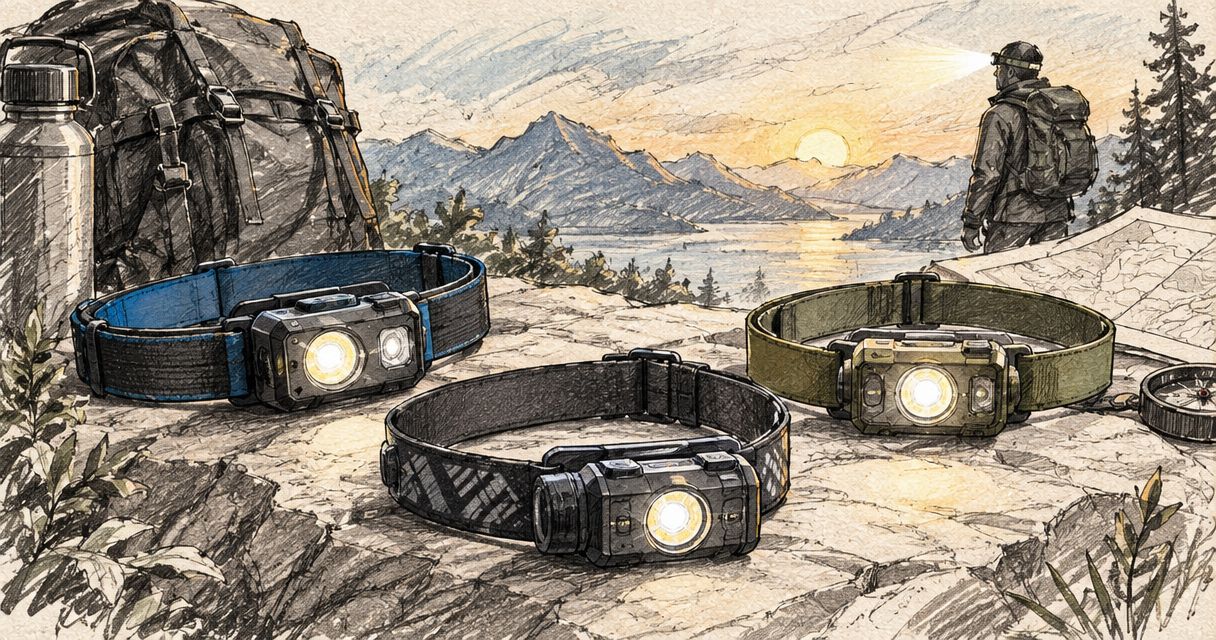
Best overall: a flood-forward Olight rechargeable headlamp with a USB charging port and a red light mode. Best for trail running: the lightest, most stable unit in the range. Best for camping: long-runtime models with a low-output setting. Best for work and power cuts: a tough, water-resistant lamp with a wide beam. Olight SA stocks Olight headlamps for South African buyers, and this guide ranks them by use case for 2026 so you can pick the right type at Olight SA without reading a spec sheet.
- The best Olight rechargeable headlamp in 2026 depends on use: flood beam for work, low weight for running, runtime for camping.
- Check the FL1 runtime figure, which counts hours only until output falls to 10% of initial.
- Buy rechargeable over disposable-battery lamps for regular use; keep a spare power bank for multi-day trips.
- Water resistance matters in South African summer storms: look for an IPX4 rating at minimum.
Why this matters in 2026
A headlamp is the one light you use with both hands busy. Fixing a geyser, pitching a tent, running a trail at 5 am, or getting through a power cut all need a beam that stays where your head points.
Rechargeable headlamps have replaced disposable-battery models for most regular users in 2026. You stop buying cells, you charge from a power bank or wall adaptor, and you can top up during load-shedding or a road trip.
The catch: not every rechargeable headlamp suits every job. A lamp built for a 20 km trail run is the wrong tool for a two-day camping trip, and a spotlight-heavy lamp is a poor choice for close work. This guide sorts the Olight range by what you actually do with it.
What makes the best rechargeable headlamp
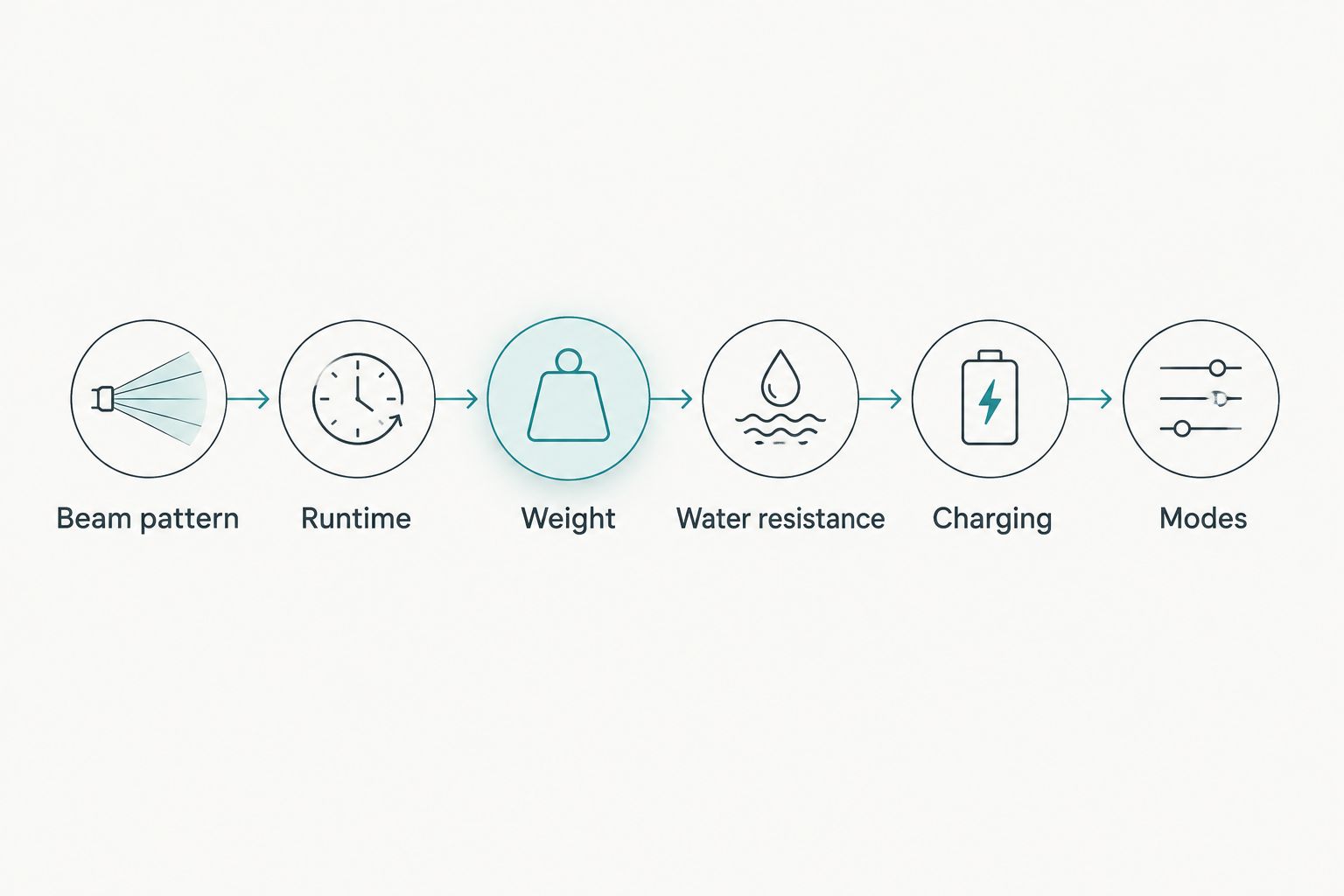
Six criteria decide the ranking. Check them before you look at the table.
- Beam pattern: Flood lights the ground near you and suits close work and walking. Spot throws a narrow beam far and suits navigation and searching. The best all-round lamps offer both.
- Runtime at usable output: Peak lumens last minutes. The number that matters is runtime at the medium setting you will use most of the night.
- Weight and balance: A heavy front-loaded lamp bounces when you run and tires your forehead. Rear-balanced or slim designs feel better on long wear.
- Water and impact resistance: Look for a stated IPX rating and a drop rating. IPX4 means splash-proof. Higher IPX7 and IPX8 ratings cover immersion.
- Charging convenience: A built-in USB charging port means one cable, and you can top up from a power bank in the field.
- Modes and controls: A red light mode preserves night vision and a lock mode stops the lamp switching on in your bag. Buttons you can work with gloves on matter more than extra modes.
Reading the specs the right way
Most headlamp buying mistakes come from misreading the box. Three points cover 90% of it.
Lumens are not distance. Lumens measure total light output. Beam distance, quoted in metres, depends on the reflector and the spot. A 1,000-lumen flood lamp can light a wide area and still throw less far than a lower-lumen spot lamp.
FL1 runtime is generous. The FL1 standard, used by reputable flashlight makers, ends the runtime clock when output falls to 10% of the initial figure, measured after the first 30 seconds. A lamp that claims 10 hours may give you a dim glow for the last few. Plan around the first half of the stated runtime for useful light.
Impact ratings are a floor, not a promise. FL1 impact testing uses a 1 m drop. Treat it as proof the lamp survives a fall from head height onto a hard floor, not a guarantee against being run over.
Olight rechargeable headlamps at a glance
The table maps each use case to the headlamp type that fits it. Check current models, specs and pricing on the store, since stock changes.
| Rank | Use case | Best for | Standout trait | Key limitation |
|---|---|---|---|---|
| 1 | Everyday and general use | Most buyers | Flood and spot balance | Not the lightest option |
| 2 | Trail running | Runners and fast hikers | Low weight, stable fit | Shorter runtime at high output |
| 3 | Camping and hiking | Multi-day trips | Long runtime, red light | More bulk on the head |
| 4 | Work and power cuts | Tradespeople, households | Wide flood, tough build | Short throw for distance |
| 5 | Search and long-range use | Navigation, farm and bush work | Narrow, far-reaching spot | Poor for close work |
1. Everyday rechargeable headlamp: best overall
This is the default pick for anyone buying one headlamp. A lamp with a wide flood, a usable spot, a red light mode and built-in USB charging covers walks, home repairs, car trouble and short camping trips.
Everyday headlamp pros:
- One cable charges it from a wall plug, laptop or power bank
- Flood and spot modes handle both close work and walking
- Medium output runs long enough for a full evening
- Red light mode keeps your eyes adjusted at night
Everyday headlamp cons:
- Heavier than dedicated running lamps
- Peak output drops after a short time to manage heat
Best for: first-time buyers and households that want one lamp in the car or cupboard.
Verdict: Buy. Browse the headlamp range at Olight SA and pick the model with the flood-and-spot combination.
2. Lightweight headlamp: best for trail running
Runners need a lamp that does not bounce. Look for a slim body, a snug strap and a beam wide enough to show the ground three or four strides ahead. Weight matters more here than peak lumens.
Trail running headlamp pros:
- Low weight reduces neck and forehead strain on long runs
- Wide beam shows uneven ground clearly
- Compact size fits a race vest pocket as a backup
Trail running headlamp cons:
- Smaller battery means less runtime at high output
- Fewer advanced modes
Best for: early-morning and evening runners, parkrun regulars and night hikers on well-marked paths.
Verdict: Buy if you run in the dark more than twice a week. Skip it for multi-day trips where you cannot recharge.
3. Long-runtime headlamp: best for camping and hiking
Camping asks for hours at low output, not minutes at high output. A lamp with a low setting for cooking and reading, a red mode for the campsite and a battery you can top up from a power bank wins here.
Camping headlamp pros:
- Low modes stretch a charge across several evenings
- Red light avoids blinding tent mates
- Lock mode stops battery drain inside a pack
Camping headlamp cons:
- Bulkier than running models
- You need a charging source for trips longer than a couple of nights
Best for: hikers, overlanders and anyone camping in the Drakensberg, the Cederberg or a game reserve.
Verdict: Buy. Pair it with a small power bank and it lasts a week.
4. Tough flood headlamp: best for work and power cuts
When the lights go out at home or you are under a bonnet, you need a wide, even beam that lights your whole work area. Water resistance and a solid body matter more than throw.
Work headlamp pros:
- Wide flood lights a full work area without harsh spots
- Water and impact resistance survive workshop conditions
- Hands-free lighting for plumbing, electrics and car repairs
Work headlamp cons:
- Short throw, so it is weak for lighting a distant yard
- Pointing it at people in close quarters is glaring; tilt the head unit down
Best for: tradespeople, DIY households and anyone sitting out load-shedding who wants both hands free.
Verdict: Buy for a home emergency kit. It is the most useful lamp per rand of any type here.
5. Long-throw spot headlamp: best for search and distance
A narrow, focused beam finds a gate, a fence line or a trail marker far ahead. It is a specialist tool and a poor choice for close tasks.
Long-throw headlamp pros:
- Reaches far down a path or across open ground
- Useful for checking boundaries and signalling
- High output modes are available for short bursts
Long-throw headlamp cons:
- Tunnel-vision beam makes close work uncomfortable
- High output drains the battery quickly and generates heat
Best for: farm and reserve work, search tasks and navigation on open terrain.
Verdict: Hold unless you need distance. A flood-and-spot lamp from item 1 covers most people better.
Browse Olight headlamps
See current Olight rechargeable headlamp models, specs and availability.
How the ranking works
The order follows how many buyers each use case covers. The everyday lamp ranks first because it satisfies the largest group across the six criteria. Trail running and camping follow as the two most common outdoor uses in South Africa. Work and long-throw lamps are more specific, so they sit lower. No lamp wins every criterion, and every item above lists what it gives up.
Which Olight rechargeable headlamp should you choose?
If you are undecided, take the everyday flood-and-spot lamp. It is the best Olight rechargeable headlamp for the widest range of buyers in 2026, and you can add a specialist lamp later if your needs narrow.
Pick the runner's lamp if weight is your main complaint. Pick the camping lamp if you spend more than a night away. Pick the tough flood lamp if your lamp lives in a toolbox or emergency kit.
Confirm the exact model specs, IPX rating and runtime figures on the product page before buying, and check availability, since stock moves.
Care tips that extend battery life
- Charge before storage: a partly charged lamp left for months can sit flat. Top it up every few months.
- Avoid heat: do not leave the lamp on a dashboard in a South African summer. Heat shortens lithium battery life.
- Use the lock mode: it stops accidental activation in a bag, which is the most common cause of a dead lamp on arrival.
- Clean the charging port: dust and grit stop a clean connection. A dry brush does the job.
FAQ
What is the best Olight rechargeable headlamp in 2026?
For most buyers it is the everyday headlamp with a flood-and-spot beam and built-in USB charging. Runners should pick a lighter model and campers a longer-runtime one.
Are Olight headlamps worth it compared with cheap headlamps?
For regular use, a quality rechargeable headlamp is worth it because you get stated runtime and impact ratings you can check. Compare the FL1 figures and IPX rating on the product page.
How long does a rechargeable headlamp battery last?
It depends on the output setting. Peak output lasts minutes, while low and medium modes last hours. FL1 runtime ends when output falls to 10% of the starting level.
Can I charge a headlamp from a power bank?
Yes, if the lamp has a USB charging port. A small power bank lets you recharge in the field, which suits multi-day camping and load-shedding.
What does an IPX4 rating mean?
IPX4 means the lamp resists splashing water from any direction. It handles rain but is not designed for immersion. IPX7 and IPX8 cover submersion.
Is a red light mode useful on a headlamp?
Yes. Red light keeps your eyes adjusted to the dark and does not blind people nearby, which makes it useful for camping, map reading and group hikes.
Where can I buy Olight headlamps in South Africa?
Olight SA is the official South African distributor's store for Olight products, run by TorchSA. Check the site for current models and availability.
One last thing
The lumen figure sells the lamp, but the medium-mode runtime and the beam shape decide whether you enjoy using it. Ignore the peak number, read the runtime at the output you will really use, and buy for your most common job in 2026 rather than your rarest one.