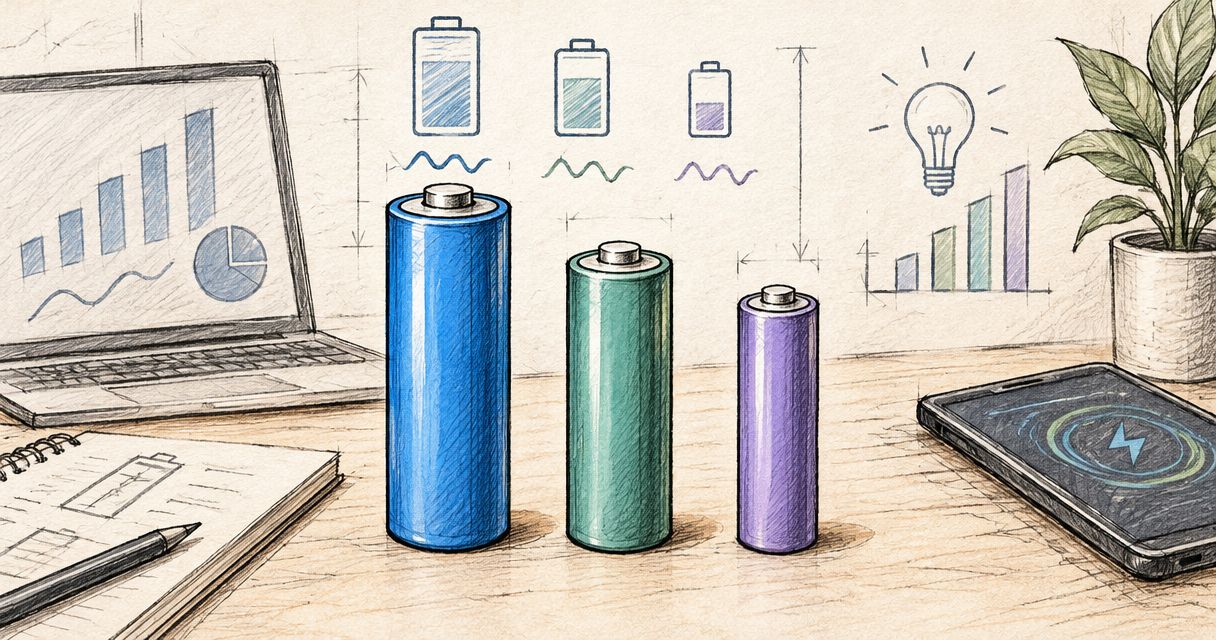
The 21700 holds the most energy of the three. A typical rechargeable 21700 cell is rated 3,000 to 5,000 mAh, an 18650 is 2,000 to 3,500 mAh, and a 16340 is roughly 600 to 800 mAh. Below is the full comparison, what it means for your torch or headlamp, and which cell to buy.
- The 21700 wins on capacity: typically 3,000 to 5,000 mAh, about 10.8 to 18 Wh per cell.
- The 18650 is the middle option at 2,000 to 3,500 mAh and fits the widest range of older lights.
- The 16340 is a compact cell at roughly 600 to 800 mAh. Choose it for size, not runtime.
- Capacity on the cell does not equal runtime. Check which format your Olight actually takes before buying.
Why cell format matters more than the mAh number
A torch is built around one cell format. You cannot swap a 16340 for a 21700 because the body, the spring and the driver are designed for one size. So the real decision is made when you pick the light, and the cell capacity follows from it.
For South African buyers, capacity also decides how long a light carries you through a load-shedding evening. If that is your main use, start with the 21700 battery guide for off-grid and load-shedding households. Olight SA stocks lights across all three formats, so the comparison below is about picking the right one rather than defending one.
Capacity benchmarks: 16340 vs 18650 vs 21700
The table shows typical published ranges for consumer rechargeable lithium-ion cells. Energy in Wh is capacity multiplied by a nominal 3.6 V, rounded.
| Cell format | Nominal size (diameter x length) | Typical capacity | Approx. energy per cell | Best for |
|---|---|---|---|---|
| 16340 | 16 x 34 mm | 600 to 800 mAh | 2.2 to 2.9 Wh | Keychain and compact EDC lights |
| 18650 | 18 x 65 mm | 2,000 to 3,500 mAh | 7.2 to 12.6 Wh | General-purpose torches and headlamps |
| 21700 | 21 x 70 mm | 3,000 to 5,000 mAh | 10.8 to 18 Wh | Long runtime and high-output lights |
The 21700 leads on capacity: its upper range of 5,000 mAh is more than six times the top of the 16340 range and about 1.4 times the top of the 18650 range. The 16340 trails at roughly 600 to 800 mAh. It is a fraction of the energy, which is the price of a cell that is about 34 mm long.
Methodology and limits. Ranges reflect typical published specifications for consumer rechargeable Li-ion cells as of 2026, not lab tests by Olight SA. Capacity on the label is a best-case rating at a gentle discharge. A light drawing high current on turbo will deliver less than the rated figure, and exact results vary by cell brand and age. Treat the table as a guide to the class of cell, not a runtime promise.
What the numbers mean in practice
16340: small cell, short runtime
A 16340 is the same physical size as a CR123A, which is why compact lights use it. Note that a rechargeable 16340 runs at about 3.7 V while a primary CR123A is 3 V, so always check the light's specification before swapping between them.
With under 3 Wh per cell, expect modest runtimes on higher modes. It suits a light you carry daily and top up often. Verdict: Buy for pocket carry, skip for all-night use.
18650: the flexible middle
The 18650 has been the default torch cell for years, so many established lights and third-party packs use it. At 2,000 to 3,500 mAh, it covers most everyday jobs from camping to trade work.
Its limit is the ceiling. If you want the longest runtime from a single cell, a 21700 of the same era usually beats it. Verdict: Buy if your light already uses it, hold if you are choosing a new light with a free choice.
21700: the capacity leader
The 21700 is about 1.5 times the volume of an 18650, working from nominal dimensions, and it uses that room for more capacity and better handling of high current. That is why it shows up in throw-focused lights, searchlights and larger headlamp battery packs.
The trade-off is size and weight. A 21700 light is thicker and longer in the hand. Verdict: Buy for runtime and output, skip for slim pocket carry.
Capacity is not the same as runtime
Runtime depends on output mode, driver efficiency, heat management and cell condition. Two lights with the same 5,000 mAh cell can run very differently, because one may sit on a 1,000-lumen mode while the other idles on a low setting.
There are three things to check before buying:
- Cell format: confirm whether the light takes a 16340, 18650 or 21700, or a proprietary pack.
- Charging method: built-in USB-C charging avoids needing a separate charger, but a dedicated charger helps with spare cells.
- Spare strategy: one extra cell often matters more than chasing the highest mAh figure.
How to use these benchmarks
- Pick the light first, the cell second. The format is fixed by the body, so choose the light for its beam and size, then use the table to understand its battery.
- Choose 21700 when runtime is the priority. Off-grid use, search work and long nights outdoors reward the extra energy per cell.
- Choose 16340 only for compact carry. Accept the short runtime and recharge regularly.
- Do not mix formats in one charger plan. If your kit has several formats, a multi-bay charger saves effort. See how to charge multiple Olight batteries with the Ostation X.
FAQ
Which has more capacity, a 21700 or an 18650?
A 21700 has more capacity. Typical 21700 cells are rated 3,000 to 5,000 mAh against 2,000 to 3,500 mAh for an 18650. The 21700 is physically larger, so it only fits lights built for it.
Can I put an 18650 in a 21700 torch?
No. The cells are different diameters and lengths, and the torch is built for one format. Using the wrong cell or an adapter that the manufacturer does not approve risks poor contact and safety problems.
How many mAh is a 16340 battery?
A rechargeable 16340 is typically around 600 to 800 mAh. That is roughly 2.2 to 2.9 Wh, which is why it suits compact lights rather than long-runtime ones.
Is a 16340 the same as a CR123A?
They share the same physical size but not the same chemistry. A rechargeable 16340 is about 3.7 V and a CR123A is 3 V, so check your light's specification before using either.
Is a higher mAh cell always better?
No. Higher mAh means more stored energy, but the cell must also suit your light and your current draw. A cheap cell with an inflated mAh label can deliver less than a quality cell with a lower rating.
Which cell format is best for load shedding?
The 21700 is the strongest choice for load shedding because it stores the most energy per cell. Keep a charged spare so you are not waiting on a recharge during an outage.
One last thing
The best battery upgrade is often a second cell, not a bigger one. A spare 18650 in your bag will usually save a bad evening more reliably than hunting for the highest mAh label. Whatever format you choose, buy cells and chargers from a source you can return them to.