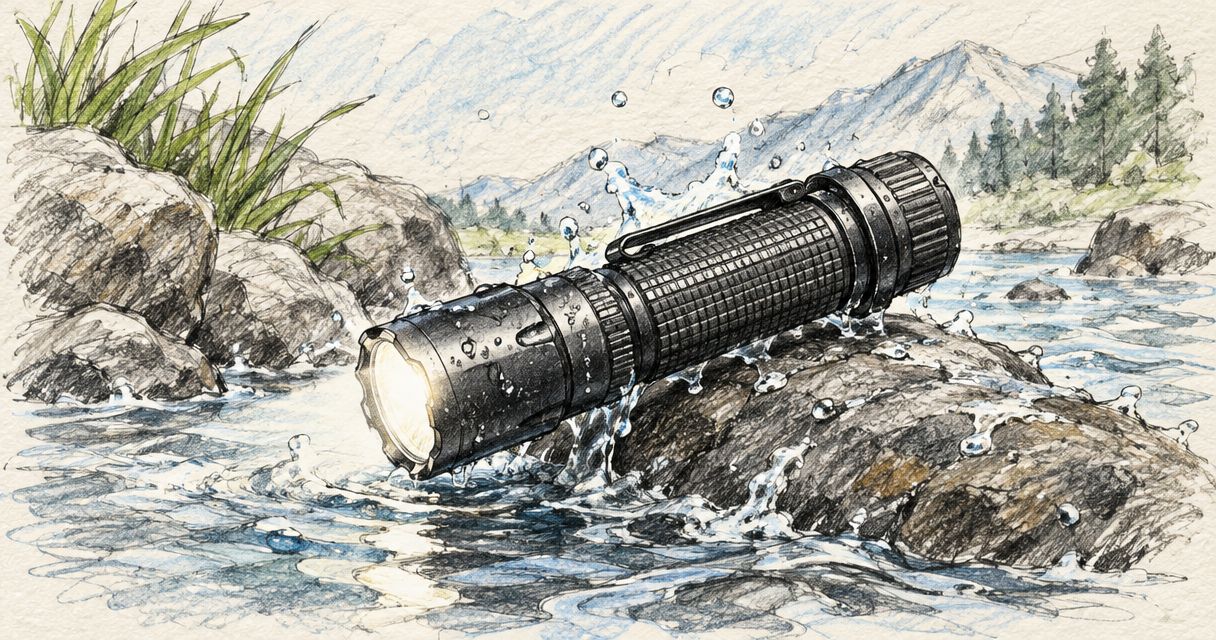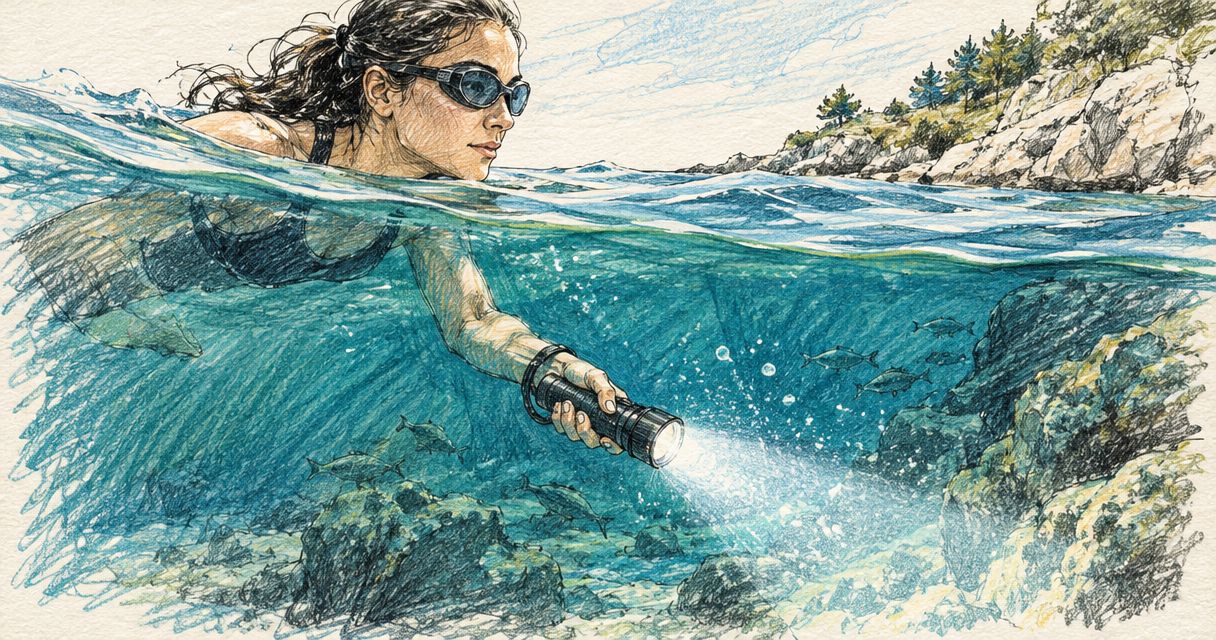
Do not swim with an Olight flashlight unless the instructions for that exact model explicitly permit the activity and conditions. An IPX7 or IPX8 rating describes water-ingress protection under defined test conditions; it is not automatic approval for swimming, snorkelling or diving. Check the permitted depth, duration and operating conditions before taking your torch underwater.
- Can you swim with an Olight flashlight? Only when the exact model’s instructions permit the intended underwater use.
- IPX7 covers temporary immersion testing at 1 metre for 30 minutes, not unrestricted swimming.
- IPX8 immersion conditions are manufacturer-specified; the code alone gives no universal depth or runtime.
- OlightSA is a dedicated South African Olight store; check each model’s instructions rather than assuming range-wide water protection.
Can you swim with an Olight flashlight?
A water-resistance rating alone is not enough to approve an Olight flashlight for swimming. Match the exact model’s instructions to the activity: carrying a torch beside a pool, retrieving a dropped torch and deliberately operating it underwater are different requirements.
The following comparison explains the rating categories, not the rating of any particular Olight model. Check your model’s manual through OlightSA before relying on an immersion claim.
| Rating or instruction | What it establishes | Best for | Limitation |
|---|---|---|---|
| IPX4 | Protection against splashing water under standard test conditions | Splash exposure within the product’s instructions | Does not establish immersion protection |
| IPX7 | Temporary immersion testing at 1 metre for 30 minutes | Assessing protection against temporary immersion | Does not establish swimming or diving suitability |
| IPX8 | Immersion under conditions specified by the manufacturer | Checking a model’s stated immersion conditions | No universal depth or duration follows from the code alone |
| Explicit underwater-use instructions | Permitted activity and operating conditions for the exact product | Deciding whether deliberate underwater use is appropriate | Depth, controls, maintenance and other restrictions still apply |
A higher-looking number does not answer every water question. IEC 60529 treats immersion and water-jet tests separately, so an immersion rating does not automatically establish resistance to every kind of directed water exposure.
Why this matters
A torch that survives an accidental drop into water has demonstrated something different from a torch intended to illuminate a swim. You need clear permission for the intended use, not just confidence that the housing looks sealed.
This distinction matters around South African pools, dams and coastal campsites. Fresh water, treated pool water and seawater are not interchangeable conditions, and a generic IP label does not specify resistance to every substance present in them.
Choose by the activity first, then verify the rating. If underwater operation is essential, reject any model whose documentation leaves that use unresolved. Keep an ordinary outdoor torch on land rather than turning an uncertain specification into an underwater experiment.
IPX7: 1 metre for 30 minutes in the immersion test
IPX7 describes temporary immersion protection under IEC 60529 test conditions. For a small handheld enclosure, the familiar test reference is 1 metre for 30 minutes.
Those figures describe a test, not a recommended swimming session. They do not establish that you can swim for 30 minutes, dive repeatedly to 1 metre or operate every switch while submerged.
The benefit is a defined basis for assessing temporary immersion protection. The limitation is equally important: the rating does not describe every condition your torch will encounter during deliberate underwater use.
Before relying on an IPX7 statement, check that it applies to the exact torch and its required configuration. A rating for a correctly assembled enclosure does not excuse an unsecured battery compartment, damaged seal or incorrectly fitted cover.
Recommendation: treat IPX7 as temporary-immersion protection, not swimming permission. If the manual does not authorise swimming, keep the torch out of the swim.
IPX8: depth and duration come from the manufacturer
IPX8 identifies immersion protection under manufacturer-specified conditions. IPX8 does not mean a universal 2-metre depth limit, unlimited immersion or suitability for diving. Read the accompanying conditions rather than supplying those assumptions yourself.
The useful specification is the complete statement: rating, depth, duration and any operating restrictions. An isolated IPX8 badge leaves essential questions unanswered, including whether controls can be operated underwater and whether the stated conditions cover your activity.
IPX8 has a clear advantage over a splash-only claim when you need evidence about immersion. Its limitation is that the code cannot replace the product-specific instructions.
Do not transfer an immersion limit between models, even within the same range. Similar names, matching charging contacts or a familiar body shape do not establish identical sealing or permitted use.
Recommendation: use the exact model’s published immersion conditions as the boundary. Never reinterpret a depth figure as an approved working depth for swimming or diving.
Why swimming suitability varies
Swimming suitability depends on more than the final digit in an IP rating. These factors determine whether a water-protection claim addresses your intended use:
- Exact model: Check the full product name and version. A specification from another torch does not establish your torch’s limits.
- Depth and duration: Use the manufacturer’s stated conditions. Do not substitute a depth or time borrowed from a different IPX8 product.
- Permitted operation: Confirm whether underwater use includes switching modes or operating controls. Enclosure protection alone does not answer that question.
- Water conditions: Check guidance for seawater and treated pool water separately from the immersion rating.
- Seal condition: Inspect accessible seals, mating surfaces and closures as the manual directs. Damage or contamination requires attention before water exposure.
- Charging requirements: Follow the model’s drying and charging instructions. A torch’s water rating is not permission to connect wet charging equipment.
These checks also expose a common buying mistake: comparing brightness before checking suitability. Lumens describe light output; metres of beam distance describe a beam specification. Neither figure establishes a permitted immersion depth.
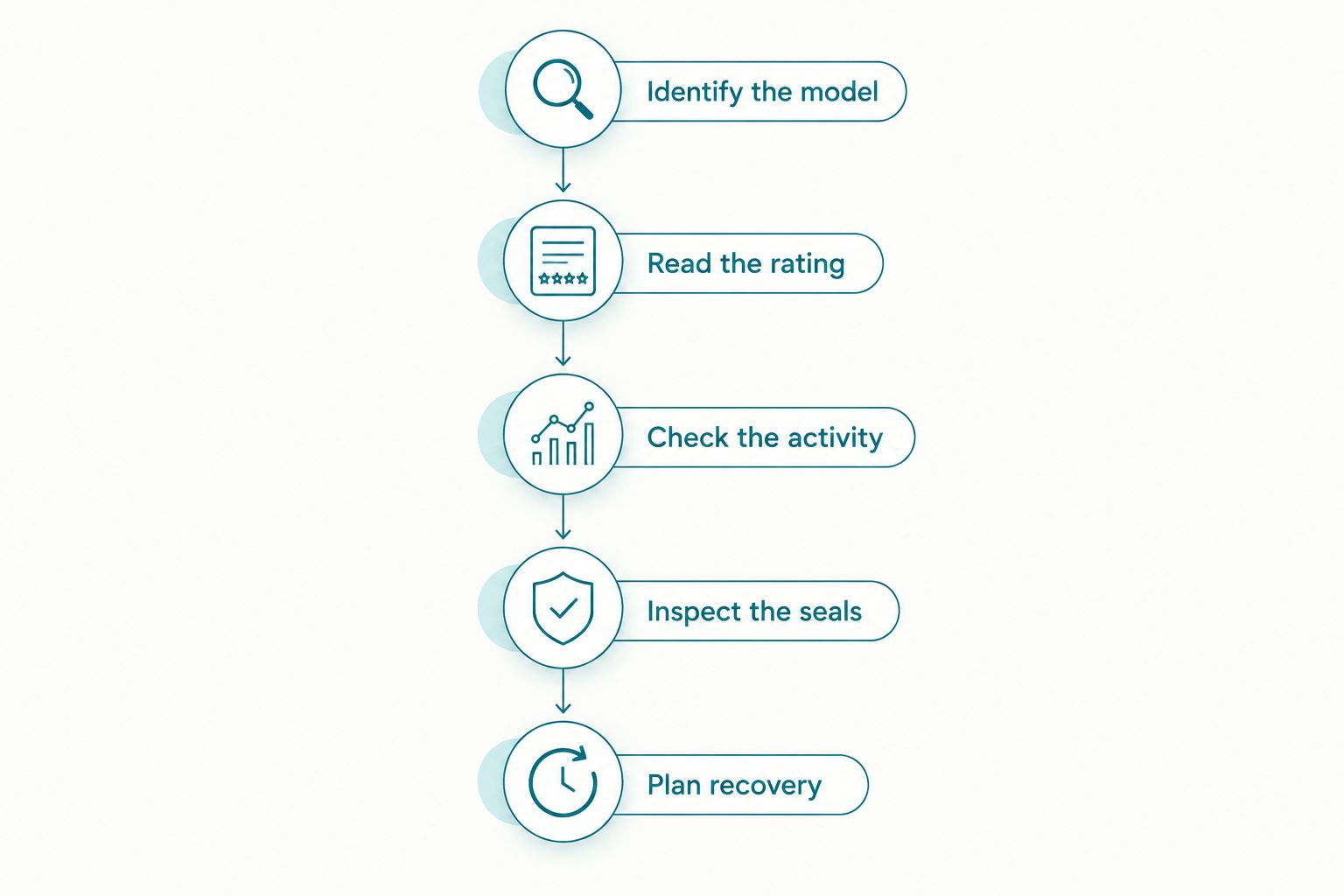
How do you check an Olight before taking it near water?
Use this sequence before a fishing trip, campsite stay or poolside task. Stop at the first unresolved requirement rather than assuming the next check will compensate for it.
- Identify the model. Read the name on the torch and match it to the correct manual. Include the generation or suffix, not just the range name.
- Read the rating. Find the water-protection statement and any accompanying depth or duration. Separate ingress protection from an explicit underwater-use claim.
- Check the activity. Look for instructions addressing deliberate immersion, swimming, diving, water type and control operation. A missing permission is not an approval.
- Inspect the seals. Check user-accessible closures and seals according to the manual. Do not dismantle sealed components to inspect them.
- Plan recovery. Keep the torch accessible from a safe position on land. Do not enter unsafe water to recover equipment.
OlightSA is best suited to South African buyers seeking a dedicated Olight torch store. For water-related use, ask about the exact model’s instructions rather than requesting a broadly described waterproof torch.
State the activity clearly when seeking advice. Holding a light on a riverbank is not the same request as using it beneath the surface, and neither should be answered with brightness alone.
Can you use an Olight flashlight in a swimming pool?
IPX7’s 1 metre for 30 minutes is a test reference, not swimming-pool approval. Use an Olight underwater in a pool only when its exact instructions permit the activity and relevant conditions.
For lighting from the pool edge, keep the torch on land and aim it from a secure position. Do not leave charging leads or powered charging equipment where they can fall into the water.
A treated pool also introduces a separate question from ingress protection: material compatibility. Follow the manufacturer’s guidance on exposure and cleaning instead of assuming that a fresh-water immersion statement covers pool chemicals.
Can you take an IPX8 Olight snorkelling or diving?
IPX8 has no universal depth or duration, so the rating alone does not approve snorkelling or diving. Select a light explicitly intended for the underwater activity and follow its stated limits.
A depth figure beside an outdoor torch is not a substitute for diving instructions. You also need clear information about operation, maintenance and the conditions in which the light is intended to work.
Do not treat a successful shallow-water trial as validation for deeper use. It does not change the published specification or establish suitability for a different activity.
What should you do if your Olight falls into water?
IPX7’s 1 metre for 30 minutes does not guarantee that every dropped torch remains safe to use. Recover it only when you can do so safely, then follow the exact model’s instructions for inspection, cleaning and drying.
Start with the outside. Check for visible damage, moisture around closures and contamination on charging surfaces; do not connect a charger simply because the torch still turns on.
If you suspect water entered the body, stop using and charging the torch. Seek model-specific advice rather than repeatedly switching it on to test whether it has recovered.
For ordinary charging procedures after the equipment is dry and safe to charge, consult the guide to charging an Olight flashlight from a USB-C power bank. Charging compatibility remains a separate check from water protection.
Choose a light for the job beside the water
For bank fishing, campsite chores or walking back from a dam, start with where the light will operate. A land-based lighting requirement does not automatically call for an underwater light, but it still calls for a suitable water rating and careful handling.
Check beam pattern, controls and carrying method after confirming environmental suitability. A useful torch must illuminate the task and remain manageable in the conditions where you will actually use it.
Keep the distinction between performance and protection clear:
- Lumens: Use output figures to compare available light, not sealing.
- Beam distance: Use the rated distance to understand the beam specification, not underwater reach or immersion depth.
- Runtime: Check the mode-specific runtime for the planned task; maximum output alone does not establish usable duration.
- Charging: Verify the required cable, battery and dry charging conditions for the exact model.
Do not buy a brighter torch to solve an unresolved water-suitability problem. More output cannot replace explicit permission for underwater use.
FAQ
Can I swim with any Olight flashlight marked waterproof?
No. A waterproof description does not replace the exact model’s rating and instructions. Swim with the torch only when the manufacturer explicitly permits the intended underwater activity and conditions.
Does IPX7 mean I can swim for 30 minutes?
No. IPX7’s 1 metre for 30 minutes describes temporary immersion testing, not an approved swimming session. Follow the product’s separate operating instructions.
Does IPX8 mean an Olight is safe at 2 metres?
No. IPX8 has manufacturer-specified immersion conditions rather than a universal 2-metre limit. Check the exact model’s published depth, duration and restrictions.
Can I press an Olight’s buttons underwater?
Only operate controls underwater when the exact model’s instructions permit it. An IP rating alone does not establish permission to use every control while submerged.
Can I use an Olight flashlight in seawater?
Use an Olight in seawater only within its model-specific guidance. An ingress rating alone does not establish resistance to salt exposure or specify the cleaning procedure.
Can I charge an Olight straight after it gets wet?
Do not connect wet charging equipment or charge a torch with suspected internal water ingress. Follow the model’s drying, inspection and charging instructions before reconnecting power.
Will OlightSA cover water damage under warranty?
Water-damage coverage depends on the applicable warranty terms and the circumstances of the damage. Ask OlightSA about the exact model and incident; an IP rating alone does not establish warranty coverage.
One last thing
The small depth figure in a water-resistance statement matters more for swimming than the large lumen figure on the box. Keep those specifications separate: one addresses defined immersion conditions, while the other describes light output.
Before your next trip, save the exact model’s manual somewhere you can access without reception. Check the permitted activity before leaving home, not after the torch is already wet.