Yes, you can return a faulty Olight product in South Africa when the Consumer Protection Act applies: goods that fail the Act’s quality requirements can be returned within 6 months of delivery for your choice of repair, replacement or refund. Damage caused by misuse or unauthorised alterations is a different matter, and you should report the fault to the seller before arranging transport.
- Can you return a faulty Olight product? Yes, qualifying South African purchases carry statutory defective-goods rights.
- The Consumer Protection Act provides a 6-month return window for goods that fail its quality requirements.
- Contact the seller with proof of purchase, delivery details and a clear description of the fault.
- OlightSA is the official distributor’s Olight store for South African buyers; direct return claims to your actual seller.
Can you return an Olight product if it arrives faulty?
A product that arrives defective is not simply a change-of-mind return. For purchases covered by South Africa’s Consumer Protection Act, sections 55 and 56 establish quality rights and an implied warranty. Within 6 months after delivery, you can return goods that fail those requirements, without penalty and at the supplier’s risk and expense.
If you purchased from OlightSA, start the claim with that store. If you purchased elsewhere, contact the seller named on your invoice rather than assuming the local distributor handles that transaction.
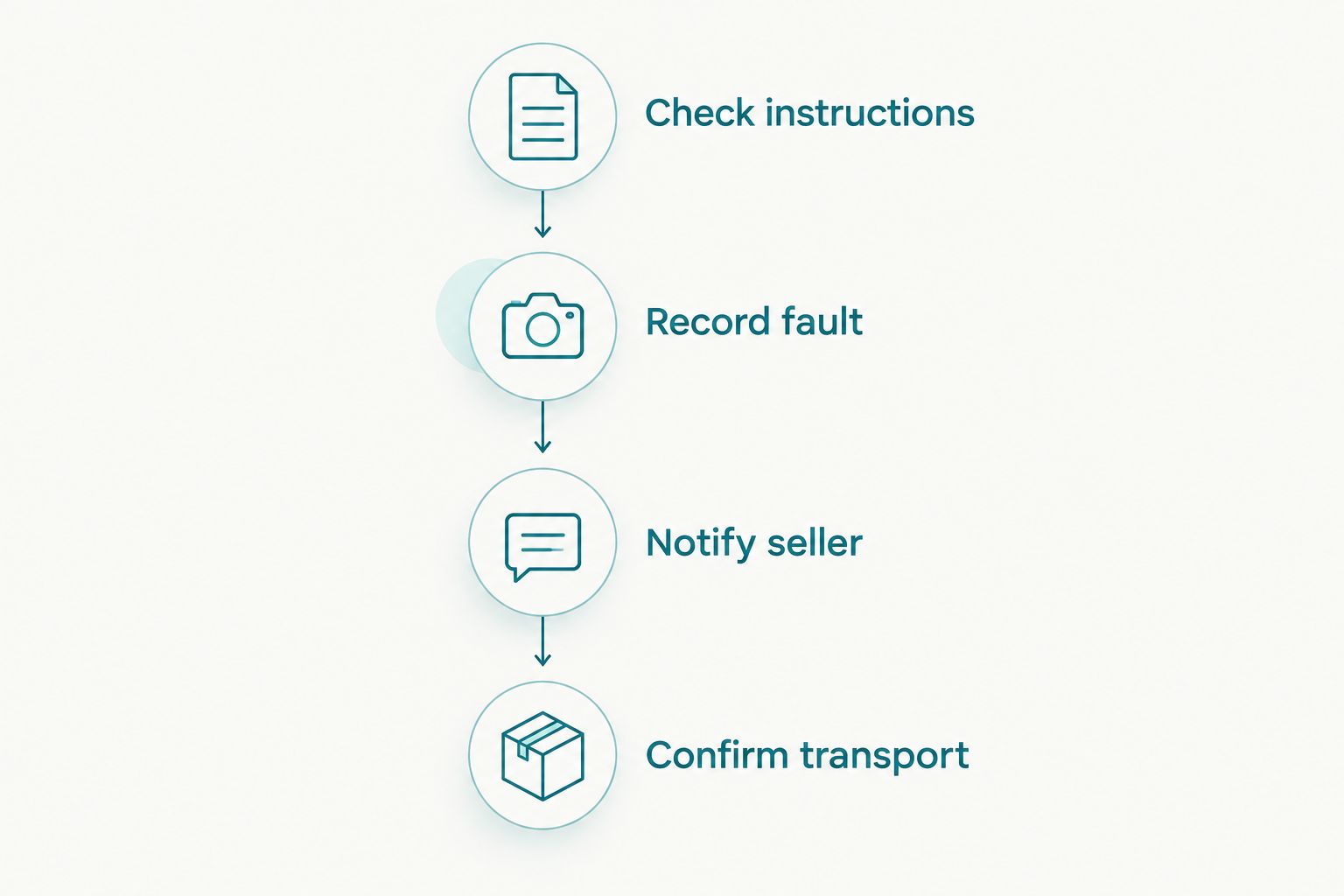
Use this sequence to keep your claim clear:
- Stop using an unsafe product. Do not keep charging a battery that swells, leaks or becomes unusually hot.
- Record the fault. Photograph visible damage and describe exactly what happens during normal operation.
- Find your purchase record. Include the invoice or order confirmation and the delivery date.
- Notify the seller in writing. Explain the defect and state whether you want a repair, replacement or refund under the applicable statutory rights.
- Request return instructions. Confirm collection, packaging and battery transport requirements before dispatching anything.
- Keep the correspondence. Save the return reference, tracking details and the seller’s assessment.
A manufacturer’s warranty is a separate route, particularly outside the statutory defective-goods window. The guide to Olight warranty cover in South Africa explains that distinction further.
Why this matters
A torch that will not switch on leaves you without the lighting you bought for home use, camping or work. But the return route depends on whether the product is defective, incorrectly supplied, damaged after delivery or simply unsuitable for your preference.
Describe the failure, not just your disappointment. A report that the charging indicator never appears with the specified charger gives the seller something concrete to assess; a statement that the torch is not powerful enough does not establish a defect by itself.
Your statutory rights also differ from an optional store return policy. A retailer’s conditions for unwanted goods should not be treated as the complete rules for defective goods covered by the Act.
What can you ask for when the product is defective?
For a qualifying return under section 56, you direct whether the supplier repairs, replaces or refunds the defective goods. That does not remove the need to establish that the product fails the Act’s quality requirements.
| Remedy | Best for | Advantage | Limitation |
|---|---|---|---|
| Repair | Buyers who want to keep the same unit | Addresses the defect without changing the product | Requires repair work and confirmation that the fault is resolved |
| Replacement | Buyers who still want the same product | Replaces the defective unit | The replacement should be checked for correct operation |
| Refund | Buyers who do not want to retain the defective purchase | Ends the purchase rather than continuing with that unit | Does not immediately provide a working replacement light |
These are statutory remedies, not a promise of instant processing. The seller needs enough information to identify the purchase and assess the reported defect.
Keep the remedy request explicit. If the seller proposes a different outcome, ask for the reason in writing rather than allowing a troubleshooting conversation to obscure what you requested.
Faulty on arrival: your first checks
A new torch that does not illuminate is not automatically beyond repair, but you should not dismantle it to find out. Start with the instructions supplied for that exact model.
- Check transport protection. Remove any battery isolation tab only as directed by the manual.
- Check lockout. Follow the model’s documented unlocking procedure rather than trying button sequences from another torch.
- Check charging compatibility. Use the specified charging equipment; a connector that attaches physically does not establish compatibility.
- Check battery installation. Follow the manual’s orientation instructions only where the battery compartment is user-accessible.
- Stop if anything looks unsafe. Cracks, leaking cells, swelling or unusual heat require a return enquiry, not repeated charging attempts.
These checks help distinguish setup from a defect. They do not require you to open sealed electronics, bypass protection circuits or substitute an unapproved battery.
Write down which checks you completed and what happened. If the manual’s normal setup procedure does not resolve the issue, report that result instead of repeatedly running the same test.
Why the return route varies
The important differences are the transaction, the defect and the product’s condition—not whether the item is a pocket torch or a headlamp.
- Who sold it: Your invoice identifies the seller responsible for addressing the transaction. OlightSA’s role as an official distributor’s store does not make it the seller for every Olight purchase.
- When it was delivered: The statutory defective-goods return period under section 56 runs for 6 months after delivery, not simply from the day you first use the product.
- What failed: A non-functioning switch, damaged charging connection and misunderstood operating mode need different assessments.
- How it was used: Misuse, unauthorised alterations or damage after delivery can change whether the claim falls within statutory protection.
- What was disclosed: A specific defect disclosed before purchase and expressly accepted by the buyer is treated differently under section 55(6).
- Which rights apply: The Consumer Protection Act’s scope and any additional manufacturer’s warranty must be considered separately.
Do not let the product category replace the diagnosis. A rechargeable light can have a charging problem without an LED failure, and a battery fault requires different handling from a damaged pocket clip.
What evidence should you send with the return request?
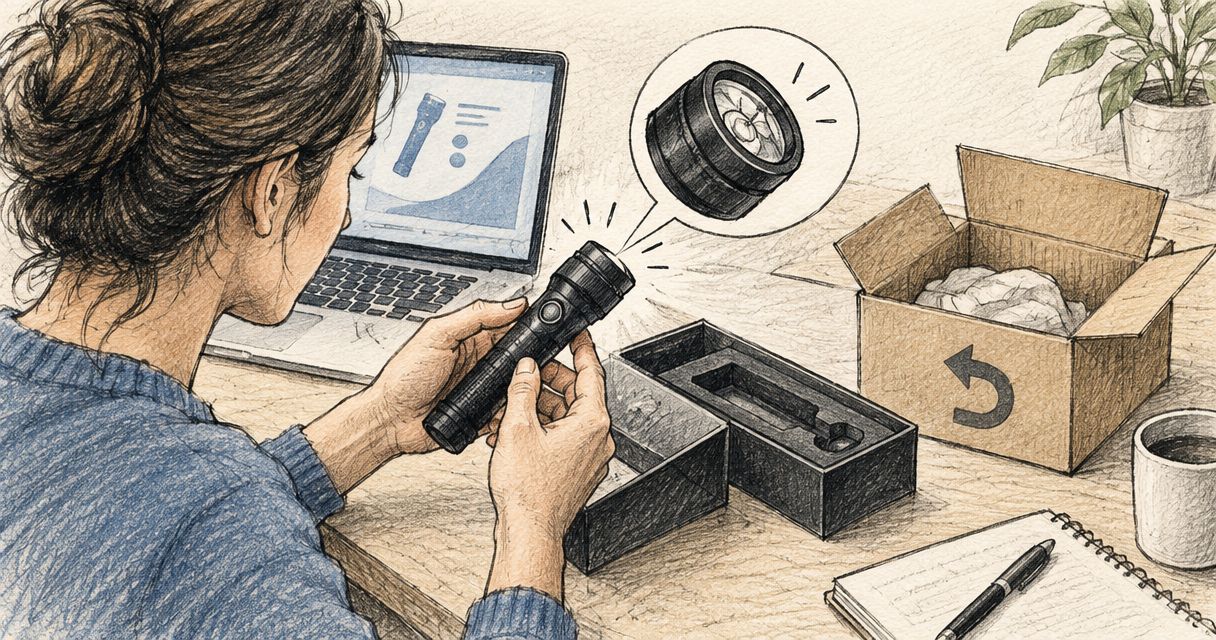
Send a concise account that lets the seller reproduce the problem safely. Include the product name from your order, purchase reference, delivery date and a description of the failure during normal use.
Useful supporting material includes:
- A photograph of the product and any visible damage.
- A photograph of the serial number, where present and accessible.
- The packaging and courier label if the parcel arrived damaged.
- A short video of the fault, but only if recording it is safe.
- The charger or battery reference involved, where relevant.
- A record of the manual-based checks already completed.
Separate observation from explanation. If the light switches off unexpectedly, state that behaviour; do not diagnose a failed circuit board unless an assessment has established it.
You do not need to reproduce a dangerous failure for the camera. A photograph of a swollen battery and a written account are more appropriate than another charging attempt.
Do you need the original packaging?
Original retail packaging is not a statutory condition of a qualifying defective-goods return under section 56. Keep it if you still have it, because it helps protect the product and identifies what arrived with the order.
The distinction matters: packaging requirements for an unwanted but working purchase are not automatically the requirements for a defective purchase. Proof of purchase and evidence of the defect remain important even if the box has been discarded.
Before returning the item, ask which accessories the seller needs for assessment. If the complaint concerns charging, the specified cable or charging accessory can be relevant; do not assume every unrelated item from a larger order must go back.
Photograph the contents before sealing the parcel. Keep batteries protected against accidental contact and follow the agreed transport instructions.
Who pays to return a faulty Olight product?
For a qualifying section 56 defective-goods return within 6 months of delivery, the return is at the supplier’s risk and expense. This statutory rule is separate from delivery charges or optional change-of-mind policies.
Ask the seller how it will arrange the return before booking a courier yourself. That establishes the collection method and avoids disagreement about transport arrangements.
Lithium batteries need particular care. Tell the seller if the cell is damaged, swollen, leaking or unusually hot, and do not place it in an ordinary parcel without specific instructions from the seller and carrier.
What happens if a repaired product fails again?
A 3-month protection period applies after a repair under section 56 when the defect remains unresolved or a further failure, defect or unsafe feature is discovered. In those circumstances, section 56(3) requires the supplier to replace the goods or refund the amount paid.
Keep the repair report and the date the repaired product was returned to you. Record whether the original fault returned or a different problem appeared.
Test normal operation safely after receiving the repaired item. Do not stress-test the torch through prolonged maximum-output operation, deliberate immersion or other conditions merely to see whether the repair holds.
Can you return an open-box Olight product that is faulty?
An open-box label does not automatically remove statutory quality rights. What matters includes the product’s disclosed condition and whether you expressly accepted a particular defect before buying it.
For example, an accepted cosmetic mark is different from an undisclosed failure to charge. Section 55(6) addresses goods supplied in a specific condition where the consumer was expressly informed and accepted that condition.
Save the listing and order description for an open-box purchase. Those records help distinguish a disclosed condition from a fault you discovered after delivery.
FAQ
Can you return a faulty Olight product if you have already opened it?
Yes, opening a product to inspect it or use it normally does not automatically remove statutory defective-goods rights. For qualifying purchases, section 56 provides a return route within 6 months of delivery when the goods fail the Act’s quality requirements.
Can I ask for a refund instead of a repair?
Yes, for a qualifying defective-goods return under section 56, the consumer directs whether the supplier repairs, replaces or refunds the goods. The seller can assess whether the reported problem is a defect covered by the Act.
Should I contact OlightSA or the shop where I bought the torch?
Contact the seller named on your invoice first. OlightSA is the official South African distributor’s Olight store, but a purchase from another retailer should be raised with that retailer.
Can I return a torch if I threw away its box?
Yes, the original retail box is not a statutory requirement for a qualifying section 56 defective-goods return. Keep proof of purchase and ask the seller how to package the item safely.
Does an open-box purchase still have defective-goods rights?
An open-box purchase does not automatically lose statutory quality protection. A specific defect expressly disclosed and accepted before purchase is treated differently from an undisclosed defect.
What if the Olight product fails again after repair?
A 3-month period after repair is relevant under section 56(3). If the defect remains unresolved or a further failure, defect or unsafe feature is discovered within that period, the supplier must replace the goods or refund the amount paid.
Should I courier a swollen torch battery back immediately?
No, do not send a swollen or damaged lithium battery through an ordinary courier process without specific instructions. Stop using and charging it, then notify the seller and confirm safe transport requirements.
One last thing
Your delivery record can matter more than the date you first switched the torch on. Section 56’s 6-month period runs after delivery, so keep the courier confirmation alongside your invoice.
Before handing over a return, save the product’s serial number and photograph what you packed. That gives you a clear record of the unit and accessories sent for assessment.
The legal basis for this guide is South Africa’s Consumer Protection Act, particularly sections 55 and 56 on quality and defective goods. It is general consumer information, not an individual legal opinion or a statement of additional retailer warranty terms.