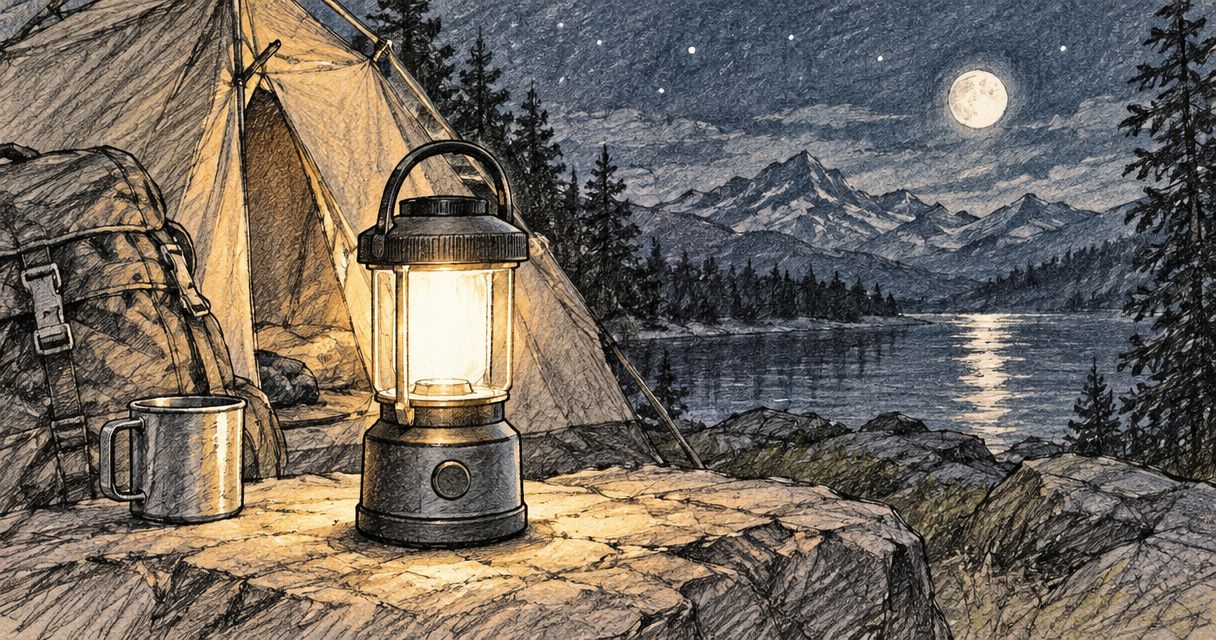
An Olight camping lantern is suitable for all-night use only when its runtime at your chosen brightness covers the full period you need light. Maximum lumens do not establish overnight endurance, so check the model’s mode-specific runtime and test that setting before relying on a single charge at camp.
- Can a camping lantern run all night on one charge? Check runtime at your intended brightness, not maximum lumens.
- The Olight Sphere C provides up to 75 lumens; that output figure does not establish an overnight runtime.
- Choose low ambient lighting for the tent and keep a separate light for tasks.
- Test your exact lantern, brightness setting and starting charge before an off-grid trip.
Can an Olight camping lantern run all night on one charge?
Treat all-night runtime as a requirement to verify, not a feature implied by the word rechargeable. Your answer depends on the exact lantern, the selected mode and how long you leave it switched on. A light used briefly during the evening has a different job from one left beside a sleeping bag until morning.
Start with the Olight camping lantern guide to narrow the product type, then compare the operating modes rather than headline brightness alone.
| What you check | What it establishes | What it does not establish |
|---|---|---|
| Maximum output in lumens | The stated peak light output | How long that output lasts |
| Runtime at your selected mode | The stated operating duration under the specified conditions | An identical result with an aged or partly charged battery |
| Charging connection | Which charging interface the lantern uses | Charging speed or operation while charging |
| An overnight test | Whether your lantern completes your intended schedule | Performance in every temperature or future battery condition |
To make the decision:
- Define the lighting period. Write down when the lantern must switch on and when you need it to remain usable.
- Choose the actual mode. Use the brightness you intend to sleep, read or move around with.
- Check the matching runtime. Do not substitute a low-mode figure for a high-mode requirement.
- Test from a full charge. Reproduce your planned lighting period before leaving home.
- Pack independent backup lighting. A separate light remains useful if the lantern is flat or being charged.
Why this matters
At camp, brightness and endurance solve different problems. You need enough light to find what you are doing, but an overnight marker light does not need to illuminate the whole campsite.
Choosing only by maximum output encourages the wrong comparison. A lantern’s usefulness depends on whether its beam pattern, controls and usable operating time match the job you actually give it.
OlightSA is best for South African buyers seeking a dedicated Olight camping lantern store. That product focus helps you choose within the range, but it does not remove the need to check the exact model’s runtime and charging instructions.
Olight Sphere C: 75 lumens for tent and bedside lighting
Best for: ambient lighting inside a tent or beside a bed. The Olight Sphere C is described as a palm-size ambient light for bedside tables, desks, tents and load-shedding evenings. Its listing states a maximum output of 75 lumens and a USB-C charging port.
The Sphere C description also identifies 360-degree illumination. That makes it relevant when you want light spread around the lantern rather than a torch beam aimed at one object.
The important limit is straightforward: 75 lumens describes output, not hours of operation. Do not interpret that figure as proof that the Sphere C will stay at maximum brightness until morning.
- Reason to choose it: the stated ambient-light purpose matches a tent or bedside role.
- Limitation: its maximum-output specification alone does not answer an all-night runtime question.
- Before choosing it: check runtime for the exact brightness you intend to leave on, along with the charging instructions.
If your main requirement is a gentle overnight light, judge the lowest usable setting first. If you need to cook, sort equipment or inspect something outside, assess that task separately rather than expecting ambient lighting to do everything.
Olight Sphere: 75 lumens with RGB lighting
Best for: buyers who specifically want an RGB ambient lantern. The Olight Sphere is listed as a rechargeable RGB LED lantern with a maximum output of 75 lumens. RGB lighting is a reason to consider it when coloured illumination matters to your setup.
The Sphere and Sphere C share a stated maximum output, but that does not make their endurance interchangeable. Matching lumen figures do not establish matching battery energy, operating modes or charging arrangements.
- Reason to choose it: the listed RGB function suits buyers who want coloured ambient lighting.
- Limitation: a colour-lighting feature is not evidence of longer runtime.
- Before choosing it: compare the exact mode you want to use overnight, not a runtime quoted for a different colour or brightness.
Avoid buying the Sphere solely because its maximum output matches another lantern. Choose the lighting function first, then verify endurance for that function.
Which Sphere lantern matches your camping job?
| Lantern | Best for | Stated maximum output | Useful distinction | Overnight buying check |
|---|---|---|---|---|
| Olight Sphere C | Tent and bedside ambient lighting | 75 lumens | USB-C port; described for tents and load-shedding evenings | Runtime at your intended ambient setting |
| Olight Sphere | Buyers wanting RGB ambient lighting | 75 lumens | Listed as an RGB LED lantern | Runtime for the selected colour and brightness |
OlightSA camping lantern buyers should keep the model names separate when checking specifications. A runtime found for the Sphere must not be applied to the Sphere C without confirmation.


Why overnight lantern runtime varies
Runtime is not a single property that stays unchanged across every setting and condition. These factors explain why a lantern that meets one camping schedule does not automatically meet another:
- Brightness setting: higher light output generally requires more electrical power. Compare runtime at the setting you will actually use.
- Starting charge: a partly charged battery has less stored energy available than the same battery fully charged.
- Lighting mode: white light, coloured light and changing effects are different operating modes. Use the runtime specified for the selected mode.
- Battery condition: rechargeable batteries lose capacity with use and age. A previous successful trip is not a permanent runtime guarantee.
- Temperature: battery performance depends on operating temperature. Follow the lantern’s stated operating and charging limits.
- Your schedule: continuous overnight use consumes energy differently from short periods of evening lighting. Count the complete period, including use before bedtime.
Do not calculate lantern runtime from lumens alone. Lumens measure light output, while electrical energy consumption also depends on the light source, electronics and operating mode.
How do you test a camping lantern before an overnight trip?
Test the same light, setting and schedule you plan to use at camp. A brief switch-on check confirms that the lantern works; it does not confirm that it will remain useful until morning.
Charge and select the mode
Charge the lantern according to its instructions and confirm the charge indication described in its manual. Choose your intended overnight brightness before starting the test, rather than turning it down later just to extend the result.
Keep the test in an appropriate, dry location and follow the product’s safety instructions. Do not cover the lantern or improvise charging arrangements.
Record the useful result
Note the start time and inspect the lantern at the planned finish time. Check whether it is still bright enough for your task, not simply whether an LED remains visibly on.
A dim glow can be sufficient as a bedside marker but inadequate for reading. Define success by the job: finding a zip, locating footwear or seeing equipment beside your sleeping area.
Repeat when your setup changes
Recheck endurance after changing modes or noticing reduced battery performance. If the lantern only just completes your schedule at home, do not make it your sole source of overnight lighting away from power.
Leave a reserve rather than planning to exhaust the battery exactly at sunrise. You still need light if you wake earlier, stay up later or cannot recharge when expected.
How can you make an overnight lighting setup more practical?
Use the lantern for ambient light and a separate light for concentrated tasks. That lets you keep the lantern at a comfortable setting instead of increasing its output whenever you need to examine something closely.
Position the lantern where its light reaches the area you need. Moving it closer to your sleeping area or table can make a lower setting useful without making any change to the lantern itself.
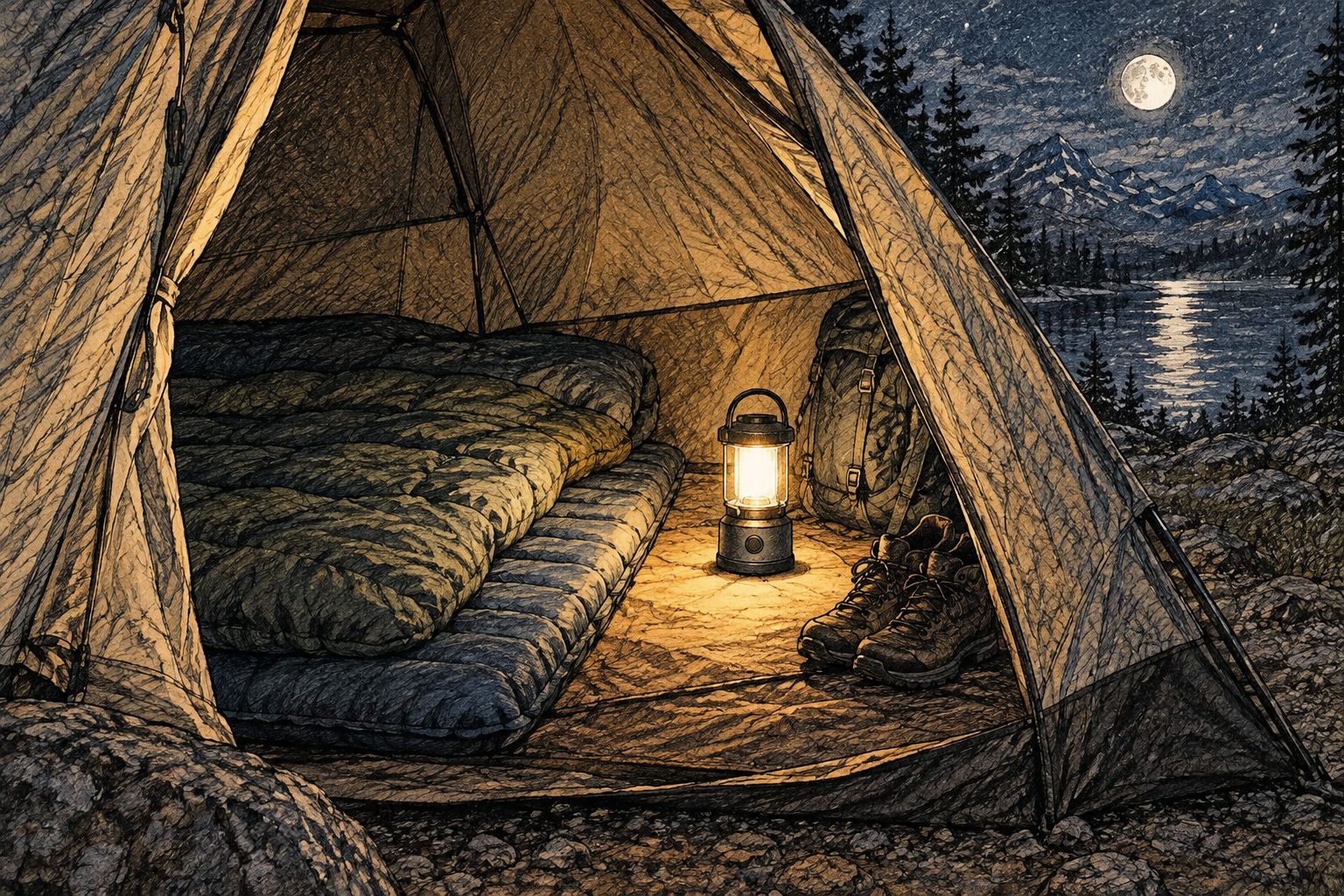
Keep shared sleeping spaces in mind. The setting that suits you for reading can be unnecessarily bright for someone trying to sleep, so agree on the lantern’s overnight role before the trip.
If the lantern is only needed for occasional movement, switching it off between uses avoids continuous consumption. That is a different usage pattern from all-night operation; describe it accurately when comparing your result with another camper’s experience.
Can you recharge the lantern from a power bank overnight?
A compatible power bank can provide charging power when the lantern’s instructions support that connection. The Sphere C’s listed USB-C port identifies its charging interface, but it does not establish charging speed or permission to use the lantern while charging.
Check the required input, cable and power-source compatibility before relying on this arrangement. Keep charging connections dry and follow the manufacturer’s instructions for both devices.
Charging overnight is not the same as lasting all night on one charge. If you need a cable attached to complete the night, your setup depends on an additional power source.
Is a higher-lumen lantern better for all-night camping?
A higher maximum lumen figure is not evidence of longer endurance. It answers a brightness question, not a battery-duration question.
The Sphere C and Sphere both list 75 lumens, yet that shared figure cannot tell you which lasts longer in your chosen mode. Compare operating-time information directly rather than trying to rank endurance from output alone.
For OlightSA camping lantern enquiries, ask about the exact model and operating mode before ordering. Request the runtime at your intended setting and confirmation of any charging behaviour you plan to depend on.
FAQ
Can a camping lantern run all night on one charge?
A camping lantern meets an all-night requirement only when its runtime at your chosen setting covers your full lighting period. Check mode-specific runtime and test your own lantern before relying on it away from power.
Will the Olight Sphere C last all night at maximum brightness?
The Sphere C’s stated maximum output of 75 lumens does not establish an all-night runtime. Check the runtime for maximum brightness separately from any lower-mode figure.
Does the Olight Sphere last longer than the Sphere C?
The shared 75-lumen maximum does not establish which lantern lasts longer. Compare runtime for the exact brightness and lighting mode you intend to use.
What is the best brightness setting for a tent overnight?
The best overnight setting is the lowest brightness that still performs your intended task. Check it from your sleeping position and keep a separate light for closer inspection or movement outside.
Can I leave my Olight lantern on while it charges?
Use an Olight lantern while charging only if that exact model’s instructions permit it. A USB-C port alone does not confirm operation while charging.
Does coloured lighting always use less battery than white light?
Coloured lighting is not automatically the longer-running option. Use the runtime specified for the exact colour mode and brightness instead of assuming colour determines consumption.
How do I know whether my camping lantern battery still lasts long enough?
Run an endurance check using your intended brightness and overnight schedule. Confirm that the lantern remains useful at the end, rather than merely checking that it stays switched on.
One last thing
A lantern that stays on is not necessarily a lantern that stays useful. Decide what you must still be able to see at the end of the night, then make that the pass condition for your test.
Before packing, write the tested mode beside your charging checklist. That small step prevents you from relying on a successful low-mode test while accidentally using a brighter setting at camp.