Best Olight flashlight by lumens in 2026: pick the 1,000-lumen class for most buyers, go to searchlight output only for hunting or search work, and keep a low-output keychain light as a backup. Lumens measure total light output. They do not measure how far a beam throws, and they do not tell you how long the light holds that output.
This ranking sorts Olight rechargeable flashlights into four lumen tiers, because a single list of models ignores the real decision: how much output you need, and what you give up to get it. Olight SA is the official South African distributor store, run by TorchSA, so every tier below maps to torches you can buy locally.
- Best overall by lumens in 2026: the high-output 21700 class, which balances brightness, runtime and size.
- Best for hunting and search work: searchlight-class output. Buy it only if you need long range.
- Best for everyday carry: mid-output pocket lights. More lumens mean more heat and shorter runtime.
- Best backup: a low-output rechargeable keychain light. Skip it as your only torch.
Why lumens alone mislead
A bigger lumen number looks like a better torch. It often is not.
Most high-output lights hit their peak for a short burst, then step down to protect the battery and the LED from heat. The number on the box is a peak. The number you live with is the sustained output.
Two lights with the same lumens can also behave very differently. A deep reflector throws a narrow beam far. A wide, smooth beam lights a room or a campsite. Lumens say nothing about that split.
Olight SA customers in South Africa add one more variable: load shedding. For a backup torch, runtime at a usable output matters more than a peak figure you use for 30 seconds.
What makes the best flashlight by lumens
These are the criteria this ranking uses. Check them before you look at the table.
- Usable output, not peak output. Check the lower modes. A light you run at medium for hours is judged on medium.
- Runtime at the output you will use. The ANSI FL1 standard measures runtime until output falls to 10% of its initial level, so read runtime figures with that in mind.
- Battery format. Rechargeable cells such as the 21700 size give more capacity than the small cells in pocket lights.
- Size and carry. A light that stays at home delivers zero lumens when you need them.
- Heat behaviour. High output in a small body forces step-down. Bigger bodies hold output longer.
- Match to your use. Hunting, hiking, camping and EDC want different output bands.
Lumen tiers at a glance
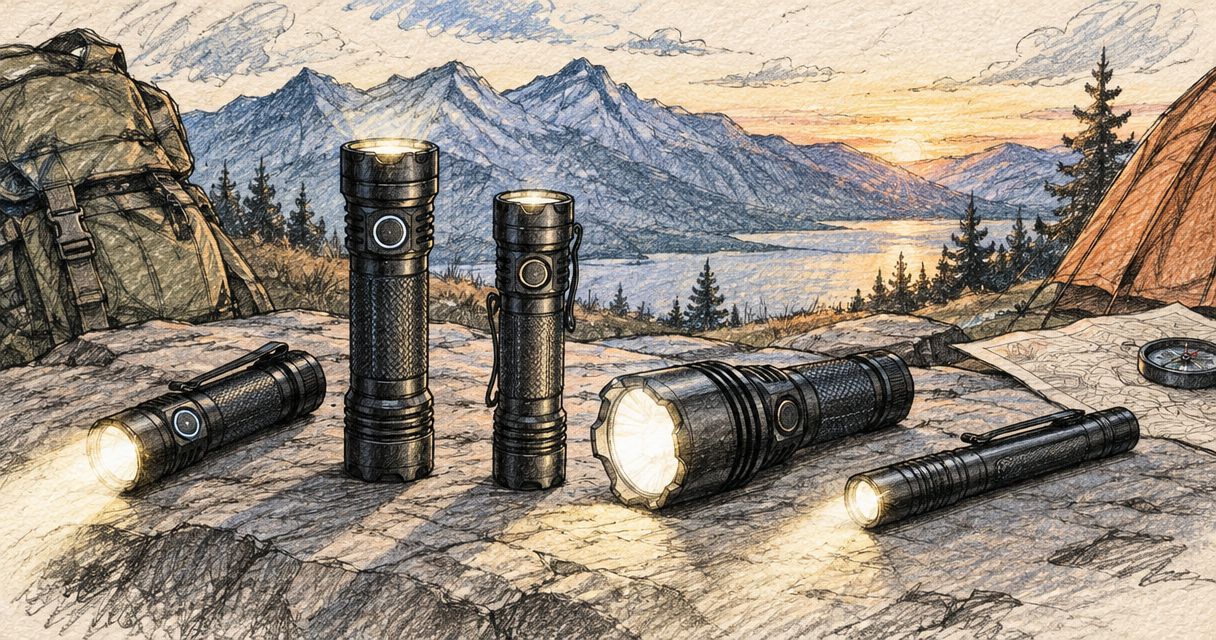
| Tier | Output class | Best for | Standout strength | Key limitation |
|---|---|---|---|---|
| 1. Searchlight class | Highest output | Hunting, search work, large open areas | Long-range reach | Large, heavy, short at peak |
| 2. High-output 21700 class | High output | Best overall, hiking, home backup | Output and runtime balance | Bulkier than a pocket light |
| 3. Mid-output EDC class | Moderate output | Everyday carry | Pocketable, long at medium | Less reach than larger lights |
| 4. Low-output keychain class | Low output | Backup, close tasks | Always on you | Limited range and runtime |
The tiers are ordered from most lumens to fewest. The verdict for each tier follows, with a distinct use case per slot.
1. Searchlight class: best Olight output for hunting and long range
This is the top of the lumen scale. Searchlight-class torches trade portability for reach and raw output.
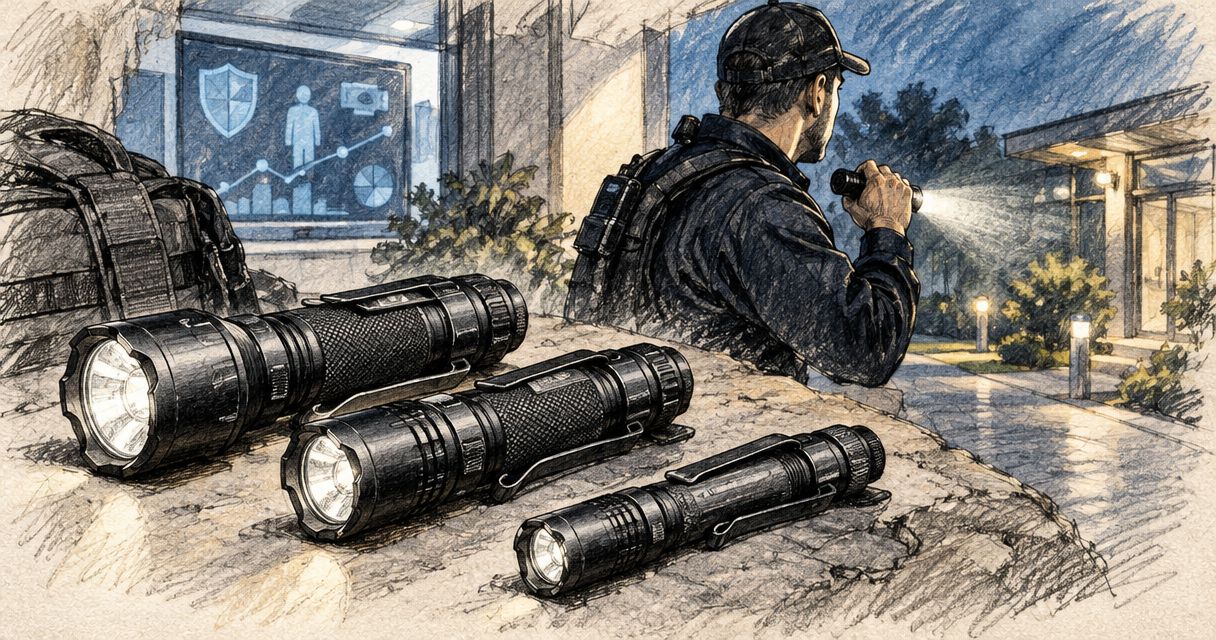
They are built for people who need to see targets or terrain a long way off. That is hunting, farm security patrols and search tasks. If you work this way, read the dedicated guide to the best Olight searchlights for hunting.
Searchlight class pros:
- Highest lumen output in the Olight range
- Built for distance, not just brightness
- Suits open ground where a pocket light fades out
Searchlight class cons:
- Large and heavy to carry all day
- Peak output cannot be held indefinitely
- Overkill for indoor use or camp tasks
Best for: hunting, patrols and search work.
Verdict: Buy if you need range. Skip if your use is home or hiking.
2. High-output 21700 class: best Olight flashlight by lumens overall
This is the default pick. Torches in this class run on a 21700 rechargeable cell, which carries more capacity than the smaller cells used in pocket lights. That capacity lets the torch hold a high output for longer before stepping down.
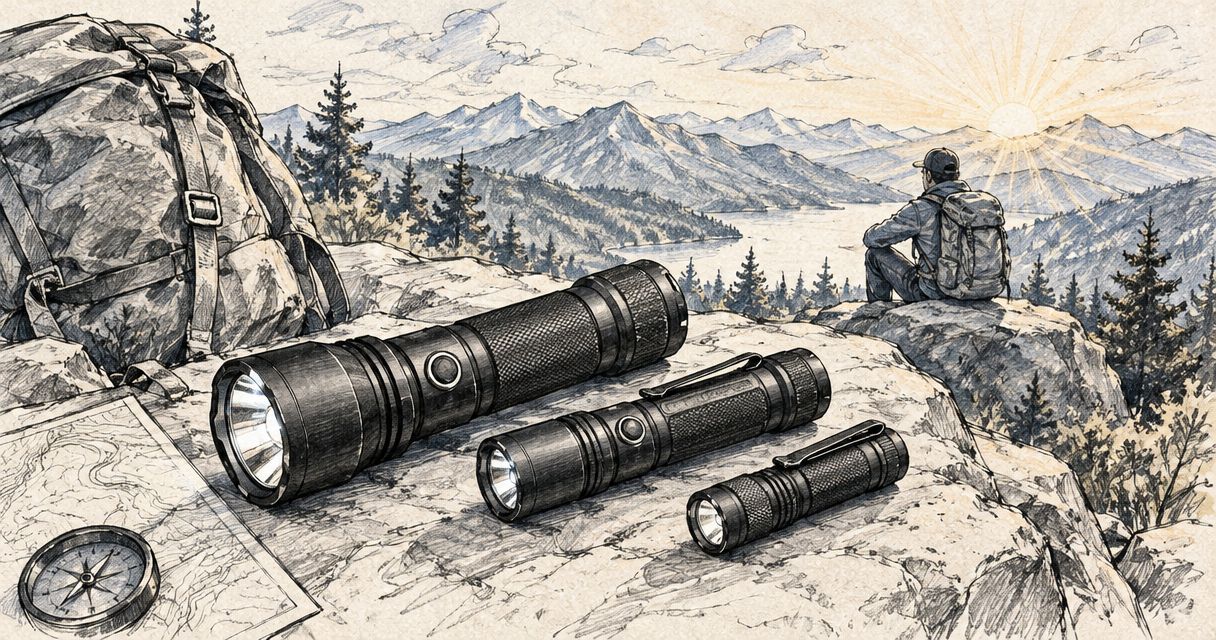
For most South African buyers, this is the sweet spot between lumens and usable runtime. It is bright enough for a trail, a campsite or a power cut, and still small enough to carry in a bag or glovebox.
The full ranking lives in the guide to the best Olight flashlights with 21700 batteries. Hikers who want to compare against trail needs should also read the best Olight flashlights for hiking.
High-output 21700 class pros:
- Strong output with real runtime behind it
- Rechargeable, so no spare cells to stock
- Works for hiking, camping, home and car
High-output 21700 class cons:
- Heavier and longer than an EDC light
- Peak output still steps down under heat
- More than you need for close-range tasks
Best for: the one torch you want to own.
Verdict: Buy. This is the best Olight flashlight by lumens for most people in 2026.
3. Mid-output EDC class: best Olight lumens for everyday carry
Everyday carry lights give up headline lumens for size. You get a torch that lives in a pocket, on a belt or on a bag strap.
The point of this tier is that moderate output is enough for most real tasks: finding a keyhole, walking a dark car park, checking under a bonnet. A light at a moderate output runs far longer than the same light at peak, so the usable value is higher than the lumen figure suggests.
Compare options in the guide to the best Olight EDC flashlights for everyday carry.
Mid-output EDC class pros:
- Fits a pocket and gets carried daily
- Low and medium modes stretch runtime
- Enough light for most urban tasks
Mid-output EDC class cons:
- Shorter reach than the 21700 class
- Peak output heats a small body quickly
- Small cells hold less energy
Best for: daily carry, commuters, tradespeople.
Verdict: Buy as a second torch next to a 21700 light.
4. Low-output keychain class: best Olight backup light
The lowest tier is the torch that is always with you. Keychain lights are rechargeable and tiny. They solve close-range problems: a lock, a bag, a dark corner.
They are a backup, not a primary light. Output and runtime are limited by the cell size, and no tuning changes that. See the options in the guide to the best Olight keychain flashlights.
Low-output keychain class pros:
- Always on your keys or bag
- Rechargeable with no spare cells
- Enough for close tasks
Low-output keychain class cons:
- Short reach
- Limited runtime at higher modes
- Not a substitute for a real torch
Best for: a backup that costs you no carry weight.
Verdict: Hold as a primary light. Buy as a second one.
How this ranking works
The tiers follow the criteria above. Output class sets the order. Usable runtime, carry size and heat behaviour set the verdict inside each tier. No tier wins on lumens alone. The 21700 class wins overall because it keeps more of its output for longer than any smaller format.
Which Olight flashlight should you choose?
Start from the task, not the number.
- One torch for everything: the high-output 21700 class.
- Hunting or long-range work: searchlight class.
- Pocket carry every day: mid-output EDC class.
- Backup on your keys: low-output keychain class.
If you are undecided, buy the 21700 class first. It covers the widest range of jobs in 2026, and you can add a smaller light later. Browse the full range at Olight SA and check the listed lumen figure and runtime on each product page before you order.
FAQ
What is the best Olight flashlight by lumens in 2026?
For most buyers the best pick is the high-output 21700 class. It balances brightness with real runtime. Choose searchlight class only if you need long range.
Do more lumens mean a better flashlight?
No. Lumens measure total output, not beam distance or runtime. A high peak figure often steps down quickly, so sustained output matters more.
What does ANSI FL1 runtime mean?
ANSI FL1 measures runtime until output falls to 10% of its initial level. A light can be technically running well past the point where it is useful.
Which Olight lumen tier is best for load shedding?
A rechargeable light that runs for hours at a medium output suits load shedding best. That points to the 21700 class rather than the highest-lumen torch.
Is a keychain torch bright enough for hiking?
No. Keychain lights suit close tasks and backup use. For trails, use a high-output 21700 light so you have both reach and runtime.
Why does my torch get dimmer at high output?
Small bodies heat up fast at peak output. The light steps down automatically to protect the LED and the battery.
Where can I buy Olight torches in South Africa?
Olight SA is the official South African distributor store, operated by TorchSA. Check the current product pages for availability.
One last thing
Buy for the mode you will use most, not for the peak mode. Open the product page, find the runtime at medium output, and judge the torch on that number. A light that gives you hours at a usable level beats a headline lumen figure you only see for seconds.
For a South African power-cut kit, the same logic applies. Read the best Olight torches for load shedding before you decide.