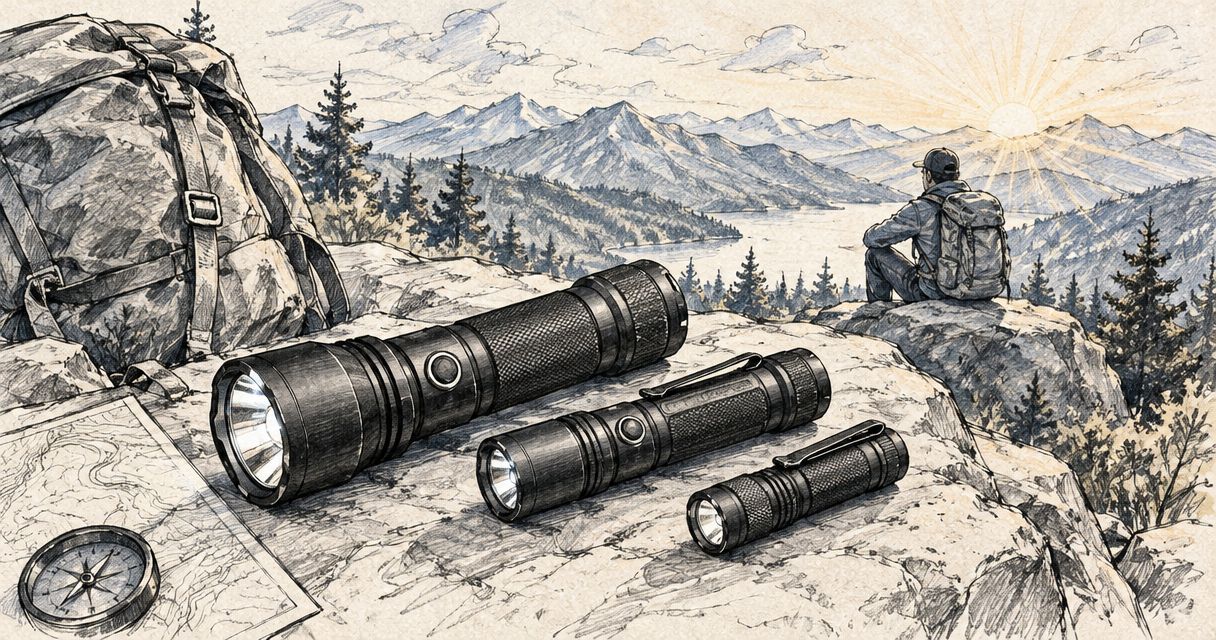
Best overall: a 21700-powered long-range Olight searchlight with a thrower beam. Best for tracking at close range: a compact rechargeable torch with a floody beam. Best for staying hands-free: a rechargeable Olight headlamp. Pick by beam distance, battery format and runtime, not by peak lumens. The range is stocked at Olight SA, the official South African distributor's store.
- The best Olight hunting searchlight in 2026 is a 21700-powered thrower with a tight beam.
- Judge range by the ANSI FL1 beam distance figure, not by peak lumens.
- Pair the searchlight with a headlamp for hands-free work at the carcass.
- Choose a rechargeable battery format you can swap and top up from a power bank.
Why this matters in 2026
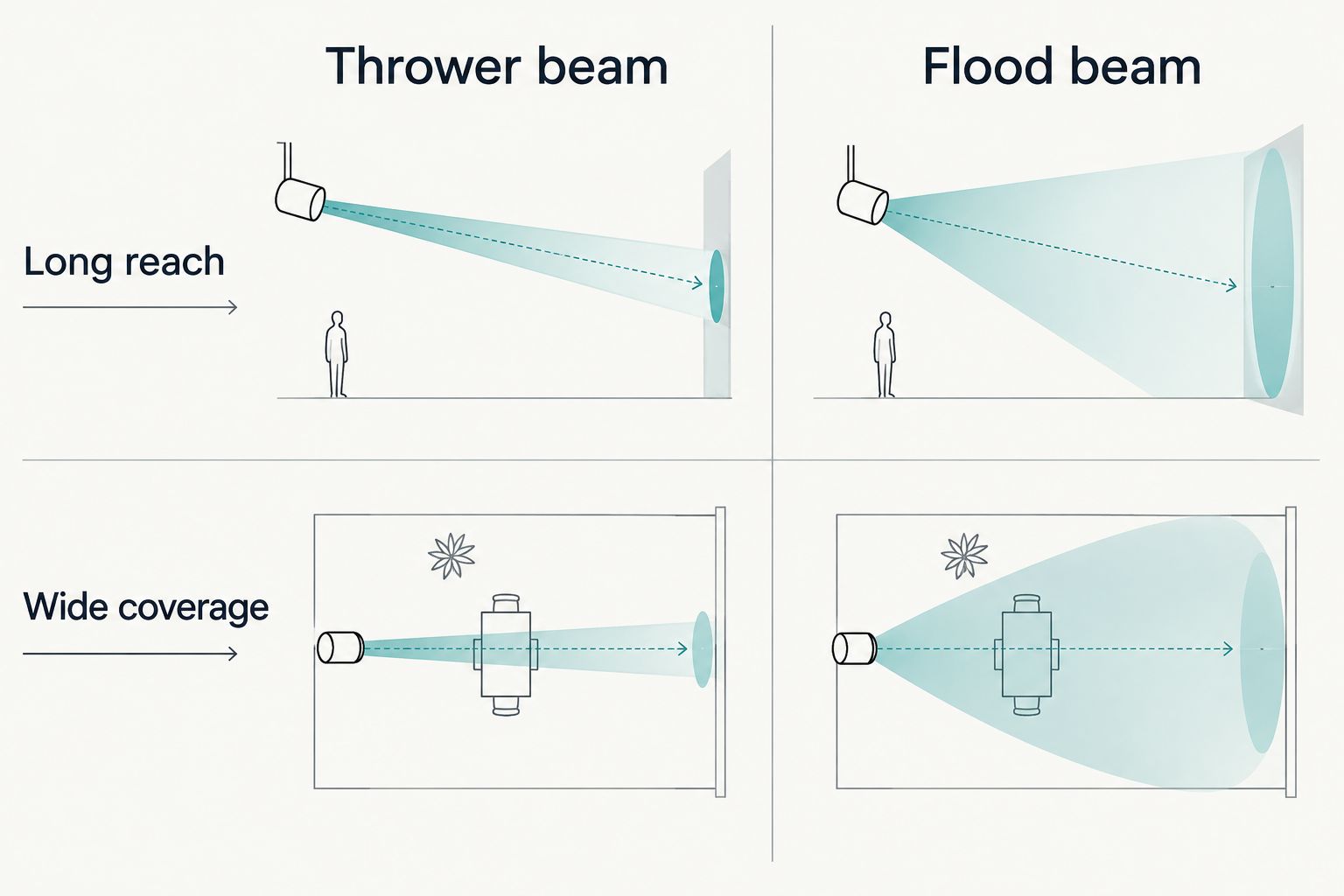
A hunting light does three different jobs: it spots at distance, it tracks at close range, and it lets you work with both hands free. No single beam does all three well. A thrower reaches far but leaves a narrow tunnel. A flood beam lights the area around you but dies at distance.
The mistake most buyers make is chasing the biggest lumen number on the box. Lumens measure total output. Distance depends on how tightly the reflector or lens focuses that output. A lower-lumen thrower can outreach a higher-lumen flood light by a wide margin.
Load shedding adds a second requirement for South African buyers in 2026: the same light should recharge from a power bank or vehicle charger, not only from the wall. The guide to Olight torches for load shedding covers that side in detail.
What makes the best Olight hunting searchlight
Use these six criteria to audit any pick in 2026, including the ones below.
- Beam distance (ANSI FL1): the FL1 standard measures the distance at which the beam falls to 0.25 lux, roughly the light of a full moon. Compare this figure across lights, not lumens.
- Beam shape: a tight hotspot with little spill spots game at range. A wide spill covers ground at your feet. Hunting needs the first, with some of the second.
- Battery format: a 21700 cell is 21 mm wide and 70 mm long and holds more energy than the older 18650. Swappable cells let you carry a spare for a long night.
- Runtime at useful output: peak output usually drops within minutes to protect the light. Check runtime at the mode you will actually use.
- Water and impact rating: IPX8 means the light survives submersion deeper than one metre. FL1 impact ratings are drop heights in metres. Both matter on wet, rough ground.
- Charging options: onboard USB charging or a magnetic charge cable means one cable covers the bakkie, the camp and the power bank.
The breakdown of Olight flashlights with 21700 batteries explains the battery side if you are choosing between cell formats.
Olight hunting searchlights at a glance
This table matches each hunting job to the type of Olight light that fits it. Check the current model range and specifications on the store before buying.
| Slot | Best for | Standout feature | Key limitation |
|---|---|---|---|
| 1. Long-range thrower | Spotting and scanning open ground | Tight beam with the highest FL1 distance | Narrow beam, poor for close work |
| 2. Rechargeable all-rounder torch | Tracking and general carry | Balanced hotspot and spill, USB recharge | Shorter reach than a dedicated thrower |
| 3. Compact backup torch | Spare light in the pack | Small, light, fits a pocket | Lower output and runtime |
| 4. Rechargeable headlamp | Hands-free work and field dressing | Head-mounted, frees both hands | Beam moves with your head, short range |
1. Long-range thrower: best Olight hunting searchlight for spotting
This is the core of any hunting kit. A thrower uses a deep reflector or a large lens to push a narrow beam far across open ground. Look for the highest FL1 beam distance in the range and a 21700 cell.
Long-range thrower pros:
- Longest reach for scanning fence lines and open veld
- 21700 cell gives more runtime than smaller formats
- Tight hotspot makes eye shine easy to pick out
- USB recharging works from a power bank
Long-range thrower cons:
- Narrow beam leaves you blind to the sides
- Larger and heavier than a pocket torch
- Peak output steps down after a short burst
Best for: open terrain and distance scanning. Verdict: Buy as your main light.
2. Rechargeable all-rounder: best for tracking and general carry
The second light is the one you use most. An all-rounder pairs a usable hotspot with enough spill to see where you are stepping. It handles tracking a blood trail, walking back to the vehicle and camp chores.
All-rounder pros:
- Spill beam shows the ground around your feet
- Lighter than a dedicated thrower
- Recharges over USB, so it fits a load-shedding household
- Suits everyday carry between hunts
All-rounder cons:
- Reach falls well short of the thrower
- Single hotspot trades range for coverage
Best for: close-range tracking and daily use. Verdict: Buy if you carry one light only, and choose it over the thrower if your ground is thick bush. The rechargeable Olight torches guide lists the options.
3. Compact backup torch: best for the spare slot
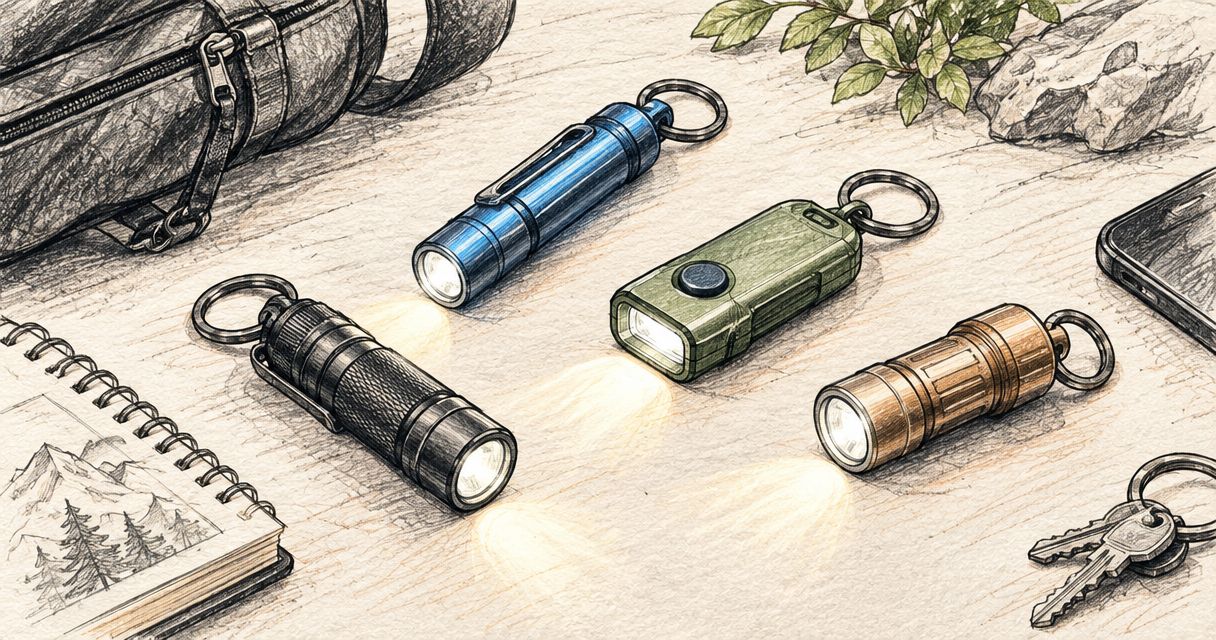
Lights fail, batteries drain, and a hunt runs longer than planned. A compact torch in the pack costs little weight and removes the risk of walking out in the dark.
Compact torch pros:
- Small enough to leave in a jacket or pack permanently
- Cheap insurance against a flat main light
- Easy to hand to a hunting partner
Compact torch cons:
- Lower output and runtime than the main lights
- Not a searchlight, so it will not scan distance
Best for: a backup that stays in the bag. Verdict: Hold until the main light is sorted, then add it.
4. Rechargeable headlamp: best for hands-free work
Field dressing, loading the bakkie and handling a rifle all need both hands. A headlamp lights where you look and leaves your hands free. It supports the searchlight and does not replace it.
Headlamp pros:
- Both hands stay free for the work
- Light follows your eyes
- Rechargeable, so no loose cells to carry
Headlamp cons:
- Short reach compared with a handheld thrower
- Beam wobbles as your head moves
Best for: carcass work and camp. Verdict: Buy as the third light. Compare options in the rechargeable Olight headlamps guide.
How to rank your own shortlist
Rank each candidate against the six criteria above, in this order: beam distance, battery format, runtime at a useful mode, water rating, charging, weight. Beam distance decides the searchlight slot. Weight and spill decide the carry slot. Do not rank by lumens alone.
A light that wins one criterion and fails two others is a specialist. Buy specialists as a second light, never as the only one.
Which Olight searchlight should you choose in 2026?
Choose the long-range 21700 thrower as your default. It covers the job a searchlight exists for: finding game at distance. Add a rechargeable all-rounder if you track in thick bush, and a headlamp for the work after the shot.
If you buy only one light in 2026, buy the thrower and accept that close-range work needs a second light. Browse the current range at Olight SA and confirm specifications and availability on each product page.
FAQ
What is the best Olight hunting searchlight in 2026?
The best pick is a 21700-powered Olight thrower with a tight beam and the longest FL1 beam distance you can find. It reaches furthest, which is the main job of a searchlight.
Do lumens or beam distance matter more for hunting?
Beam distance matters more. Lumens measure total output, while beam distance shows how far the light reaches. A tightly focused beam with fewer lumens can outreach a brighter flood light.
What does ANSI FL1 beam distance mean?
It is the distance at which the beam measures 0.25 lux, roughly full-moon brightness. It gives a standard way to compare reach across different lights.
Is a 21700 battery better than an 18650 for a searchlight?
A 21700 cell is larger, at 21 mm by 70 mm, and holds more energy. That generally means longer runtime in the same kind of light.
Can I recharge an Olight searchlight during load shedding?
Lights with USB or magnetic charging can recharge from a power bank or vehicle charger. Check the charging method on the product page before you buy.
Should I carry a headlamp as well as a searchlight?
Yes. A headlamp frees both hands for field dressing and camp work, which a handheld searchlight cannot do.
What water rating should a hunting light have?
Look for IPX8 where possible. It means the light survives submersion deeper than one metre, which covers rain, river crossings and wet ground.
One last thing
Peak output is a short burst, not a working mode. Before you buy in 2026, read the runtime at the mode you will actually use on a long night. That single figure says more about a hunting light than any headline lumen number.