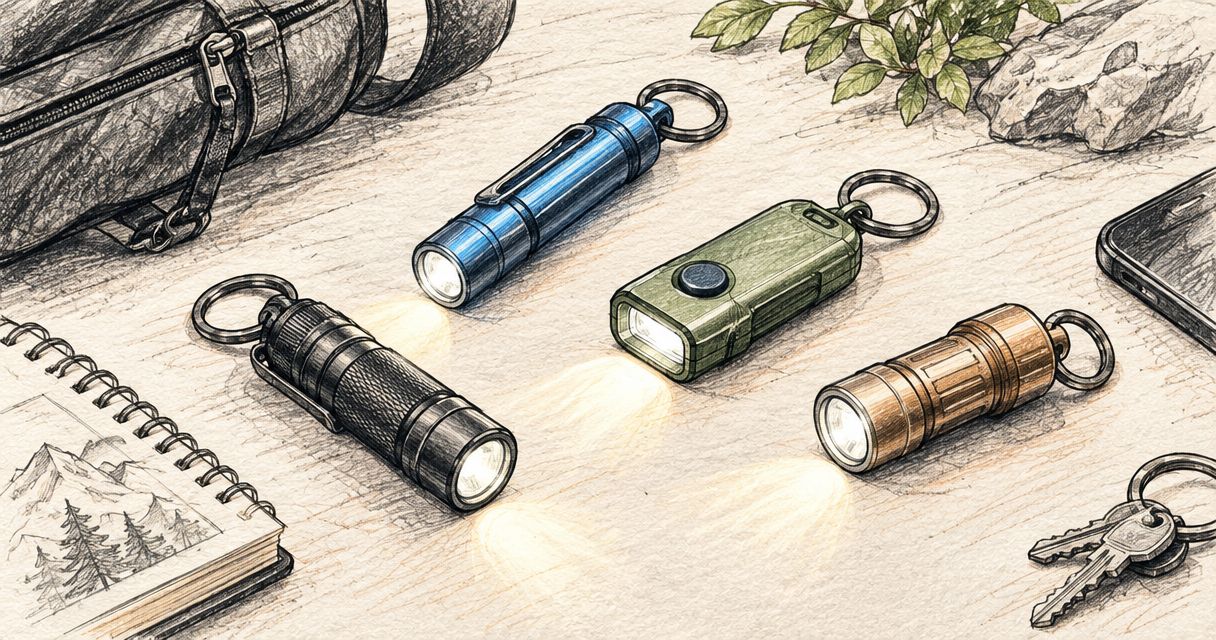
Best overall: a rechargeable USB keychain light from the Olight SA range. Best for spare-battery carriers: an AAA-powered keychain light. Best for the lightest pocket: an ultra-compact clip-on. The best Olight keychain flashlight in 2026 is the one that matches how you carry it, not the one with the biggest number on the box.
- The best Olight keychain flashlight in 2026 is a rechargeable USB model for most daily carriers.
- Choose an AAA-powered keychain light if you want swappable batteries during load shedding.
- Choose an ultra-compact clip-on if keys and pockets are already crowded.
- Check runtime, charging port and water resistance before you buy, not peak output alone.
Why this matters in 2026
A keychain flashlight is the light you actually have when the power drops, the car park is dark or the lock will not turn. A big torch in the cupboard does not help there. Olight SA, the official South African distributor store for Olight, stocks keychain-sized lights alongside headlamps, tactical lights and accessories, so the choice is real, and the wrong pick means a light that is dead or too bulky to carry.
The trade-off is always the same: smaller body, smaller battery, shorter high-output time. Knowing which compromise you can live with decides the purchase. Browse the full range at Olight SA and check current availability there, since stock changes.
What makes the best keychain flashlight
Use these five criteria to judge any keychain light before you buy:
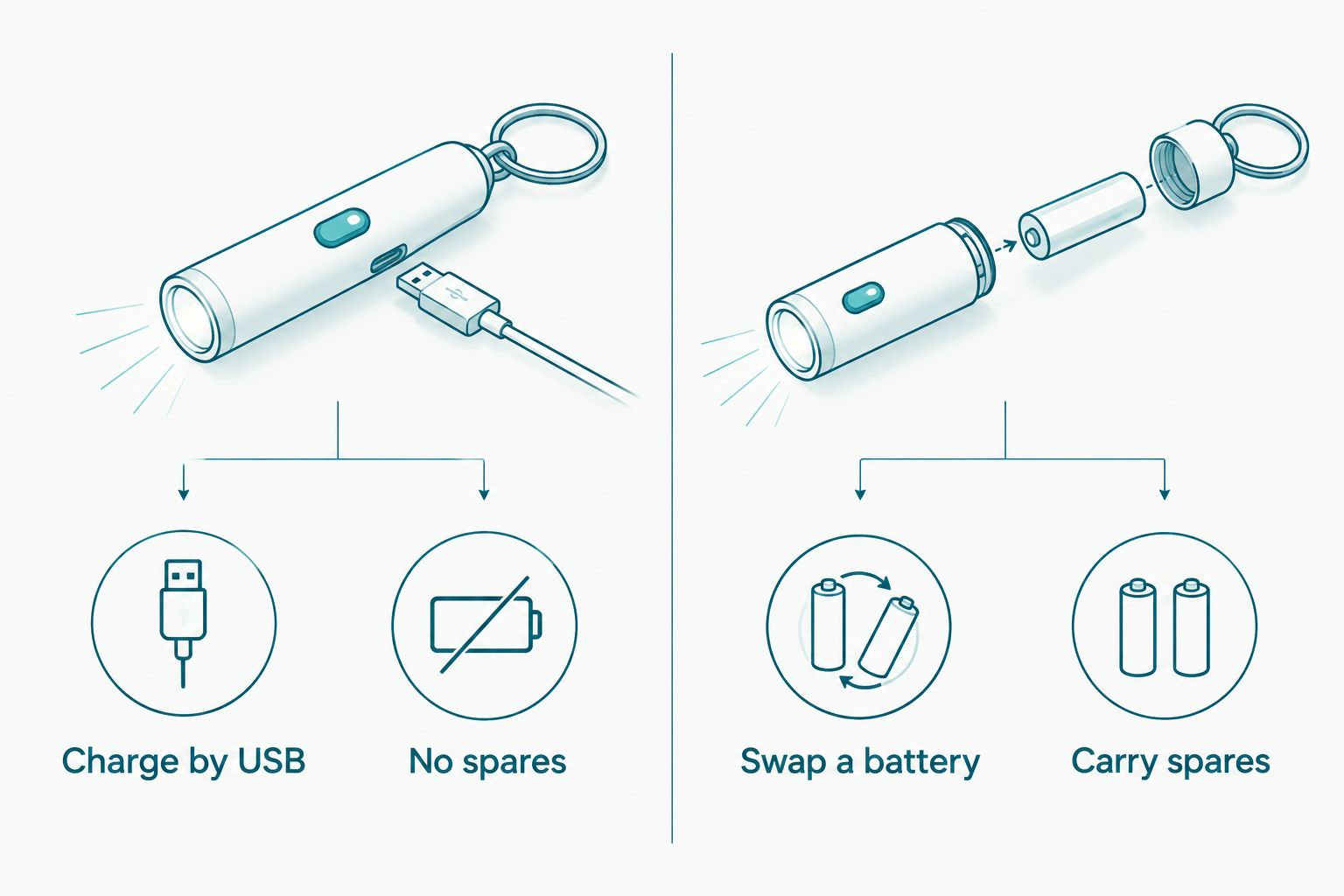
- Power source. Built-in rechargeable cell or a standard AAA battery. Rechargeable is convenient; AAA is swappable in the field.
- Charging method. USB charging means you can top up from a laptop, power bank or car. Check the port type on the product page.
- Runtime at usable output. Peak output drains a small cell fast. Look at the runtime on a medium mode, which is what you will use most.
- Size and attachment. A light that snags pockets ends up in a drawer. Check how it attaches to a ring or clips to a bag.
- Water and impact resistance. Keys live in pockets, bags and rain. Look for a published water-resistance rating on the product page.
Keychain lights at a glance
| Type | Best for | Standout strength | Key limitation |
|---|---|---|---|
| Rechargeable USB keychain light | Daily carry, commuting | No spare batteries to buy | Dead cell means no light until you charge |
| AAA-powered keychain light | Load shedding, travel, spares | Swap a battery in seconds | Slightly bulkier than the smallest options |
| Ultra-compact clip-on | Crowded key rings, light pockets | Barely noticeable weight | Lowest runtime on high |
| Keychain light with a pocket clip | Hands-free work, camping | Clips to a cap, strap or pocket | Clip adds bulk to a key ring |
1. Rechargeable USB keychain light: best for daily carry
This is the default recommendation. A built-in cell charged over USB means you top it up the way you charge a phone, and you never hunt for a battery at the moment you need light.
Rechargeable keychain light pros:
- Charges from a laptop, power bank or car port
- Nothing to buy or replace between charges
- Usually sealed better than a battery-door design
- Runs on low and medium modes for everyday tasks
Rechargeable keychain light cons:
- A flat cell cannot be swapped out
- Cells lose capacity over years of use
Best for: commuters, students and anyone who carries keys daily and charges devices at a desk. Verdict: Buy.
2. AAA-powered keychain light: best for load shedding and travel
If your household plans around outages, a swappable battery is a real advantage. Carry a spare AAA in a bag or glovebox and a flat light is a ten-second fix. AAA cells are sold almost everywhere, which matters when you are away from home.
The read on this type: slightly larger than a sealed rechargeable, but it never depends on a plug. For a wider look at lights built for outages, see the guide to the best Olight torches for load shedding.
AAA keychain light pros:
- Swap batteries without a charger
- Works with spare cells kept in a bag or car
- Easy to keep running on long trips
AAA keychain light cons:
- Bulkier than the smallest sealed models
- You must remember to carry spares
Best for: households with frequent outages, hikers and travellers. Verdict: Buy if outages shape your week.
3. Ultra-compact clip-on: best for the lightest pocket
Some people carry a bunch of keys, a car remote and an access tag already. A bulky light loses to the pocket every time. The ultra-compact class trades runtime and output for a body you stop noticing.
It works as an emergency and utility light: finding a keyhole, reading a label, walking to the car. It is not the tool for a long walk or a repair job.
Ultra-compact pros:
- Adds almost no weight to a key ring
- Stays on you when larger lights get left behind
- Good for short, close-range tasks
Ultra-compact cons:
- Shortest runtime on high output
- Smaller cell means more frequent charging
Best for: minimalist carriers and anyone with a crowded key ring. Verdict: Buy as a backup, Hold as your only light.
4. Keychain light with a pocket clip: best for hands-free use
A clip lets the light sit on a cap brim, a bag strap or a shirt pocket, so both hands stay free. That suits camping, fixing something under a sink or a car bonnet, and walking a dog after dark.
If your use leans towards a dedicated everyday carry setup, read the best Olight EDC flashlights for everyday carry guide, which covers the next size up.
Clip-on pros:
- Hands-free positioning
- Attaches to pockets, straps and caps
- Useful for repairs and outdoor tasks
Clip-on cons:
- The clip adds bulk when hung on a key ring
- Can catch on fabric or bag lining
Best for: campers, DIY users and dog walkers. Verdict: Buy if you work with both hands.
How the picks are ranked
Each type is ranked on the five criteria above: power source, charging, runtime on usable modes, size and attachment, and water and impact resistance. Each type owns a different use case, so the list works as a decision tree, not a leaderboard. Rechargeable leads because it fits the widest group of buyers, not because the others are weak. Exact specifications for any model change, so confirm them on the product page before you order.
Which keychain flashlight should you choose?
Start with how you handle power. If you charge a phone every night, pick the rechargeable USB keychain light. If outages are routine and you want a battery you can swap, pick the AAA-powered model. If your key ring is already heavy, pick the ultra-compact clip-on as a backup. If you work with both hands, pick the clip version.
Unsure? Choose rechargeable. It is the best Olight keychain flashlight for most people in 2026.
FAQ
What is the best Olight keychain flashlight in 2026?
For most people, a rechargeable USB keychain light is the best pick in 2026. It charges like a phone and needs no spare batteries. Choose an AAA model if you want swappable power.
Is a rechargeable or AAA keychain flashlight better?
Rechargeable is better for daily carry, AAA is better for outages and travel. Rechargeable removes battery shopping, while AAA lets you swap a cell in seconds when no charger is near.
Does a keychain flashlight work during load shedding?
Yes, if it is charged or loaded with a spare AAA. Keep rechargeable models topped up before a scheduled outage, and keep a spare cell with AAA models.
How do I choose the right keychain flashlight?
Pick by power source first, then check runtime on medium output, size, and water resistance. Peak output matters less than how long the light holds a usable level.
Are keychain flashlights waterproof?
It depends on the model. Check the published water-resistance rating on the product page before you rely on one in rain or near water.
Is a keychain light bright enough for walking at night?
For short walks and close tasks, yes. For long trails or hunting, a larger torch or headlamp is the right tool, since small cells run down quickly on high.
Where can I buy Olight in South Africa?
Olight SA is the official South African distributor store for Olight, operated by TorchSA. Check the site for current models and availability.
One last thing
A keychain light is a backup, not your main light. Pair it with a larger torch at home and a headlamp for work or camping, and you stop relying on a small cell for jobs it was not built for. Charge it on the first of every month in 2026 and it will be ready when you need it.