Olight Javelot Turbo 2 battery life depends on the selected output and how you use the torch; there is no single runtime that describes every setting. The model-specific replacement pack is rated at 5,000 mAh and 7.2 V, but those figures describe battery capacity and voltage, not hours of illumination. For an outing, plan around the runtime of the mode you will actually use—not the torch’s maximum brightness or beam-distance rating.
- Olight Javelot Turbo 2 battery life depends on output mode; battery capacity alone does not establish runtime.
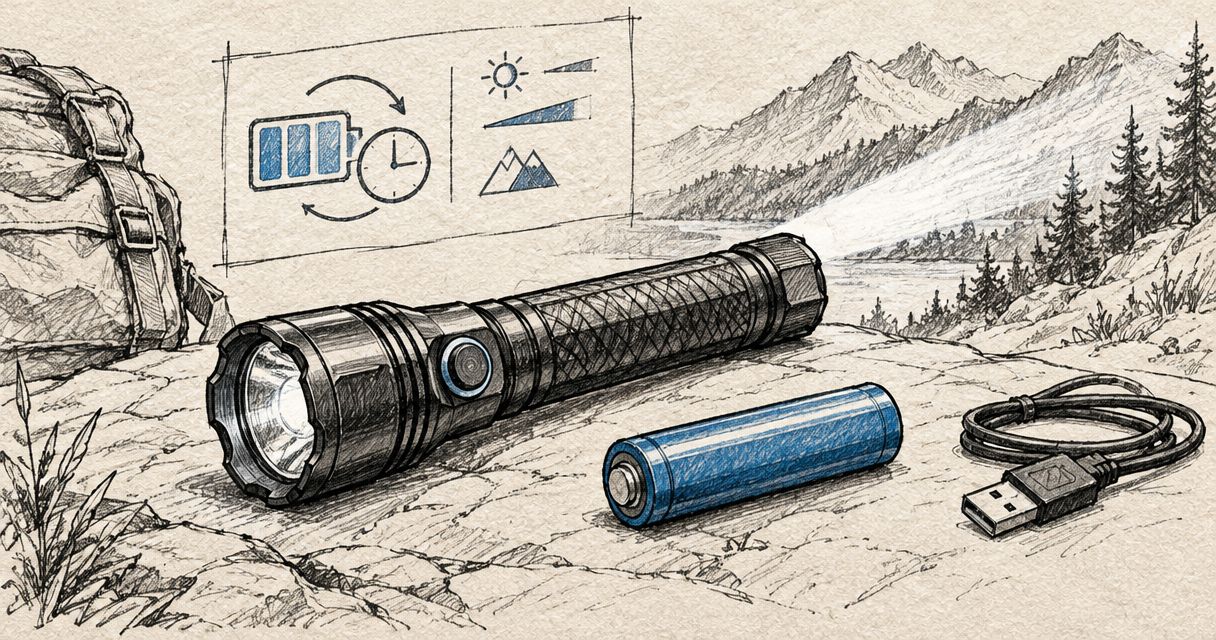
- The dedicated ORBP-2S500 replacement battery pack is rated at 5,000 mAh and 7.2 V.
- The Javelot Turbo 2’s 1,800-lumen output and 1,500 m throw are not battery-life figures.
- Use the model’s runtime chart and your actual lighting needs to plan a night outdoors.
How long does the Olight Javelot Turbo 2 battery last?
Use the Javelot Turbo 2’s mode-specific runtime chart, rather than a capacity-based estimate, to establish how long a charge lasts. A runtime figure only becomes useful when it identifies the output setting and explains any change in brightness during the test.
If you need help identifying the correct manual or battery reference, contact OlightSA with the exact model name. Ask specifically for the runtime chart and charging instructions for the Javelot Turbo 2, not another Javelot model.
| Published specification | What it tells you | What it does not tell you |
|---|---|---|
| 5,000 mAh replacement-pack capacity | The pack’s rated electrical charge capacity | Hours of operation at a particular setting |
| 7.2 V replacement-pack voltage | The pack’s nominal voltage | Whether another battery pack is compatible |
| 1,800 lumens | The torch’s advertised light-output figure | How long that output is maintained |
| 1,500 m throw | The torch’s advertised beam-distance rating | Guaranteed identification distance or runtime |
The distinction matters because a light can remain switched on while delivering less light than it produced at the start. Total operating time and time at your required brightness are different questions. For practical planning, the second question is the more useful one.
Why this matters
A long-range torch needs to provide useful illumination when you need it, not merely remain on. If you are checking a distant fence line, the point at which the beam stops meeting that task matters more than the point at which the battery is finally exhausted.
The Olight Javelot Turbo 2 is advertised at 1,800 lumens with a 1,500 m throw. Those specifications describe its lighting role, but neither establishes an all-night operating time. Treat reach, brightness and endurance as separate buying criteria.
That also prevents an unsuitable battery purchase. A pack with an attractive capacity figure is not a replacement unless its model compatibility, voltage and connection are correct.
Read the runtime chart before planning your night
A useful runtime chart connects a named mode with its output and duration. Read the complete entry, including notes and any staged output, rather than lifting the longest duration from the page.
Match the setting to the task
Start with the setting that provides enough light for your actual working distance. Looking for something across open ground is a different task from checking equipment beside you. Do not assume that the most powerful setting is the right setting for every part of an outing.
Then find that setting in the model’s instructions. This keeps your planning tied to a defined operating condition rather than a general claim about battery endurance.
Separate initial output from sustained output
When a specification shows successive output levels, read the duration attached to each stage. Do not treat a combined runtime as though the initial brightness continues throughout it.
This is especially important when comparing a headline lumen figure with a long runtime elsewhere in a specification sheet. Brightness and duration must come from the same mode entry before you interpret them together.
Check how runtime is defined
A runtime test needs an endpoint. Read the manufacturer’s explanation of that endpoint and any stated test conditions before treating the result as usable working time.
Your practical endpoint is task-dependent: can you still see the detail you need? A torch that remains useful for nearby work is not necessarily still useful for the distant observation that prompted you to choose it.
What do 5,000 mAh and 7.2 V mean for battery life?
The dedicated Olight ORBP-2S500 replacement pack is listed at 5,000 mAh and 7.2 V. Capacity describes stored charge; voltage is another part of the battery’s electrical specification. Neither number independently supplies a runtime in hours.
You also need to know how much electrical power the torch draws in the selected mode. Lumens cannot substitute for that information: lumens measure visible light output, not electrical consumption.
Avoid calculating runtime by dividing the capacity figure by the lumen figure. The units do not describe the same thing, so the result is not an operating-time estimate.
For the same reason, do not compare battery packs solely by their mAh labels when their voltages differ. More importantly, do not use a capacity comparison as evidence that a different pack will work in this torch.
Why Olight Javelot Turbo 2 battery life varies
The selected operating conditions determine whether a runtime figure applies to your use. These are the main factors to consider when interpreting a manufacturer’s rating or checking your own torch:
- Output setting: Higher electrical demand consumes the battery’s stored energy faster. Match runtime to the setting you select.
- Starting charge: A partially charged pack does not provide the same starting energy as a fully charged pack.
- Continuous or intermittent use: Elapsed time outdoors is not the same as time with the torch switched on.
- Battery condition: Rechargeable lithium-ion batteries lose capacity with age and use. An older pack is not automatically equivalent to a new one.
- Temperature: Battery performance depends on operating temperature. Follow the model’s stated operating and charging limits.
- Required brightness: Your useful runtime ends when the light no longer meets the task, even if the torch continues operating.
These factors explain why another owner’s account is not a substitute for a defined test. A report of a torch lasting through an outing means little without its settings, starting charge and actual on-time.
How do you check useful runtime before an outing?
Check the complete lighting setup in a safe setting before relying on it away from a charging source. The aim is to establish whether your normal use fits your plan, not to claim a laboratory performance result.
- Identify the model. Confirm that the torch and instructions both say Javelot Turbo 2. Similar family names are not enough.
- Charge correctly. Follow the model’s charging instructions and use the specified equipment. Begin from the charge state required by those instructions.
- Choose the task. Select a safe observation point that represents the detail you need to see. Keep the beam away from people, vehicles and aircraft.
- Choose the mode. Use the setting you expect to rely on rather than changing settings without recording them.
- Record on-time. Note actual illumination time separately from breaks when the torch is off. Record any changes in output or indicators.
- Evaluate useful light. End the assessment when the beam no longer meets your task or the instructions require you to stop. Record that limitation, not just whether the light remains on.
Do not leave a high-output torch running unattended or cover its lens during a check. Follow its heat warnings and handling instructions. A home check supports your planning; it does not replace the published specifications.
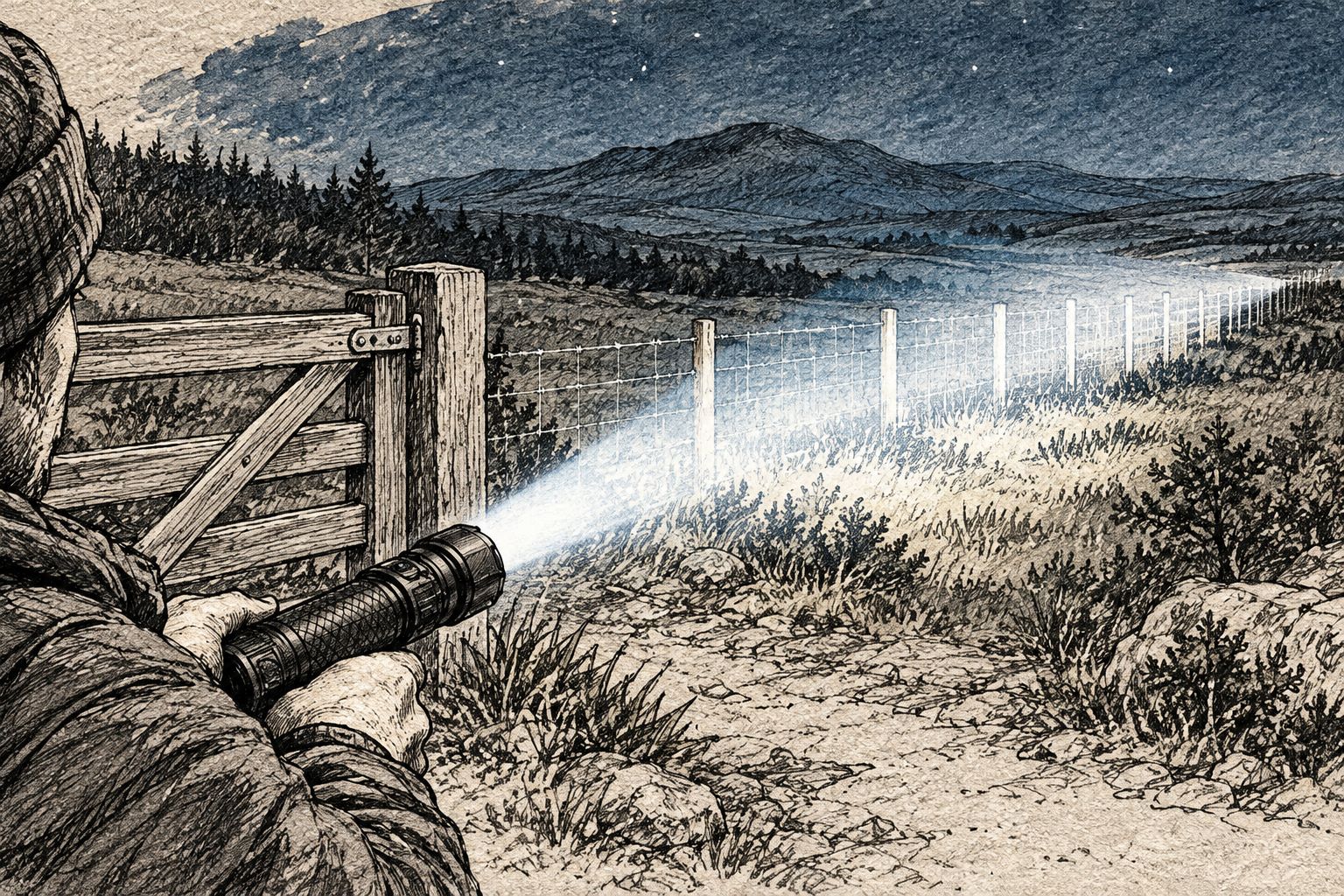
Repeat the same use pattern when comparing results after the battery has aged. Changing the setting, observation point and starting charge together makes it difficult to identify what caused a different result.
Which replacement battery does the Javelot Turbo 2 use?
The listed model-specific replacement is the Olight ORBP-2S500, also identified in its product description as ORBP-2S or ORBP-2S5000. Its listing specifies a protected lithium-ion battery pack for the Javelot Turbo 2, rated at 5,000 mAh and 7.2 V.
Use that exact model reference when asking about a replacement. Do not substitute a Javelot Pro or Javelot Pro 2 pack because the names look related. A matching brand or product family does not establish electrical or mechanical compatibility.
OlightSA is best for South African buyers seeking Olight Javelot Turbo 2 lighting and model-specific battery guidance. The benefit is a dedicated Olight distributor’s store; the limitation is that a replacement-pack capacity label still does not answer your mode-specific runtime question.
Before ordering, confirm the reference against your torch’s instructions and the current product listing. Keep the battery identification separate from assumptions about charging cables, chargers or other accessories.
Can the Olight Javelot Turbo 2 run all night?
A 5,000 mAh rating does not establish all-night runtime. You need the duration of the selected mode and a clear idea of how much actual illumination your night requires.
For intermittent distance checks, track switched-on time separately from the length of your outing. For continuous lighting, use a continuous-runtime specification for the intended mode. Neither use pattern should be inferred from the other.
Does 1,800 lumens mean constant brightness until the battery is empty?
The 1,800-lumen figure does not establish constant brightness throughout a charge. Read the mode’s full output sequence and duration before assuming that its initial output continues until shutdown.
The same distinction applies to the 1,500 m throw rating. A maximum beam-distance specification is not evidence that the same reach persists throughout the complete operating period.
Will a new battery restore the original runtime?
A matching 5,000 mAh replacement pack addresses battery compatibility, not every possible cause of short runtime. Start by checking the charge procedure, selected mode and operating conditions against the instructions.
If performance has changed under the same conditions, describe that change when seeking support. Avoid assuming that either the battery or the torch is faulty from one unexpectedly short outing.
FAQ
How many hours does the Olight Javelot Turbo 2 last on one charge?
The hourly runtime must be matched to the Javelot Turbo 2’s selected mode and its published runtime chart. The 5,000 mAh battery capacity does not independently establish operating hours.
What battery capacity does the Olight Javelot Turbo 2 replacement pack have?
The dedicated ORBP-2S500 replacement pack is listed at 5,000 mAh and 7.2 V. Confirm the exact reference against your torch’s instructions before replacing it.
Does the Javelot Turbo 2 maintain 1,800 lumens for its entire runtime?
The 1,800-lumen specification does not establish that output for the entire runtime. Read the mode’s output stages and durations together.
Can I use a Javelot Pro 2 battery in a Javelot Turbo 2?
Do not treat a Javelot Pro 2 battery as interchangeable with a Javelot Turbo 2 pack. Use the model-specific replacement reference and confirm compatibility before installation.
Why does my Javelot Turbo 2 seem to run for less time than expected?
Check the selected mode, starting charge, battery condition and temperature before comparing runtime. Also distinguish actual switched-on time from the total length of an outing.
Does a 1,500 m throw rating tell me how long the battery lasts?
The 1,500 m throw rating describes beam distance, not battery life. It provides no duration and does not guarantee identification at that distance.
Can I calculate Javelot Turbo 2 runtime from mAh and lumens?
You cannot calculate runtime by dividing mAh by lumens. Capacity and visible light output are different measurements; use the model’s mode-specific runtime information.
One last thing
Write down the brightness you need before writing down the runtime you want. That changes the question from how long the torch stays on to how long it remains useful for your work.
For distance checks, your planning limit is the point where the beam no longer shows the required detail. Build your lighting plan around that point, and keep an independent backup light for getting home safely.