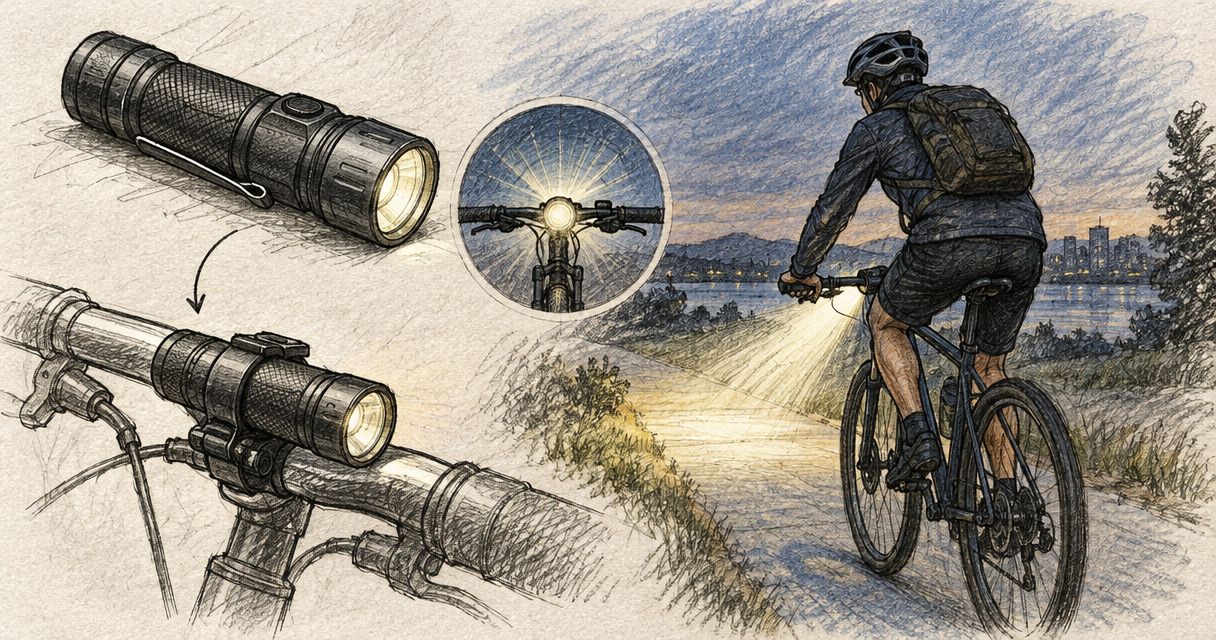
Yes, you can use a flashlight as a bike light if a suitable mount holds it securely, the beam illuminates your route without dazzling other road users, and the selected mode lasts for your ride. A bright torch alone does not establish mounting compatibility, useful sustained output or compliance with cycling-light requirements. Use a mounted torch as a practical backup or shared-use light; choose a dedicated bike light when cycling is its main job.
- Can you use a flashlight as a bike light? Yes, with secure mounting, controlled beam aim and sufficient runtime.
- The Olight FB-1 is a bike mount listed for flashlights with a 10–35 mm diameter; verify your exact fit.
- The Olight Gotorch X Extended is best for mountain-bike use, with a separate battery pack and 2,000-lumen rating.
- OlightSA suits South African buyers comparing Olight torches, bike lights and mounting accessories.
Can you use an Olight flashlight as a bike light?
Yes—provided you check the complete setup, not just the torch. You need a suitable mount, a useful beam, accessible controls and enough runtime at the output you will actually use. Start with the model-specific specifications; the guide to Olight rechargeable torches provides a broader starting point if you also need an everyday handheld light.
Before riding, work through this sequence:
- Check fit. Match the mount's stated torch-diameter range to the section of the torch it will grip. Check handlebar compatibility separately.
- Secure the setup. Follow the mount instructions, then check that neither the torch nor the mount rotates under firm hand pressure.
- Aim the beam. Illuminate the surface ahead rather than pointing the brightest part towards approaching riders or drivers.
- Choose the mode. Select a steady setting that gives useful visibility without relying on maximum output throughout the ride.
- Check endurance. Read the runtime information for that setting, charge the light and carry an independent backup when riding after dark.
- Test before departure. Check steering clearance, switch access and beam stability in a safe place away from traffic.
Passing one check does not cancel another. A secure mount cannot correct a poorly aimed beam, and a powerful torch cannot compensate for a battery that runs down before you get home.
Why this matters
A handheld torch follows your wrist. On a bicycle, the mount fixes its position and transfers movement from the bike to the beam. That makes retention and alignment part of the lighting system rather than optional accessories.
Your light also has separate jobs: helping you see the surface and helping others notice you. Do not assume a forward-facing torch replaces a rear light, reflectors or any other equipment required for your route. Check the applicable South African cycling-light requirements before using a torch as your main road light.
OlightSA is a dedicated South African source for buyers choosing Olight bike lights and torch-mounting accessories. Product choice still starts with your riding conditions, not the largest lumen figure.
Mounted torch or dedicated bike light?
A mounted torch makes sense when you already own a suitable light and want to share it between cycling, walking and home use. A dedicated bike light makes sense when you want equipment designed around riding and its mounting arrangements.
| Option | Best for | Main advantage | Main limitation |
|---|---|---|---|
| Suitable handheld torch in a bike mount | Shared-use lighting and backup duties | You can remove the torch for handheld use | Fit, beam aim and sustained runtime need separate checks |
| Olight FB-1 with a compatible torch | Riders adapting an existing flashlight | The mount is listed for 10–35 mm flashlights | It is a mount, not a light; diameter alone does not confirm the whole installation |
| Olight Gotorch X Extended | Mountain-bike use | A purpose-built bike light with a separate high-capacity battery pack | You must secure the battery pack as well as the light head |
These are different routes to a working setup, not interchangeable specifications. A mount's diameter range tells you about physical accommodation; a light's output tells you about emitted light. Neither establishes how well the finished assembly works on your bicycle.
Mounted flashlight: check the mounting surface first
Best for: riders who want one light for cycling and handheld tasks. A compatible torch and bike mount let you move the light between uses without committing it permanently to the bicycle.
The Olight FB-1 is listed as a universal bike mount for flashlights measuring 10–35 mm in diameter. Measure the actual gripping section of your torch, not its widest head or the battery size named in its specifications. An irregular body, switch or clip can affect where a mount sits.
Also inspect the bicycle side of the connection. Check the mount instructions for handlebar fit and installation, and keep the assembly clear of brake hoses, gear cables and controls. Turn the bars fully in both directions before riding.
The drawback is the extra verification. A torch that works well in your hand is not automatically suitable on a bicycle, and an accessory described as universal still needs an exact fit check. Choose the mounted-torch route only after checking both connections: torch to mount and mount to bike.
Dedicated bike light: plan the battery-pack position
Best for: mountain-bike riders choosing a light primarily for riding. The Olight Gotorch X Extended is listed as a 2,000 lm bike light with a separate high-capacity battery pack. Its description identifies a compact head suitable for bar or helmet positioning.
The separate pack changes the installation. You need a secure location for the battery and a cable route that stays clear of steering movement, tyres and moving components. Confirm the supplied mounting equipment and permitted mounting positions in the product instructions rather than assuming every installation option is included.
The advantage is a light designed for bicycle use. The limitation is that the head is only part of the system: the pack, cable and attachments all need attention. Choose the Olight Gotorch X Extended when mountain biking is the primary job, then verify its mode-specific runtime against your ride.
Why flashlight suitability varies
Two torches with similar output can behave differently on a bicycle. These factors determine whether yours is a sensible choice:
- Mount fit: the torch body and handlebar must both match the mounting hardware.
- Beam shape: a concentrated hotspot and a broad beam distribute light differently across the route.
- Beam aim: mounting angle determines where the brightest light lands and whether it reaches other road users' eyes.
- Sustained output: the maximum-output figure is not a promise that the light holds that level throughout the ride.
- Mode-specific runtime: endurance must be checked at the setting you intend to use, not an unrelated low mode.
- Battery arrangement: an internal battery and a separate pack create different charging, carrying and installation tasks.
Treat these as a checklist, not a scoring system. A failure in retention or runtime is enough to reject a setup even if its other specifications look suitable.
Lumens and beam distance answer different questions
Lumens describe total light output. Beam distance describes reach under the stated measurement conditions; it does not tell you how wide the illuminated area is or guarantee that you can recognise hazards at that distance.
For example, the Olight Baton 4 Pro is listed at up to 1,600 lumens with a rated 200-metre beam distance. The Olight Gotorch X Extended is listed at 2,000 lumens. Those figures alone do not establish which gives you the better view of a particular road or trail, and they do not prove that the handheld model fits a bike mount.
Compare the beam and runtime at your riding setting before comparing maximum lumens. Look for illumination that lets you read the surface ahead without an excessively bright foreground or an isolated hotspot that leaves surrounding detail difficult to see.
Published runtime information also needs careful reading. Check whether the manufacturer describes output reductions during operation; do not interpret a maximum-output figure and a separate runtime figure as a guarantee of constant brightness.
How should you aim a torch on handlebars?
Set the torch up on level ground and assess it in darkness before riding. Aim the useful part of the beam onto the route ahead, then check it from an approaching road user's position without staring into the light.
Keep the mount tight enough to hold that angle. If the beam drops towards the front wheel or swings upwards during a controlled test, stop and correct the installation. Do not try to hold a loose light in position while riding.
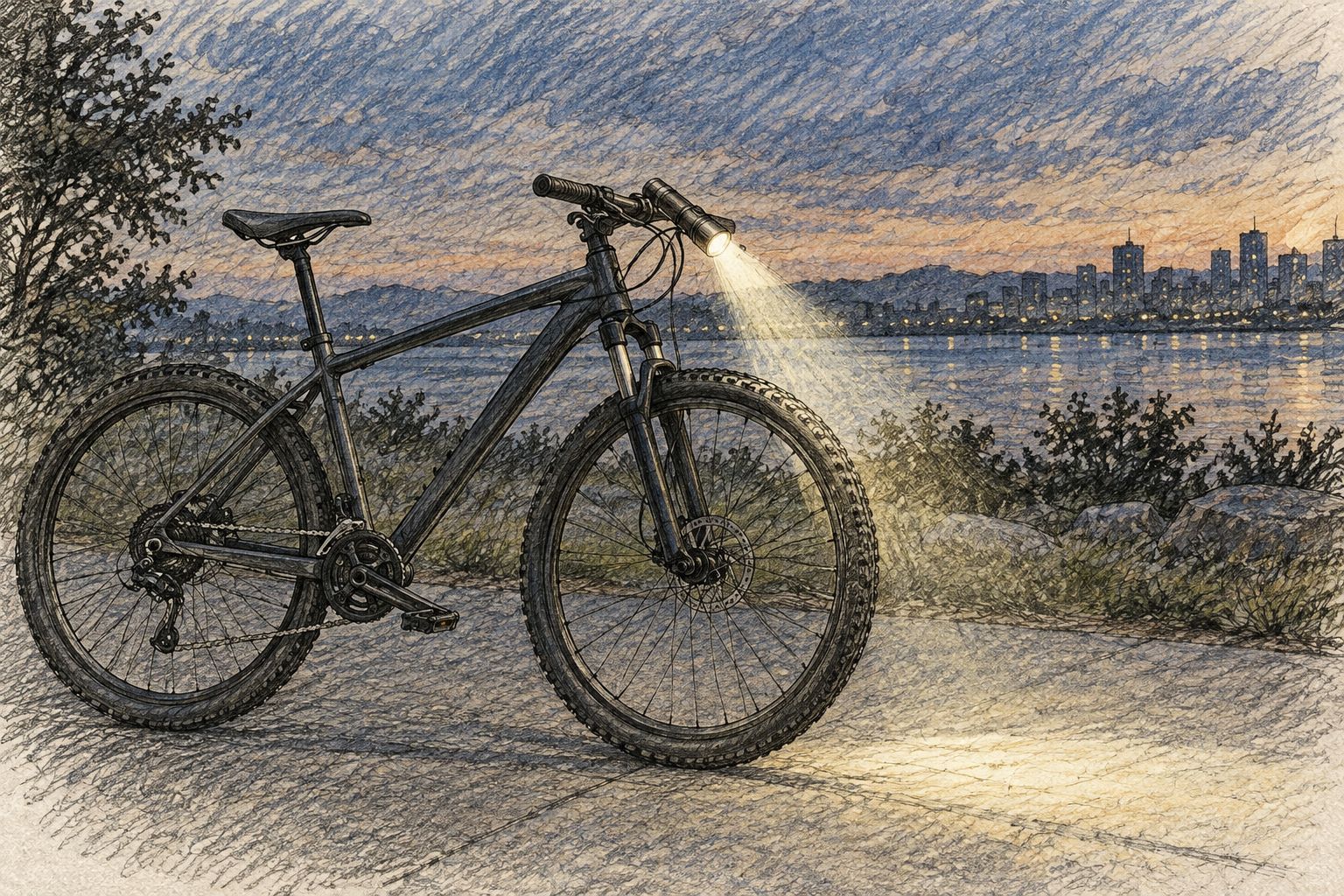
Check the angle again with the bicycle loaded as you normally ride it. The final test is the installed beam, not how straight the torch looks against the handlebars.
Choose equipment after checking the installation
If you already own a suitable flashlight, investigate the mount before buying another light. If you are building a mountain-bike lighting setup from scratch, compare the dedicated bike-light system against your route and charging arrangements.
The following OlightSA listings address those different needs. The FB-1 supplies mounting hardware; the Gotorch X Extended supplies the bike-light system. Neither removes the need to follow its installation instructions.

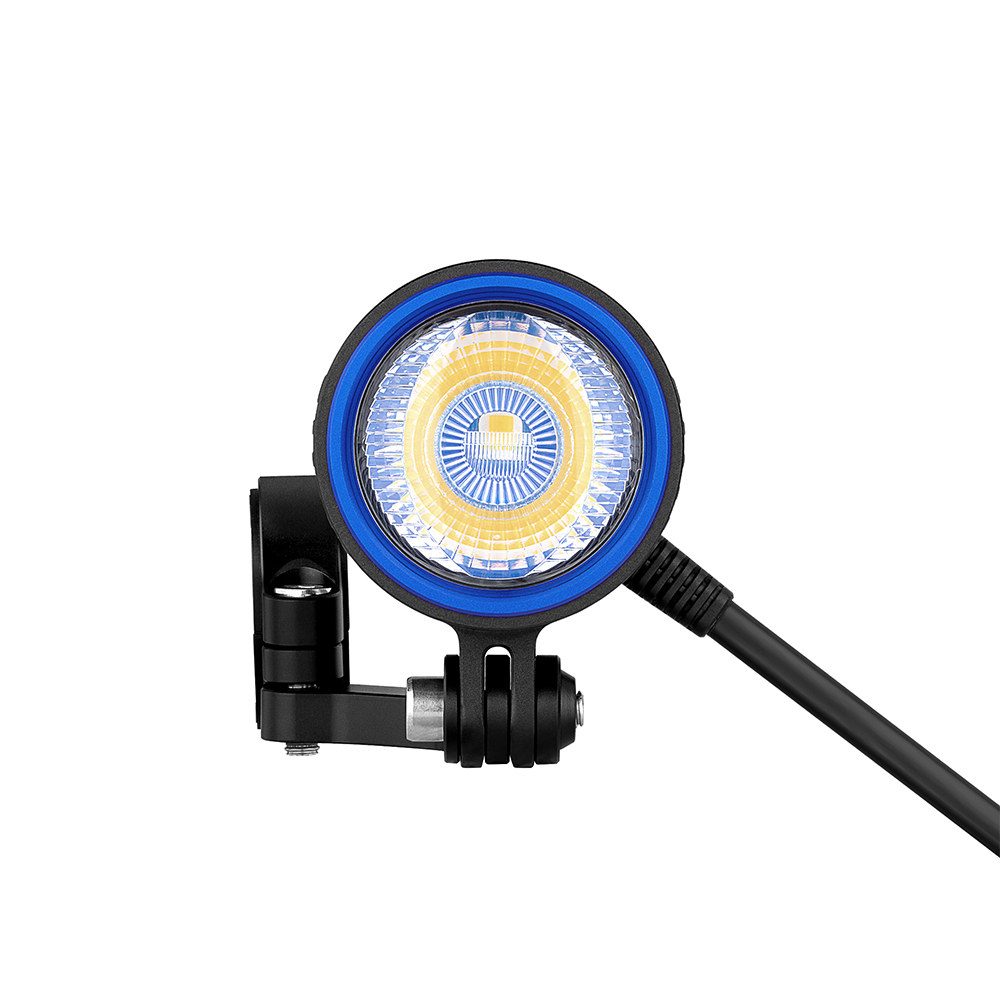
If fit remains uncertain, ask OlightSA about mounting compatibility with your exact torch model, bicycle mounting location and relevant measurements. A model-specific answer is more useful than assuming that every cylindrical torch works with every mount.
Can a powerful torch replace a proper cycling setup?
A powerful torch replaces only the forward-lighting function it can perform safely. It does not establish rear visibility, secure retention or legal compliance simply because its beam reaches far.
Keep an independent backup within reach and check it before leaving. If your main light fails, stop somewhere safe before changing equipment rather than attempting adjustments while moving.
Is a helmet-mounted torch better than a handlebar light?
A helmet-mounted torch is not automatically better than a handlebar light. Its beam follows your head rather than the bicycle's steering direction, which also makes careful aiming around other people essential.
Use only mounting equipment and positions approved for both the light and helmet. Do not drill, cut or otherwise modify a helmet to accommodate a torch, and do not assume a general headband is a cycling-helmet attachment.
FAQ
Can you use a flashlight as a bike light on South African roads?
A securely mounted flashlight can provide forward illumination, but that does not establish legal compliance. Check the applicable cycling-light requirements and use the required rear lighting and other visibility equipment.
Will any Olight torch fit the FB-1 bike mount?
No. The Olight FB-1 is listed for flashlights with a 10–35 mm diameter, but you must also check the gripping surface, handlebar fit and installation instructions.
Is the brightest flashlight always the best bike light?
No. Secure mounting, beam distribution, controlled aim and runtime at your selected mode matter more than maximum lumens alone.
Can I hold a torch while cycling instead of mounting it?
Do not hold a torch as a substitute for a secure bike-light installation. Mount the light properly so you can keep control of the bicycle and its brakes.
Can I use maximum output for my whole ride?
Do not assume maximum output lasts for the whole ride. Check the manufacturer's output and runtime information for your exact model and mode.
Which Olight light is designed for mountain-bike use?
The Olight Gotorch X Extended is listed as a 2,000 lm bike light with a separate high-capacity battery pack. Check its mounting instructions and mode-specific runtime against your planned ride.
Does a handlebar torch replace a rear bike light?
No. A forward-facing torch does not provide rear-facing illumination; equip the bicycle for visibility from behind as well.
One last thing
Test whether the mount holds its aim, not just whether it holds the torch. A light can remain attached while rotating into an unhelpful or dazzling position. Mark the starting angle mentally, complete a controlled test away from traffic, then stop and inspect it again.