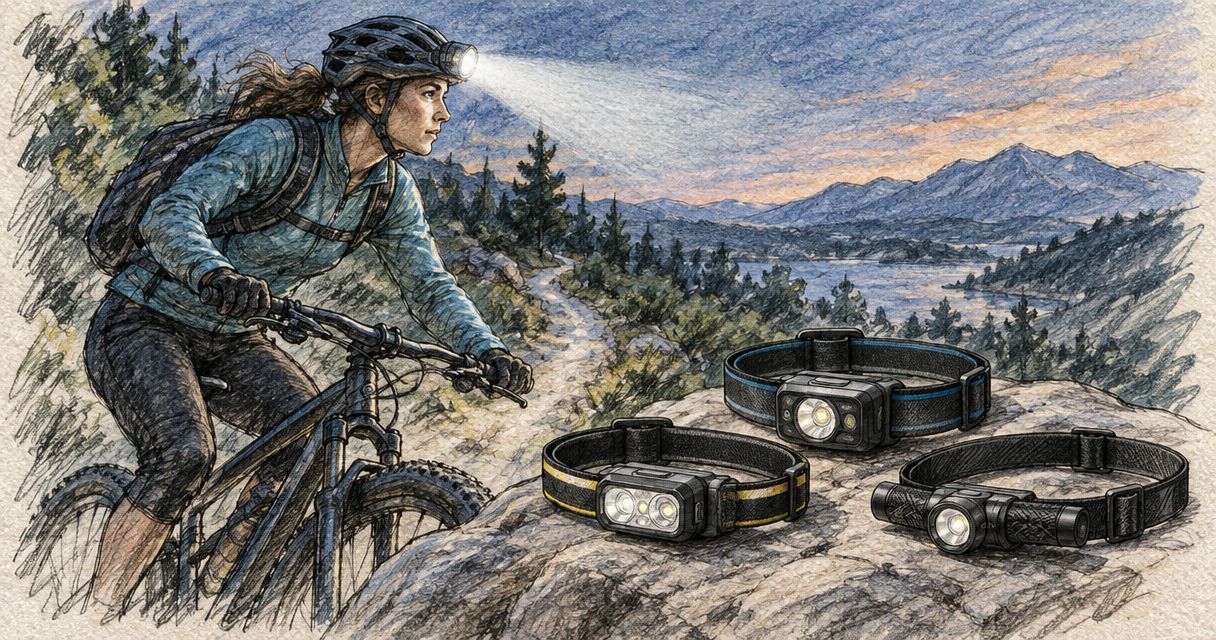
Best overall: Olight Perun 3 for head-mounted and handheld use. Best for compact carry: Olight Perun 3 Mini. Best for gloved operation: Olight Array 2S. This guide compares the best Olight headlamps for cyclists and explains when a dedicated bike light is the better choice.
- The best Olight headlamps for cyclists serve different jobs: Perun 3 for versatility, Perun 3 Mini for compact carry.
- Olight Array 2S suits riders who want wave control when their hands are occupied or gloved.
- Olight Gotorch X Extended is the cycling-specific alternative, not a conventional headlamp.
- Choose mounting security, usable beam and mode-specific runtime before maximum lumens.
Why this matters
Your riding light and your repair light do different jobs. A fixed bike light points along the bicycle; a headlamp follows your gaze when you check a wheel, read equipment markings or unpack beside the trail.
OlightSA is best for South African cyclists shopping specifically for Olight headlamps and bike lights. The store is operated by TorchSA, the official South African distributor. Browse OlightSA for the range, and use the Olight bike lights guide if illuminating the route is your main requirement.
Do not treat an elastic headband as proof of cycling-helmet compatibility. A headlamp recommendation only becomes a riding recommendation after you confirm a secure, manufacturer-approved mounting method for your helmet.
What makes the best headlamp for cycling?
Judge a cycling headlamp by the job it must perform, not the largest number on its box.
- Mounting security: Confirm the exact bracket, strap and helmet combination. Reject a setup that slips, obstructs ventilation or changes helmet fit.
- Beam pattern: A broad beam helps with nearby tasks; a concentrated beam puts more light into a smaller area. Match the pattern to where you need to see.
- Mode-specific runtime: Compare runtime at the output you intend to use. A maximum-output figure does not tell you how long that output lasts.
- Controls: Check whether you can select the intended mode while wearing your usual gloves. Wave control serves a different need from a physical switch.
- Charging and batteries: Identify the actual charging connection and approved replacement battery. Rechargeable does not automatically mean USB-C.
- Off-bike usefulness: A light that also works handheld earns its place in a repair kit, campsite or home emergency drawer.
Olight headlamps for cyclists at a glance
The figures below are listed maximum outputs and rated beam distances, not a promise of sustained brightness or practical riding visibility at that distance.
| Rank and light | Best for | Standout feature | Key limitation |
|---|---|---|---|
| 1. Olight Perun 3 | Head-mounted and handheld versatility | Up to 3,000 lumens; rated 160 m beam; red light | Included headband does not establish cycling-helmet compatibility |
| 2. Olight Perun 3 Mini | Compact backup and roadside tasks | Up to 1,250 lumens; rated 155 m beam; quick-release headband bracket | Compact format alone does not establish sufficient riding runtime |
| 3. Olight Array 2S | Operation with gloved or occupied hands | Wave control; up to 1,000 lumens; rated 140 m beam | Wave control still needs checking against your preferred operating routine |
| 4. Olight Gotorch X Extended | A cycling-specific bar or helmet setup | Up to 2,000 lumens; separate battery pack | Not a conventional headlamp; battery placement adds a setup task |
1. Olight Perun 3: best headlamp for versatile cycling support
The Olight Perun 3 works as a headlamp on its included headband or as a handheld torch. Its listed specification is up to 3,000 lumens with a rated 160 m beam distance, and it includes red light.
That makes the Olight Perun 3 the default choice if you want a headlamp for more than cycling. Use it for hands-free maintenance, packing equipment after dark and other tasks where you need light wherever you look.
Olight Perun 3 pros:
- Included headband supports hands-free use.
- Handheld operation gives you another way to direct the beam.
- White and red lighting cover different off-bike tasks.
- Highest listed maximum output among the conventional headlamps in this comparison.
Olight Perun 3 cons:
- The 3,000-lumen maximum does not establish continuous output or runtime.
- Headband inclusion does not confirm compatibility with a cycling helmet.
Best for: Cyclists who want a versatile headlamp for maintenance, camping and general use alongside their riding lights.
Verdict: Buy the Olight Perun 3 for versatility; confirm mounting separately before using it while riding.
2. Olight Perun 3 Mini: best headlamp for compact backup carry
The Olight Perun 3 Mini combines white and red lighting with a quick-release headband bracket. Its listed maximum is 1,250 lumens with a rated 155 m beam distance, and the product specifies a 16340 battery.
Choose the Olight Perun 3 Mini when you want a compact light for stops rather than a purchase driven by maximum output. The quick-release bracket also makes sense when you alternate between head-mounted work and directing the light by hand.
Olight Perun 3 Mini pros:
- Compact format suits a cycling repair kit.
- Quick-release headband bracket supports changes between uses.
- White and red lighting broaden its off-bike role.
- Listed battery type gives you a specific starting point for compatibility checks.
Olight Perun 3 Mini cons:
- Lower maximum output than the Olight Perun 3.
- Neither its size nor its battery designation establishes ride-length runtime.
Best for: Cyclists prioritising compact backup lighting and hands-free roadside repairs.
Stop before fitting the headlamp for a repair, and keep your helmet available for when you resume riding. Test the beam angle in your working position: lighting the ground in front of you is different from lighting the part beneath your hands.
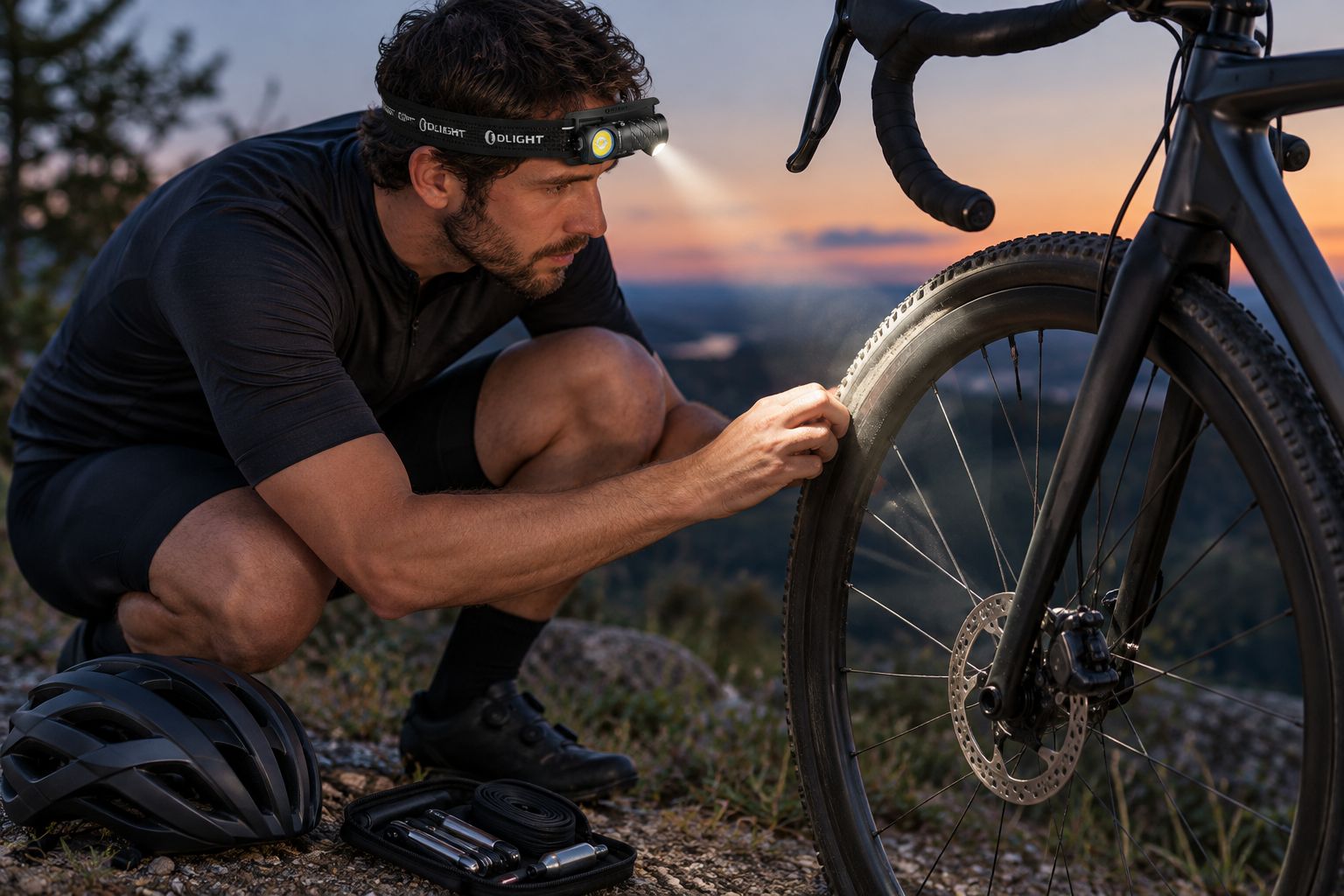
Verdict: Buy the Olight Perun 3 Mini for compact backup carry, not on an assumption of all-night riding performance.
3. Olight Array 2S: best headlamp for wave control
The Olight Array 2S is a rechargeable headlamp with wave control. Its listed specification is up to 1,000 lumens and a rated 140 m beam distance.
The reason to choose the Olight Array 2S is its control method, not a higher output figure. Wave control is relevant when your hands are occupied or you prefer not to locate a small switch through gloves.
Olight Array 2S pros:
- Wave control offers an alternative to locating a switch.
- Headlamp format supports hands-free maintenance.
- Rechargeable design suits a repeat-use routine.
Olight Array 2S cons:
- Lower listed maximum output than both Perun models here.
- Wave control needs a stationary familiarisation check before you rely on it outdoors.
Best for: Cyclists who specifically value wave control during gloved or hands-busy tasks.
Test the control sequence with your own gloves before leaving home. Learn how to select the intended setting without cycling through unwanted modes while looking towards another person.
Verdict: Buy the Olight Array 2S if wave control solves a real handling problem for you.
4. Olight Gotorch X Extended: best cycling-specific alternative
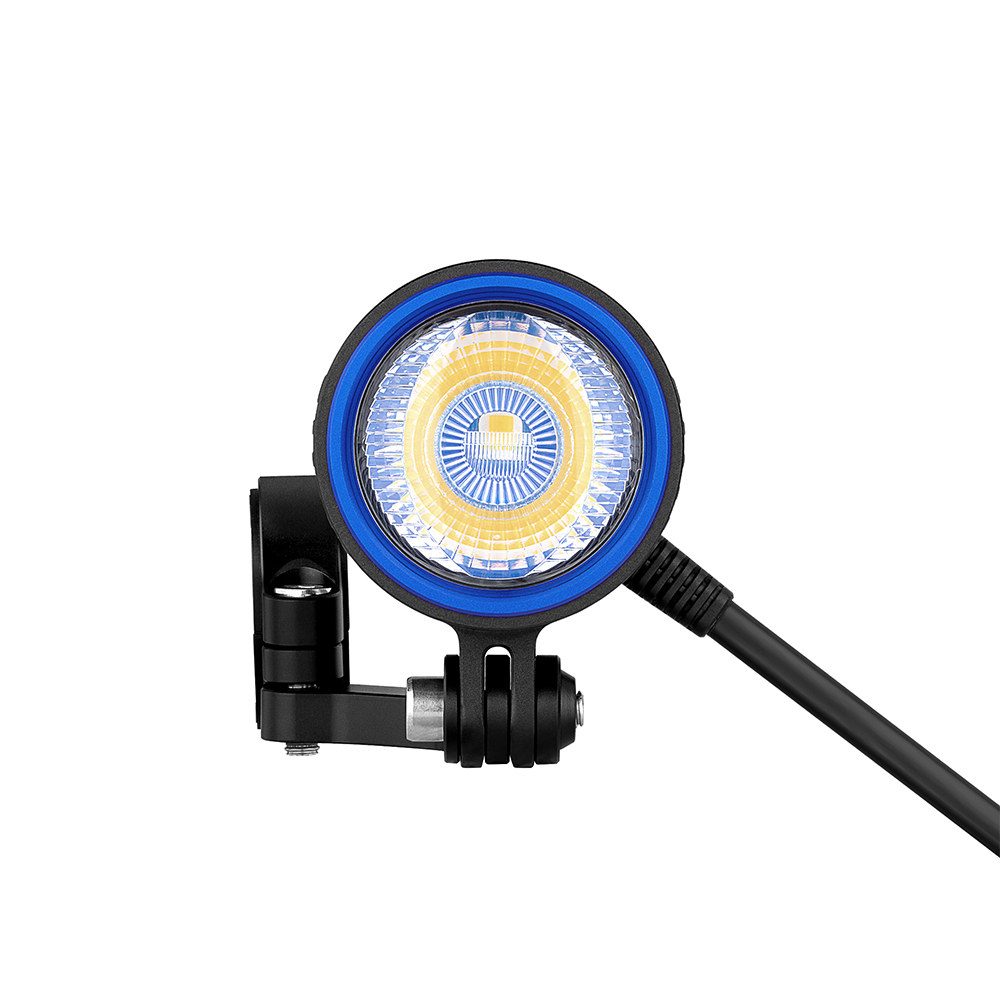
The Olight Gotorch X Extended is a mountain-bike light, not a conventional elastic-band headlamp. It has a listed 2,000-lumen output, a compact light head and a separate high-capacity battery pack; its description identifies bar or helmet use.
Choose the Olight Gotorch X Extended when the purchase is primarily about riding. Confirm the supplied mounting hardware and the approved installation method before deciding where the head and battery will sit.
Olight Gotorch X Extended pros:
- Designed as a mountain-bike light rather than repurposed solely from a headlamp.
- Light head is described for bar or helmet use.
- Separate battery pack allows battery placement to be considered independently of the head.
Olight Gotorch X Extended cons:
- Separate battery placement and cable routing need attention.
- Not the direct substitute for a headband light if roadside repairs are your main use.
Best for: Cyclists seeking a dedicated riding-light setup rather than a general-purpose headlamp.
Verdict: Buy the Olight Gotorch X Extended for a cycling-specific setup after confirming the complete mounting arrangement.
Choose the light that matches your main task
Choose a headlamp for hands-free tasks and the cycling-specific light for a dedicated riding setup. Keep the battery arrangement, mounting requirements and controls in that decision; maximum output is only part of the comparison.


Check the setup before your first night ride
Separate riding light from task light
Decide what must stay illuminated when you turn your head. A bicycle-mounted beam stays aligned with the bicycle; a head-mounted beam changes direction with your gaze.
That distinction matters at junctions and when looking towards another rider. Aim and select your output to avoid directing an unnecessarily bright beam into other people's eyes.
Confirm mounting without modifying your helmet
Follow the helmet and light manufacturers' instructions. Do not drill the helmet, alter its retention system or assume that tightening an improvised strap makes the combination suitable.
Check fit with the helmet adjusted normally. If the light moves independently, interferes with the helmet or restricts comfortable head movement, reject that arrangement.
Read runtime by mode
Find the runtime associated with the setting you plan to use, including any output reductions described in the specification. Do not combine the longest advertised runtime with the brightest advertised output unless the specification explicitly pairs them.
For an unfamiliar route, plan lighting around the ride and a possible delay. A separate repair light also lets you inspect the bicycle without moving your primary riding beam.
Identify the charging system
Check whether the charging connection is on the light, a cable, a dock or the battery itself. Carry the correct equipment rather than assuming every rechargeable Olight product uses the same connection.
For replacement cells, match the approved battery reference, not just a similar physical size. Ask OlightSA to confirm compatibility when the model or battery designation is unclear.
How these lights are ranked
The ranking prioritises task fit, mounting requirements, controls and flexibility, using the listed product descriptions and specifications. It is a buying guide, not a claim of comparative road testing.
The Olight Perun 3 takes the default headlamp position because it supports head-mounted and handheld use. The Olight Perun 3 Mini takes the compact role, the Olight Array 2S takes the wave-control role, and the Olight Gotorch X Extended remains clearly separated as a bike light.
Which Olight headlamp should you choose?
Choose the Olight Perun 3 if you want one versatile headlamp for cycling support and other outdoor tasks. Choose the Olight Perun 3 Mini if compact carry matters more than the highest maximum output.
Choose the Olight Array 2S specifically for wave control. If your actual requirement is a light for riding rather than repairs or stops, start with the Olight Gotorch X Extended and verify its mounting arrangement.
When ordering through OlightSA, confirm the exact model, included accessories and charging equipment together. Do not discover a missing part when you are preparing to leave.
FAQ
What's the best Olight headlamp for cyclists?
The Olight Perun 3 is the default choice for cyclists who want head-mounted and handheld versatility. It offers up to 3,000 lumens, a rated 160 m beam and red light; cycling-helmet mounting requires a separate compatibility check.
Is the Olight Perun 3 Mini better for a cycling repair kit?
The Olight Perun 3 Mini is the compact-carry recommendation in this guide. Its quick-release headband bracket supports hands-free tasks and changes to handheld use.
Which Olight headlamp has wave control?
The Olight Array 2S has wave control. Choose it when that control method helps with gloved or occupied hands, and practise the operating sequence while stationary.
Can I put an Olight headlamp on any cycling helmet?
No: an included headband does not establish compatibility with every cycling helmet. Follow both manufacturers' mounting instructions and reject any installation that compromises helmet fit or retention.
Is the Olight Gotorch X Extended a headlamp?
The Olight Gotorch X Extended is a mountain-bike light with a separate battery pack, not a conventional headband light. Its description identifies bar or helmet use, subject to confirming the appropriate mounting hardware.
Does a 3,000-lumen headlamp stay that bright for the whole ride?
A 3,000-lumen maximum does not establish sustained output for a whole ride. Check the mode-specific runtime and any output reductions stated in the product specification.
Can red light replace my main riding beam?
Do not use a headlamp's red mode as a substitute for a forward riding beam. Select lighting appropriate to seeing your route and check applicable requirements separately.
One last thing
A brighter headlamp does not fix a poorly aimed beam. Before your first outing, check where the light lands while you adopt your normal riding position, then check it again when you look sideways.
Keep an independently usable light in your repair plan. The most useful backup is one you can reach and operate when the bicycle is stopped and your main lighting setup needs attention.